Written by
Consultant Psychiatrist and Addiction Specialist
MBBS — University of Health Sciences (UHS); MD Psychiatry — King Edward Medical University (KEMU); MPH — Institute of Public Health (IPH); UNODC Certified Addiction Specialist; International Certification of Addiction Professionals (ICAP-P); Formal training/fellowship in Child & Adolescent Psychiatry — King Edward Medical University, Lahore
View profileApproved by
Dr. Muhammad Shoaib Zafar
Super Admin
- Published:
- Last updated:
- Approved:
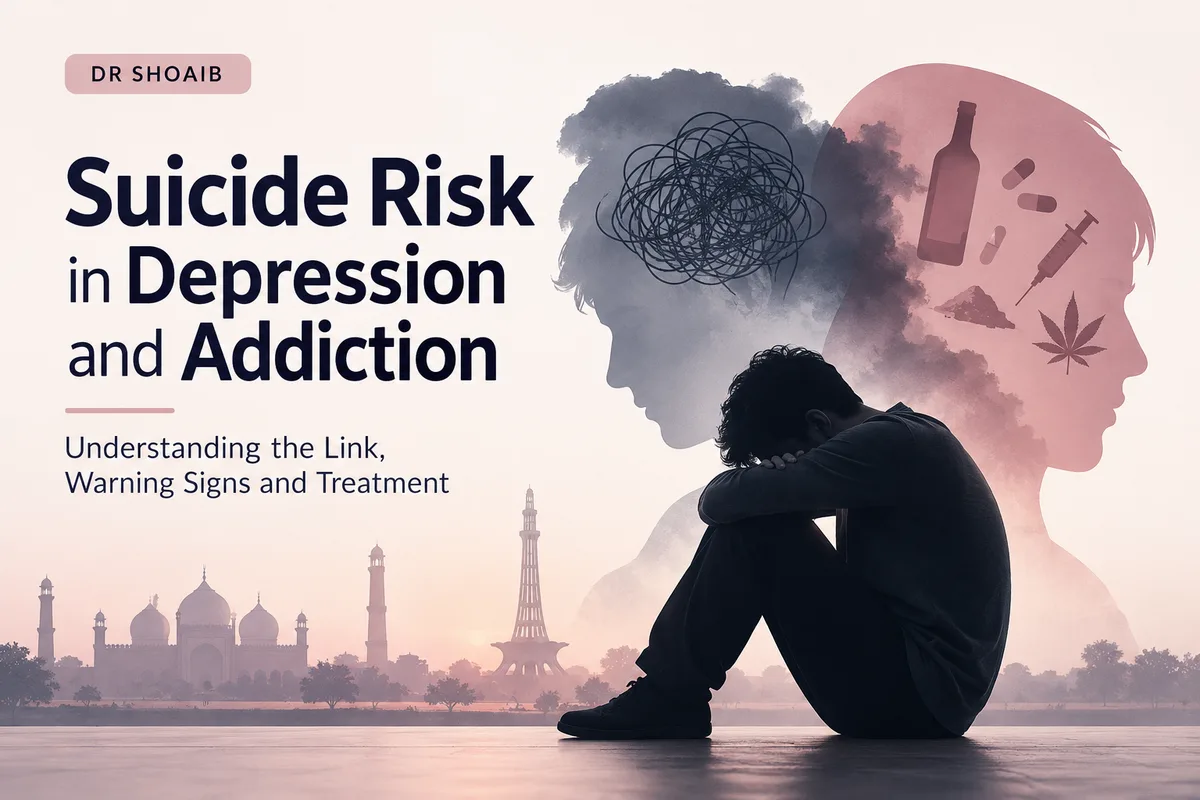
Suicide Risk in Depression and Addiction: Warning Signs, Clinical Assessment and Treatment
Author: Dr. Muhammad Shoaib Zafar Consultant Psychiatrist & Addiction Specialist | Lahore, Pakistan Reading time: 6–7 minutes Category: Adult Psychiatry | Addiction Psychiatry
Introduction
Suicidal thoughts and behaviours are among the most serious complications of untreated depression and substance use disorders.
When depression and addiction occur together, the clinical picture can become more complicated, particularly when hopelessness, emotional distress, impulsivity, intoxication or withdrawal are present.
A person struggling with depression may experience persistent sadness, loss of interest, guilt, worthlessness and hopelessness. Someone with substance dependence may increasingly rely on alcohol, opioids, cannabis, stimulants or prescription medications to cope with emotional pain.
When these conditions coexist, their combined effects can significantly affect judgement, emotional regulation and personal safety.
Importantly, suicidal thoughts are not a personal weakness or a character flaw. They are a clinical concern that deserves timely psychiatric assessment and appropriate treatment.
For individuals and families in Lahore, recognising the relationship between depression, addiction and suicide risk can be an important first step towards obtaining professional help.
1. How Does Depression Increase Suicide Risk?
Depression is more than temporary sadness. It is a psychiatric disorder that can affect mood, thinking, sleep, energy, motivation, relationships and everyday functioning.
In some individuals, severe depression produces a persistent sense of hopelessness and the belief that their circumstances cannot improve.
Common clinical features associated with increased concern include:
* Persistent hopelessness and feelings of worthlessness. * Severe guilt, self-blame and negative thinking. * Social withdrawal and isolation. * Loss of interest in previously enjoyable activities. * Severe anxiety, agitation or emotional distress. * Sleep disturbance and significant changes in appetite.
* Thoughts about death, suicide or self-harm. * Previous suicide attempts or episodes of self-harm.
Depression can also coexist with bipolar disorder, anxiety disorders, personality disorders and other psychiatric conditions. These underlying diagnoses need careful assessment because treatment approaches may differ.
According to the World Health Organization (WHO), depression is associated with an increased risk of suicide, but effective treatments are available.
2. Why Does Addiction Increase Suicide Risk?
Substance use disorders can contribute to suicidal behaviour through several interacting biological, psychological and social mechanisms.
Alcohol dependence: Alcohol can impair judgement, increase impulsivity and reduce the ability to manage emotional distress. Intoxication may intensify an existing suicidal crisis.
Opioid dependence: Opioid addiction can be associated with depression, social and occupational difficulties, withdrawal-related distress and increased vulnerability to overdose.
Stimulant use: Substances such as methamphetamine and cocaine can contribute to agitation, insomnia, paranoia, mood disturbances and, in some cases, psychotic symptoms.
Cannabis and other substances: Substance-related psychiatric symptoms, worsening mood and impaired judgement may complicate the assessment of an individual already experiencing psychological distress.
Prescription medication misuse: Dependence on sedatives, sleeping pills or other medications may coexist with depression and increase clinical complexity.
A particularly important concern is the period of intoxication, withdrawal or relapse. During these periods, mood, judgement and behavioural control may change rapidly.
Alcohol and benzodiazepine withdrawal can also cause serious medical complications and may require medically supervised treatment.
3. Dual Diagnosis: When Depression and Addiction Occur Together
The coexistence of a psychiatric disorder and a substance use disorder is commonly described as dual diagnosis or co-occurring disorders.
For example, a person may develop alcohol dependence while attempting to manage persistent depressive symptoms. Another individual may experience depression that becomes more severe following prolonged substance use.
The relationship can operate in both directions:
* Depression may contribute to the initiation or continuation of substance use. * Substance use may worsen depressive symptoms. * Intoxication and withdrawal may increase emotional instability. * Relapse may trigger guilt, hopelessness and further psychological distress. * Family conflict, financial difficulties and social isolation may aggravate both conditions.
A critical clinical consideration is distinguishing primary depression from substance-induced depressive symptoms. This requires a detailed psychiatric history, assessment of the timeline of substance use and mood symptoms, and evaluation during appropriate periods of sobriety.
Treating addiction alone without addressing an underlying psychiatric disorder may leave important relapse and safety risks unresolved.
Similarly, treating depression without addressing ongoing substance dependence may compromise recovery.
Both conditions need to be assessed and managed as part of an integrated treatment plan.
4. Warning Signs That Require Urgent Psychiatric Assessment
Families should take significant changes in behaviour, mood and communication seriously, especially in someone with a history of depression, addiction or previous self-harm.
Warning signs include:
* Increasing hopelessness or statements suggesting that life is no longer worth living. * Talking about suicide, death or self-harm. * Sudden deterioration in mood or severe emotional agitation. * Increasing substance consumption or a recent relapse. * Withdrawal from family, friends and normal activities. * Severe insomnia, restlessness or unusual behavioural changes.
* Giving away important belongings or making unusual final arrangements. * Previous suicide attempts or recent self-harm.
Not everyone experiencing suicidal thoughts displays obvious warning signs. A person may also deny suicidal thoughts despite significant clinical distress.
Therefore, the absence of obvious warning signs should not be considered proof of safety.
When there is immediate concern about suicide, a professional assessment should not be delayed.
5. How Does a Psychiatrist Assess Suicide Risk?
Suicide risk assessment is a clinical process, not simply a questionnaire or a numerical score.
A psychiatrist evaluates the person’s current mental state, psychiatric history, substance use pattern, previous self-harm, psychosocial circumstances and available support.
A comprehensive assessment may include:
A. Suicidal thoughts and behaviour
The psychiatrist explores the presence, frequency and intensity of suicidal thoughts, intent, planning, previous attempts and any recent preparatory behaviour.
B. Psychiatric assessment
Depression, bipolar disorder, psychosis, anxiety, personality-related difficulties and other psychiatric conditions are evaluated.
C. Addiction assessment
The type of substance, duration of use, dependence severity, intoxication, withdrawal, previous overdoses and relapse history are reviewed.
D. Dynamic risk factors
Recent losses, relationship problems, financial stress, agitation, insomnia, worsening depression and changes in substance consumption are considered.
E. Protective factors and family support
Supportive relationships, engagement with treatment, personal reasons for living, coping abilities and willingness to accept help are explored.
Importantly, NICE guidelines advise against relying on low, medium or high risk categories or risk-scoring tools to predict suicide or determine access to treatment. Individualised clinical formulation and safety planning are essential.
6. Evidence-Based Treatment: Managing Depression, Addiction and Suicide Risk Together
Treatment should address immediate safety concerns as well as the underlying psychiatric and addiction disorders.
Depending on the individual’s clinical presentation, an integrated treatment programme may involve:
1. Psychiatric treatment of depression
Appropriate treatment may include antidepressant medication, psychological interventions or a combination of both.
In bipolar disorder, treatment must be tailored to the underlying mood disorder rather than assuming that all depressive symptoms represent unipolar depression.
2. Medically supervised addiction treatment
Patients with significant substance dependence may require structured detoxification, withdrawal management and specialist addiction treatment.
The treatment plan should account for the medical risks of withdrawal, particularly with alcohol and benzodiazepines.
3. Psychotherapy
Evidence-based psychological interventions can help patients develop healthier coping strategies, manage emotional distress and address negative thinking patterns.
Depending on the diagnosis and individual needs, these may include:
* Cognitive Behavioural Therapy (CBT). * Dialectical Behaviour Therapy (DBT), where clinically indicated. * Relapse prevention therapy. * Motivational interviewing. * Problem-solving and supportive psychotherapy.
4. Suicide safety planning
A collaborative safety plan identifies personal warning signs, coping strategies, supportive individuals, professional contacts and practical steps to reduce access to potentially harmful means.
Family involvement may be valuable when appropriate and consistent with the patient’s circumstances, consent and safeguarding needs.
5. Continued monitoring and relapse prevention
Recovery requires ongoing follow-up. Monitoring mood symptoms, substance use, sleep, medication response and psychosocial stressors can help identify deterioration early.
Patients with significant or immediate suicide risk may require emergency assessment, hospital-based treatment and a higher level of supervision.
7. When Should Families Seek Help in Lahore?
Families should not wait for a suicide attempt or a major deterioration before consulting a psychiatrist.
Professional psychiatric assessment is particularly important when a person has:
* Depression accompanied by increasing substance use. * Repeated relapses associated with hopelessness or emotional distress. * Previous suicide attempts or self-harm. * Alcohol or drug dependence with significant mood disturbances. * Severe anxiety, agitation, insomnia or behavioural changes. * Psychiatric symptoms that persist despite addiction treatment.
In Lahore, individuals and families can seek specialist psychiatric assessment for depression, addiction, dual diagnosis and associated behavioural or emotional difficulties.
If someone has current suicidal intent, has attempted suicide, or cannot be kept safe, seek emergency medical care immediately. Do not leave the person alone. Reduce access to potentially harmful substances or other means where this can be done safely, and arrange urgent assessment at the nearest emergency department.
In Punjab, Rescue 1122 can be contacted for emergency assistance. Do not wait for a routine outpatient appointment.
8. Specialist Psychiatric Care for Depression and Addiction in Lahore
Dr. Muhammad Shoaib Zafar is a Consultant Psychiatrist and Addiction Specialist in Lahore, with clinical experience in the assessment and management of psychiatric disorders and substance use disorders.
His clinical areas of interest include:
* Depression and mood disorders. * Alcohol and drug dependence. * Opioid dependence and medically supervised treatment. * Dual diagnosis and co-occurring psychiatric disorders. * Suicide risk assessment and clinical management. * Addiction detoxification and rehabilitation. * Relapse prevention and continuing psychiatric care.
The treatment approach focuses on identifying underlying psychiatric conditions, addressing substance dependence and developing an individualised plan for recovery.
For patients with co-occurring depression and addiction, an integrated psychiatric and addiction treatment approach can help address the factors that contribute to ongoing distress and relapse.
If you or someone in your family is struggling with depression, addiction or suicidal thoughts, seek professional psychiatric help. Early assessment and appropriate treatment can make a meaningful difference.
Consultation: Dr. Muhammad Shoaib Zafar – Consultant Psychiatrist & Addiction Specialist, Lahore, Pakistan.
⸻
Frequently Asked Questions
Can depression and addiction increase suicide risk?
Yes. Depression and substance use disorders are both associated with suicidal behaviour. Their coexistence can introduce additional clinical challenges, particularly during intoxication, withdrawal, relapse or severe emotional distress.
Can alcohol or drug addiction cause suicidal thoughts?
Substance use can contribute to mood disturbances, impulsivity, impaired judgement and psychological distress.
The relationship varies between individuals and requires a comprehensive psychiatric assessment.
Is depression after stopping drugs or alcohol normal?
Depressive symptoms can occur during withdrawal or early recovery. However, persistent or severe symptoms should not automatically be attributed to withdrawal. A psychiatrist should assess whether an independent depressive disorder or another psychiatric condition is present.
Should addiction be treated before depression?
Not necessarily. The treatment sequence depends on clinical stability, withdrawal risks, psychiatric symptoms and immediate safety concerns. Co-occurring conditions often require coordinated treatment rather than a rigid sequential approach.
When should someone with suicidal thoughts see a psychiatrist?
Anyone experiencing suicidal thoughts should receive prompt professional assessment. Current intent, an attempt, or an inability to maintain safety requires immediate emergency medical attention rather than waiting for an outpatient appointment.
Where can I consult a psychiatrist for depression and addiction in Lahore?
Dr. Muhammad Shoaib Zafar provides specialist psychiatric and addiction-related consultation in Lahore.
Patients and families can seek assessment for depression, substance dependence, dual diagnosis and associated psychiatric difficulties.
⸻
Clinical References
1. World Health Organization. Suicide. WHO Fact Sheet. https://www.who.int/news-room/fact-sheets/detail/suicide 2. World Health Organization. Assessment for self-harm/suicide in persons with priority mental, neurological and substance use disorders. mhGAP Intervention Guide. https://www.who.int/teams/mental-health-and-substance-use/treatment-care/mental-health-gap-action-programme/evidence-centre/self-harm-and-suicide/assessment-for-self-harm-suicide-in-persons-with-priority-mental-neurological-and-substance-use-disorders
3. National Institute for Health and Care Excellence (NICE). Self-harm: assessment, management and preventing recurrence. NG225. 2022. https://www.nice.org.uk/guidance/ng225 4. National Institute for Health and Care Excellence (NICE). Depression in adults: treatment and management. NG222. 2022. https://www.nice.org.uk/guidance/ng222 5. World Health Organization. mhGAP Evidence Centre: Self-harm and suicide. https://www.who.int/teams/mental-health-and-substance-use/treatment-care/mental-health-gap-action-programme/evidence-centre/self-harm-and-suicide
Medical disclaimer: This article is for educational purposes and does not replace individual psychiatric assessment, diagnosis or treatment. Suspected suicidal emergencies require immediate medical attention.
Frequently Asked Questions
What suicide warning signs require urgent attention?
Warning signs include talking about suicide or self-harm, increasing hopelessness, severe agitation, social withdrawal, increasing substance use, and giving away important belongings. Not everyone shows obvious signs, so their absence does not prove that someone is safe.
Why should depression and addiction be treated together?
Depression may contribute to substance use, while substance use, intoxication and withdrawal may worsen mood and emotional instability. An integrated treatment plan addresses both conditions rather than leaving important safety and relapse risks unresolved.
What does a suicide safety plan include?
A collaborative safety plan identifies personal warning signs, coping strategies, supportive people, professional contacts and safe steps to reduce access to potentially harmful means. Family involvement may help when appropriate and consistent with consent and safeguarding needs.
What should families do if someone is in immediate danger?
If someone has current suicidal intent, has attempted suicide or cannot be kept safe, seek emergency medical care immediately. Do not leave them alone. Reduce access to harmful substances or other means where safe, and arrange assessment at the nearest emergency department. In Punjab, contact Rescue 1122 for emergency assistance rather than waiting for a routine appointment.
About the author
Consultant Psychiatrist and Addiction Specialist
MBBS — University of Health Sciences (UHS); MD Psychiatry — King Edward Medical University (KEMU); MPH — Institute of Public Health (IPH); UNODC Certified Addiction Specialist; International Certification of Addiction Professionals (ICAP-P); Formal training/fellowship in Child & Adolescent Psychiatry — King Edward Medical University, Lahore
King Edward Medical University (KEMU) & Mayo Hospital, Lahore
clinical interests
Adult Psychiatry; Addiction Psychiatry & Rehabilitation; Child & Adolescent Psychiatry; Psychotherapy & Psychological Interventions; Psychiatric Assessment & Consultation
training
Formal training/fellowship in Child & Adolescent Psychiatry, King Edward Medical University, Lahore
memberships
Pakistan Medical & Dental Council (PMDC); Pakistan Psychiatric Society (PPS); International Certification of Addiction Professionals (ICAP)
Dr. Muhammad Shoaib Zafar, MBBS, MD (Psychiatry) Assistant Professor of Psychiatry, King Edward Medical University (KEMU), Lahore