Written by
Consultant Psychiatrist and Addiction Specialist
MBBS — University of Health Sciences (UHS); MD Psychiatry — King Edward Medical University (KEMU); MPH — Institute of Public Health (IPH); UNODC Certified Addiction Specialist; International Certification of Addiction Professionals (ICAP-P); Formal training/fellowship in Child & Adolescent Psychiatry — King Edward Medical University, Lahore
View profileApproved by
Dr. Muhammad Shoaib Zafar
Super Admin
- Published:
- Last updated:
- Approved:
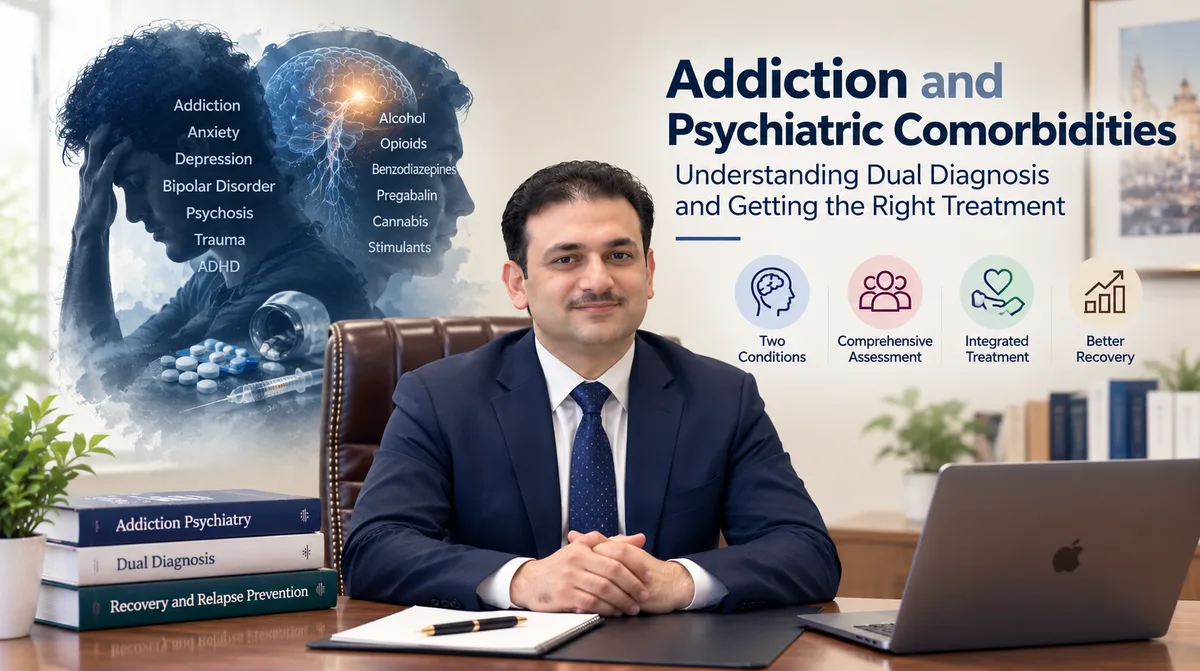
Addiction and Psychiatric Comorbidities: Understanding Dual Diagnosis and Getting the Right Treatment in Lahore
Author: Dr. Muhammad Shoaib Zafar Consultant Psychiatrist & Addiction Specialist | Lahore, Pakistan
When a person develops an addiction, families often focus on stopping the substance. They may arrange detoxification, seek rehabilitation or ask the person to promise that they will never use drugs again.
But an important question is sometimes overlooked: What else is happening in that person’s mental health?
Behind addiction, there may be depression, anxiety, trauma, bipolar disorder, attention-deficit/hyperactivity disorder (ADHD), or another psychiatric condition. In some cases, the mental health problem existed before substance use began. In others, prolonged substance use has contributed to new psychological symptoms.
When addiction and another psychiatric disorder occur together, the condition is commonly called dual diagnosis or a co-occurring disorder. Understanding both conditions is essential because treating one while ignoring the other can make recovery more difficult.
What is dual diagnosis?
Dual diagnosis refers to the presence of a substance use disorder alongside another mental health disorder.
For example, a person may have alcohol use disorder and depression, opioid dependence and post-traumatic stress disorder (PTSD), or stimulant use disorder and bipolar disorder.
These conditions do not always develop in the same order. A person may begin using substances to cope with emotional distress, develop a psychiatric illness after prolonged substance use, or experience both conditions because of shared genetic, psychological and social vulnerabilities.
The symptoms can also overlap. Insomnia, irritability, low mood, poor concentration and anxiety may occur during intoxication, withdrawal or an independent psychiatric illness. A careful assessment is therefore necessary before reaching a diagnosis.
How common are mental health problems and addiction?
The available evidence highlights the scale of both problems, although national figures for mental illness should not be mistaken for estimates of dual diagnosis.
Pakistan: A nationally representative psychiatric morbidity survey conducted between 2019 and 2022 interviewed 17,773 adults across the country’s four provinces. Published in BMJ Public Health in 2026, it estimated that 32.3% of adults had a current mental or behavioural disorder covered by the study’s diagnostic categories. The estimate includes a broad range of conditions and does not mean that one-third of Pakistanis have addiction or dual diagnosis.
Pakistan’s national drug-use survey conducted in 2013, with support from the United Nations Office on Drugs and Crime (UNODC), estimated that approximately 6.7 million people aged 15–64 had used substances other than alcohol and tobacco in the previous year. These are historical figures; they should not be presented as the current number of people using drugs.
Internationally: The UNODC World Drug Report 2026 estimates that 331 million people used drugs worldwide in 2024, excluding alcohol and tobacco. This represents a substantial global public health challenge, although drug use alone does not establish the presence of a substance use disorder or another psychiatric diagnosis.
The key message is that addiction and mental illness are important, overlapping public health concerns.
Pakistan still needs more contemporary data specifically measuring how frequently these conditions occur together.
Why do addiction and psychiatric disorders occur together?
There is rarely a single explanation. Several pathways may contribute.
1. Using substances to cope with emotional pain
A person experiencing anxiety, depression, trauma or loneliness may discover that a substance temporarily changes how they feel.
Alcohol may appear to reduce anxiety, sedatives may seem to help with sleep, and opioids may temporarily numb emotional or physical pain.
The relief is often short-lived. As tolerance develops, the person may need more of the substance to achieve the same effect. Withdrawal and worsening emotional symptoms can then reinforce continued use.
This pattern is sometimes described as self-medication, but it should not be assumed to explain every case of addiction.
2. Substance use can worsen mental health
Substances can disrupt sleep, concentration, emotional regulation and judgement. Depending on the drug, dose and pattern of use, they may contribute to anxiety, depressive symptoms, paranoia or psychosis.
Stimulants can produce severe agitation and suspiciousness. Cannabis can provoke or worsen psychotic symptoms in some vulnerable individuals.
Alcohol and sedative withdrawal can cause serious complications, including seizures or delirium.
Symptoms arising during intoxication or withdrawal may resemble an independent psychiatric disorder. Distinguishing between them requires clinical judgement and, where appropriate, reassessment after the acute effects have settled.
3. Shared biological and social vulnerabilities
Family history, childhood adversity, chronic stress, trauma, social isolation and limited access to healthcare can increase vulnerability to both psychiatric illness and substance-related problems.
These factors do not determine a person’s future. They help clinicians understand why two conditions may develop together and what support may improve recovery.
Common psychiatric conditions associated with addiction
Depression: Persistent sadness, loss of interest, hopelessness and low energy may precede addiction or become worse during substance use and withdrawal. Depression should not automatically be dismissed as a temporary consequence of drug use, particularly when symptoms are severe or persist.
Anxiety disorders: Some people use benzodiazepines, alcohol or other substances to manage anxiety. Repeated use can create a cycle in which rebound anxiety and withdrawal reinforce further consumption.
Bipolar disorder: Episodes of depression may coexist with periods of unusually elevated or irritable mood, increased energy and reduced need for sleep.
Substance use can complicate recognition of these episodes. Correct diagnosis matters because treatment strategies for bipolar disorder differ from those for unipolar depression.
Psychosis and schizophrenia-spectrum disorders: Cannabis, stimulants and other substances may trigger or exacerbate psychotic symptoms in susceptible individuals. Some people also have an independent psychotic disorder alongside addiction, requiring ongoing specialist care.
PTSD and other trauma-related conditions: People living with intrusive memories, nightmares, hypervigilance or emotional distress may turn to substances for temporary relief. Trauma-informed treatment can help address these symptoms without relying on substance use.
ADHD and other developmental conditions: Impulsivity, attention difficulties and executive-function problems can complicate addiction treatment.
A careful developmental history helps distinguish longstanding ADHD from concentration difficulties caused by intoxication, withdrawal, poor sleep or another psychiatric condition.
Why treating addiction alone may not be enough
Detoxification can be an important first step, particularly when withdrawal creates medical risks. However, detoxification does not automatically resolve depression, trauma, bipolar disorder or other co-occurring conditions.
If these problems remain untreated, the person may continue experiencing distress and return to substances as a way of coping. Conversely, psychiatric treatment may be less effective if ongoing substance use disrupts sleep, medication adherence or daily functioning.
UNODC guidance on mental comorbidities in drug use disorders highlights the association between co-occurring conditions and more complex treatment needs, relapse risk, hospitalisation and other adverse outcomes.
This is why integrated treatment for addiction and psychiatric comorbidity is important. Instead of treating the two conditions as unrelated problems, the clinical team develops a coordinated plan addressing both.
What does effective dual-diagnosis treatment involve?
The right treatment depends on the substances involved, the psychiatric diagnosis, withdrawal risk, physical health and the person’s circumstances.
A comprehensive approach may include:
* Psychiatric and addiction assessment: Reviewing substance use, previous treatment, mental health symptoms, medical history and immediate safety concerns. * Medically supervised detoxification: Managing withdrawal safely when indicated, particularly for alcohol, benzodiazepines and other substances that may cause dangerous withdrawal complications.
* Evidence-based addiction treatment: Using appropriate medication where indicated, alongside psychological and social interventions. For opioid use disorder, medication treatments such as buprenorphine or methadone may be appropriate where available. * Treatment of psychiatric conditions: Developing a plan for depression, anxiety, bipolar disorder, psychosis or trauma-related symptoms, with appropriate monitoring and review.
* Psychotherapy and relapse prevention: Helping patients identify triggers, build coping skills, manage cravings and develop healthier routines. * Family education and continuing care: With the patient’s consent, involving family members can improve understanding, communication and support after rehabilitation.
Treatment should be individualised.
Some people benefit from outpatient care, while others need inpatient detoxification or structured rehabilitation. The most restrictive or expensive treatment is not necessarily the most appropriate.
When should a family seek urgent help?
Seek urgent medical assessment if a person develops severe confusion, seizures, hallucinations, extreme agitation, difficulty waking or slow or irregular breathing.
Suspected overdose or dangerous withdrawal requires emergency care.
Suicidal thoughts, severe self-neglect or rapidly worsening psychotic symptoms also warrant prompt professional assessment. Do not abruptly stop alcohol or benzodiazepines in a person who may be physically dependent without medical advice.
Addiction and psychiatric treatment in Lahore
Families in Lahore have different options for seeking help, but choosing a service that can assess both addiction and mental health is important when dual diagnosis is suspected.
A qualified psychiatrist or addiction specialist can help determine whether symptoms reflect an independent psychiatric disorder, the effects of substance use, withdrawal or a combination of these factors.
Depending on clinical needs, treatment may involve medication, psychotherapy, medically supervised detoxification, rehabilitation and continuing follow-up.
Early assessment can prevent avoidable complications and help families move beyond repeated cycles of stopping and restarting substance use.
Recovery means treating the whole person
Addiction does not erase a person’s dignity, and a psychiatric diagnosis does not mean that recovery is out of reach.
Both conditions deserve careful assessment, compassionate care and evidence-based treatment.
When addiction and mental illness coexist, the goal is not simply to stop substance use. It is to improve emotional stability, physical health, relationships and everyday functioning while building a sustainable recovery plan.
If you or a family member is struggling with addiction alongside depression, anxiety, mood changes or other mental health symptoms, seek a comprehensive psychiatric and addiction assessment.
Treating both conditions together can provide a clearer path towards recovery.
About the author
Dr. Muhammad Shoaib Zafar is a Consultant Psychiatrist and Addiction Specialist based in Lahore, Pakistan. His clinical interests include addiction psychiatry, dual diagnosis, medically supervised detoxification, relapse prevention and the treatment of co-occurring psychiatric disorders.
Medical disclaimer: This article is intended for education and awareness and does not replace an individual medical assessment. Treatment and medication decisions should be made with a qualified healthcare professional.
References
1. Prevalence and sociodemographic correlates of mental and behavioural disorders in Pakistan: findings from the first nationally representative cross-sectional survey.
BMJ Public Health. 2026. https://bmjpublichealth.bmj.com/content/4/3/e005182 2. United Nations Office on Drugs and Crime. World Drug Report 2026. https://data.unodc.org/wdr2026search 3. United Nations Office on Drugs and Crime. Mental comorbidities in drug use disorders. https://www.unodc.org/documents/drug-prevention-and-treatment/UNODCComorbiditiesindruguse_disorders.pdf
4. World Health Organization. Global status report on alcohol and health and treatment of substance use disorders. 2024. https://www.who.int/publications/b/73683 5. Sarfaraz Y, Jafri L, Majid H, et al. Exploring landscape of drug abuse trends in Pakistan: A decade and a half of clinical laboratory big data analysis. PLOS Global Public Health. 2025;5(5):e0004424. https://doi.org/10.1371/journal.pgph.0004424
Frequently Asked Questions
What is dual diagnosis?
Dual diagnosis means having a substance use disorder alongside another mental health disorder, such as depression, anxiety, bipolar disorder or PTSD. A careful assessment helps distinguish an independent psychiatric condition from symptoms caused by substance use or withdrawal.
Is detoxification enough to treat dual diagnosis?
Detoxification may be an important first step, but it does not automatically resolve co-occurring mental health conditions. Coordinated treatment addresses both addiction and psychiatric symptoms through an individualised care plan.
What can dual-diagnosis treatment in Lahore involve?
Treatment may include psychiatric and addiction assessment, medically supervised detoxification when needed, medication, psychotherapy, relapse prevention and continuing follow-up. Outpatient care, inpatient treatment or rehabilitation depends on the person's clinical needs.
When should someone seek urgent medical help?
Severe confusion, seizures, hallucinations, extreme agitation, difficulty waking, or slow or irregular breathing require urgent medical assessment. Suspected overdose or dangerous withdrawal requires emergency care. Do not abruptly stop alcohol or benzodiazepines in someone who may be physically dependent without medical advice.
About the author
Consultant Psychiatrist and Addiction Specialist
MBBS — University of Health Sciences (UHS); MD Psychiatry — King Edward Medical University (KEMU); MPH — Institute of Public Health (IPH); UNODC Certified Addiction Specialist; International Certification of Addiction Professionals (ICAP-P); Formal training/fellowship in Child & Adolescent Psychiatry — King Edward Medical University, Lahore
King Edward Medical University (KEMU) & Mayo Hospital, Lahore
clinical interests
Adult Psychiatry; Addiction Psychiatry & Rehabilitation; Child & Adolescent Psychiatry; Psychotherapy & Psychological Interventions; Psychiatric Assessment & Consultation
training
Formal training/fellowship in Child & Adolescent Psychiatry, King Edward Medical University, Lahore
memberships
Pakistan Medical & Dental Council (PMDC); Pakistan Psychiatric Society (PPS); International Certification of Addiction Professionals (ICAP)
Dr. Muhammad Shoaib Zafar, MBBS, MD (Psychiatry) Assistant Professor of Psychiatry, King Edward Medical University (KEMU), Lahore