Written by
Consultant Psychiatrist and Addiction Specialist
MBBS — University of Health Sciences (UHS); MD Psychiatry — King Edward Medical University (KEMU); MPH — Institute of Public Health (IPH); UNODC Certified Addiction Specialist; International Certification of Addiction Professionals (ICAP-P); Formal training/fellowship in Child & Adolescent Psychiatry — King Edward Medical University, Lahore
View profileApproved by
Dr. Muhammad Shoaib Zafar
Super Admin
- Published:
- Last updated:
- Approved:
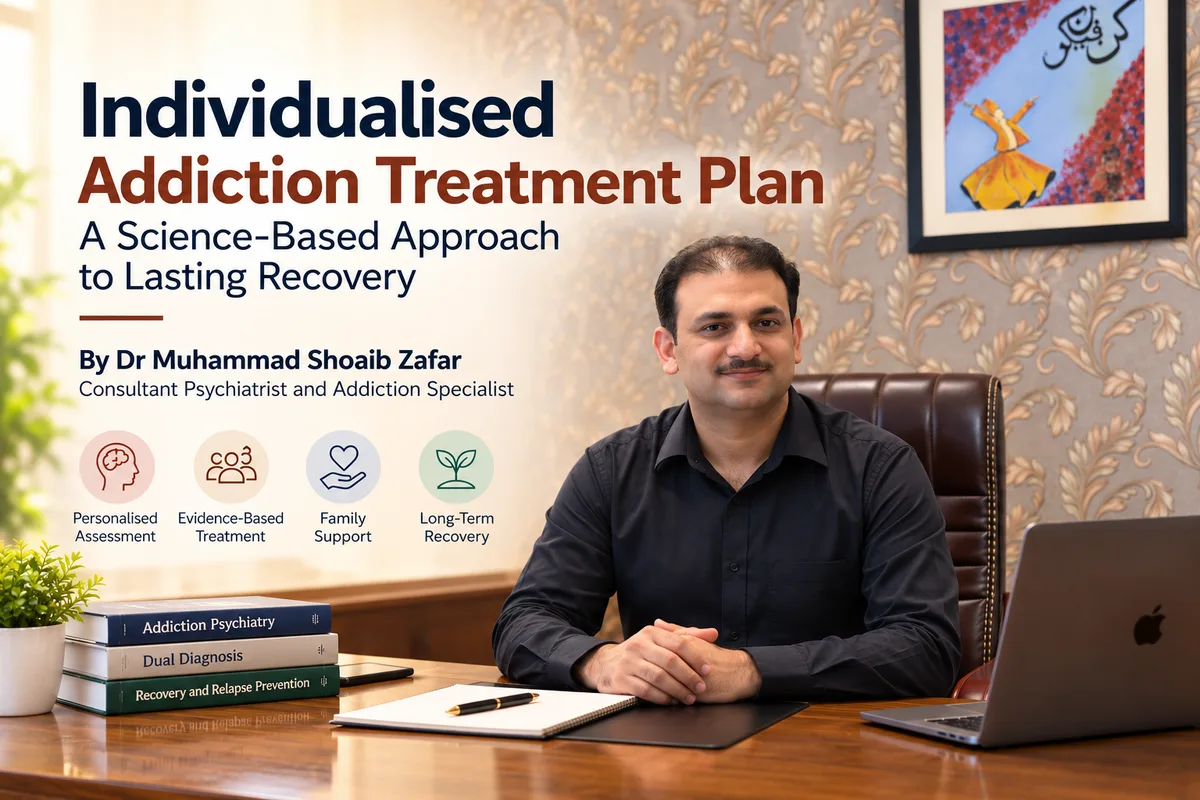
Individualised Addiction Treatment: A Science-Based Approach to Lasting Recovery
Author: Dr Muhammad Shoaib Zafar Consultant Psychiatrist and Addiction Specialist
Addiction is not simply a bad habit or a lack of willpower. Substance use disorders are complex, treatable health conditions influenced by biological, psychological, psychiatric and social factors.
Although two people may use the same substance, their treatment needs can be very different.
For example, a person using ice (methamphetamine) may require a different treatment approach from someone dependent on opioids, alcohol or sedative medications. Similarly, a patient experiencing addiction alongside depression, bipolar disorder or psychosis may need an integrated treatment plan addressing both addiction and mental health.
The key principle is simple: effective addiction treatment should be built around the individual, not a standard programme.
Guidance from the World Health Organization (WHO), the United Nations Office on Drugs and Crime (UNODC) and the American Society of Addiction Medicine (ASAM) supports person-centred care, appropriate treatment intensity and ongoing reassessment.
1. Why Does Addiction Treatment Need to Be Personalised?
Every patient has a different history, pattern of substance use, set of triggers and level of support.
Some people use substances to cope with emotional distress, trauma or psychiatric symptoms. Others develop dependence through repeated exposure, peer influence or environmental pressures.
Some experience repeated relapses despite previous detoxification or rehabilitation.
A comprehensive treatment plan considers five important areas:
* Physical health: Withdrawal risks, sleep, nutrition, medical conditions and substance-related complications. * Psychological factors: Cravings, emotional regulation, motivation, impulsivity and coping skills.
* Psychiatric conditions: Depression, anxiety, bipolar disorder, psychosis, ADHD and other relevant conditions. * Social circumstances: Family relationships, employment, housing, financial stress and exposure to substance use. * Previous treatment: Earlier rehabilitation, medication, relapses, treatment barriers and adverse effects.
Understanding these factors helps clinicians identify the causes and circumstances that maintain substance use and select interventions that address the patient’s actual needs.
2. Comprehensive Assessment: The Foundation of Recovery
Individualised treatment begins with a thorough assessment by qualified healthcare professionals.
The clinician needs to understand which substances the patient uses, how frequently they are taken, the duration of use, the last use, withdrawal symptoms, cravings and any history of overdose or other complications.
Polysubstance use requires particular attention because different substances can interact and create additional medical risks.
Psychiatric assessment is equally important. Methamphetamine, for example, can cause severe sleep disturbance, paranoia and hallucinations. However, psychotic symptoms in someone using substances do not automatically mean that the person has schizophrenia.
The timing of symptoms, previous psychiatric history and progress during abstinence can help clarify the diagnosis.
Assessment should also explore suicidal thoughts, mood symptoms, anxiety, trauma, cognitive difficulties and physical health concerns.
The patient’s family environment, daily routine, relationships, employment and available support should be considered as well.
The result is a clinical formulation that identifies the patient’s difficulties, strengths, immediate risks and treatment priorities.
3. Choosing the Right Level of Care
The appropriate treatment setting depends on clinical severity, safety, available support and the patient’s ability to participate in treatment.
Outpatient treatment may be suitable for medically and psychiatrically stable patients who can attend appointments and live in a sufficiently safe environment.
Treatment can include psychiatric reviews, medication management, psychotherapy and relapse-prevention planning.
Intensive outpatient or day treatment provides more frequent clinical contact for patients who need structured support but do not require continuous residential supervision.
Residential rehabilitation may be appropriate when repeated relapses, environmental triggers or an unstable living situation make recovery difficult without a structured setting.
A good programme should include clinical oversight, evidence-based psychological interventions and a clear aftercare plan.
Hospital-based treatment may be necessary for severe withdrawal, overdose, significant medical complications, acute psychosis, mania or serious suicidal risk.
These settings are not interchangeable. Alcohol and benzodiazepine withdrawal can be medically dangerous and may require supervised treatment.
Seizures, suspected overdose, severe confusion or acute psychiatric deterioration warrant urgent medical assessment.
The objective is to provide the least restrictive setting that can safely meet the patient’s needs, with the flexibility to increase or reduce treatment intensity as circumstances change.
4. Evidence-Based Psychological Treatment
Psychological interventions help patients understand their substance-use patterns, manage cravings and develop healthier ways to respond to stress.
Cognitive behavioural therapy (CBT) helps identify triggers, unhelpful thoughts and behaviours associated with substance use. Patients learn coping strategies, problem-solving skills and ways to manage high-risk situations.
Motivational interviewing supports patients who feel uncertain about changing their substance use. Rather than relying on confrontation or shame, it helps them explore their own reasons for recovery and strengthen their commitment to change.
Contingency management uses structured incentives to reinforce treatment participation or objectively verified recovery-related goals.
It has particularly strong evidence for stimulant-use disorders, including methamphetamine use disorder.
Family-based interventions can improve communication, establish healthier boundaries and help relatives respond constructively to challenges. Family involvement should be guided by the patient’s consent, confidentiality and safety.
No single therapy works equally well for everyone.
The choice should reflect the patient’s clinical needs, preferences and access to appropriately trained professionals.
5. The Role of Medication and Dual-Diagnosis Treatment
Medication can be an important part of addiction treatment, but its role varies according to the substance involved.
For opioid use disorder, medications such as buprenorphine or methadone can reduce illicit opioid use and overdose mortality when appropriately prescribed and monitored.
Naltrexone may be suitable for selected patients following careful assessment.
For alcohol use disorder, medications such as naltrexone or acamprosate may help reduce drinking or support abstinence in appropriate patients.
Methamphetamine and other stimulant-use disorders require a different approach. No medication is universally established as effective for every patient.
Behavioural treatments, particularly contingency management, are important, while selected off-label medications may be considered by qualified clinicians after reviewing the evidence and individual risks.
Treatment becomes more complex when addiction coexists with another psychiatric condition, a situation commonly described as dual diagnosis.
For example, a patient may experience depression alongside opioid dependence, psychosis alongside methamphetamine use, or bipolar disorder alongside alcohol misuse.
These conditions can influence one another. Untreated psychiatric symptoms may increase vulnerability to substance use, while continued substance use can worsen mental health and interfere with treatment.
An integrated plan may include psychiatric medication, addiction-focused psychotherapy, sleep stabilisation, family education and regular monitoring.
Clinicians should distinguish substance-induced symptoms from independent psychiatric disorders through careful assessment and follow-up.
Medication should always be prescribed and monitored by a qualified clinician.
6. Why Detoxification Alone Is Not Enough
Detoxification addresses acute intoxication or withdrawal-related needs when medically indicated.
However, it does not automatically resolve cravings, psychiatric symptoms, emotional difficulties, relationship problems or environmental triggers.
Sustainable recovery usually requires continued treatment after detoxification, which may include:
* Psychiatric and medical follow-up. * Medication where clinically indicated. * Psychological treatment and relapse-prevention training.
* Family education and practical support. * Healthy daily routines and recovery-oriented activities. * Ongoing assessment of mental health and functioning.
A fixed duration of rehabilitation cannot meet everyone’s needs. A 28-day programme may be appropriate for some patients but insufficient for others. Treatment duration should depend on clinical progress, safety, patient preferences and continuing support needs.
7. Relapse Prevention and Family Support
Relapse prevention involves identifying high-risk situations and preparing practical strategies before difficulties arise.
Common triggers include contact with substance-using peers, family conflict, sleep deprivation, emotional distress, social isolation and exposure to places associated with previous substance use.
Patients can learn to recognise early warning signs, manage cravings, seek help promptly and reduce exposure to avoidable risks.
A lapse should prompt clinical reassessment rather than humiliation or automatic exclusion from treatment. Reviewing what happened can help the treatment team adjust the plan and prevent further harm.
Overdose prevention is also essential.
Following a period of abstinence, opioid tolerance may decrease, increasing the risk of overdose if opioid use resumes. Education about overdose recognition and access to naloxone, where available, can be lifesaving.
Family support can strengthen recovery when it is constructive and appropriate. Counselling can help relatives understand addiction, establish boundaries, reduce unhelpful interaction patterns and recognise warning signs.
Patients may also need practical support to rebuild relationships, return to education or employment and develop healthier social networks.
Family involvement is valuable, but it does not replace professional treatment.
8. Aftercare: Supporting Long-Term Recovery
Leaving a rehabilitation centre should mark a transition to continuing care, not the end of treatment.
A personalised aftercare plan should specify follow-up appointments, medication arrangements, psychological support, family involvement and the steps to take if symptoms worsen or substance use resumes.
Patients with repeated relapses, a history of overdose, recent psychosis or significant psychiatric comorbidity may require closer monitoring.
Progress should be evaluated through meaningful outcomes, including substance use, cravings, psychiatric symptoms, treatment engagement, family and social functioning, employment, quality of life and safety.
Where appropriate, validated assessment tools and biological tests can supplement clinical interviews, but their results should always be interpreted in context.
Recovery is not always a straight line. Setbacks may indicate that additional support, a different intervention or a change in treatment intensity is needed.
Conclusion: Treat the Person, Not Just the Addiction
Effective addiction treatment involves much more than detoxification or temporary abstinence. It requires a thoughtful combination of assessment, evidence-based psychological interventions, medication where indicated, psychiatric care, family support and continuing follow-up.
For patients with polysubstance use or co-occurring psychiatric disorders, coordinated care is especially important.
A truly individualised treatment plan identifies the patient’s needs, establishes realistic goals, selects appropriate interventions and changes as clinical circumstances evolve.
The goal is not simply to stop substance use. It is to support safer, more stable and sustainable recovery, with better mental health, healthier relationships, greater independence and improved quality of life.
About the Author
Dr Muhammad Shoaib Zafar is a Consultant Psychiatrist and Addiction Specialist with a clinical focus on addiction treatment, psychiatric assessment, dual-diagnosis care and individualised recovery planning. His approach emphasises evidence-based interventions, appropriate psychiatric oversight, family involvement and continuity of care.
Patients and families seeking professional guidance should consult a qualified psychiatrist or addiction-treatment professional for an individual assessment.
Scientific References and Further Reading
1. World Health Organization and United Nations Office on Drugs and Crime. International Standards for the Treatment of Drug Use Disorders: Revised Edition Incorporating Results of Field-Testing.
WHO; 2020. 2. American Society of Addiction Medicine. The ASAM Criteria. Framework for assessing treatment needs and selecting appropriate levels of care. 3. Substance Abuse and Mental Health Services Administration. Substance Use Disorder Treatment for People With Co-Occurring Disorders. Treatment Improvement Protocol 42; 2020. 4. Substance Abuse and Mental Health Services Administration.
Treatment Options for Substance Use Disorder. 5. The ASAM/AAAP Clinical Practice Guideline on the Management of Stimulant Use Disorder. Journal of Addiction Medicine.
Medical disclaimer: This article is intended for educational purposes and does not replace individual medical assessment, diagnosis or treatment. Treatment decisions should be made with qualified healthcare professionals.
Frequently Asked Questions
Why should addiction treatment be personalised?
People differ in their substance use, physical and mental health, triggers, living circumstances and previous treatment experiences. A personalised plan considers these factors to select appropriate care and support.
Does everyone with addiction need residential rehabilitation?
No. Medically and psychiatrically stable patients with a sufficiently safe living environment may be suitable for outpatient care. Others may need day treatment, residential rehabilitation or hospital care, depending on their safety and clinical needs.
What is dual-diagnosis treatment?
Dual-diagnosis treatment addresses addiction alongside another psychiatric condition, such as depression or bipolar disorder. An integrated plan may include psychiatric medication, addiction-focused psychotherapy and regular monitoring.
Why is continued care important after detoxification?
Detoxification addresses acute intoxication or withdrawal-related needs but does not automatically resolve cravings, psychiatric symptoms or environmental triggers. Continued care may include medical follow-up, psychological treatment, medication where indicated and relapse-prevention support.
About the author
Consultant Psychiatrist and Addiction Specialist
MBBS — University of Health Sciences (UHS); MD Psychiatry — King Edward Medical University (KEMU); MPH — Institute of Public Health (IPH); UNODC Certified Addiction Specialist; International Certification of Addiction Professionals (ICAP-P); Formal training/fellowship in Child & Adolescent Psychiatry — King Edward Medical University, Lahore
King Edward Medical University (KEMU) & Mayo Hospital, Lahore
clinical interests
Adult Psychiatry; Addiction Psychiatry & Rehabilitation; Child & Adolescent Psychiatry; Psychotherapy & Psychological Interventions; Psychiatric Assessment & Consultation
training
Formal training/fellowship in Child & Adolescent Psychiatry, King Edward Medical University, Lahore
memberships
Pakistan Medical & Dental Council (PMDC); Pakistan Psychiatric Society (PPS); International Certification of Addiction Professionals (ICAP)
Dr. Muhammad Shoaib Zafar, MBBS, MD (Psychiatry) Assistant Professor of Psychiatry, King Edward Medical University (KEMU), Lahore