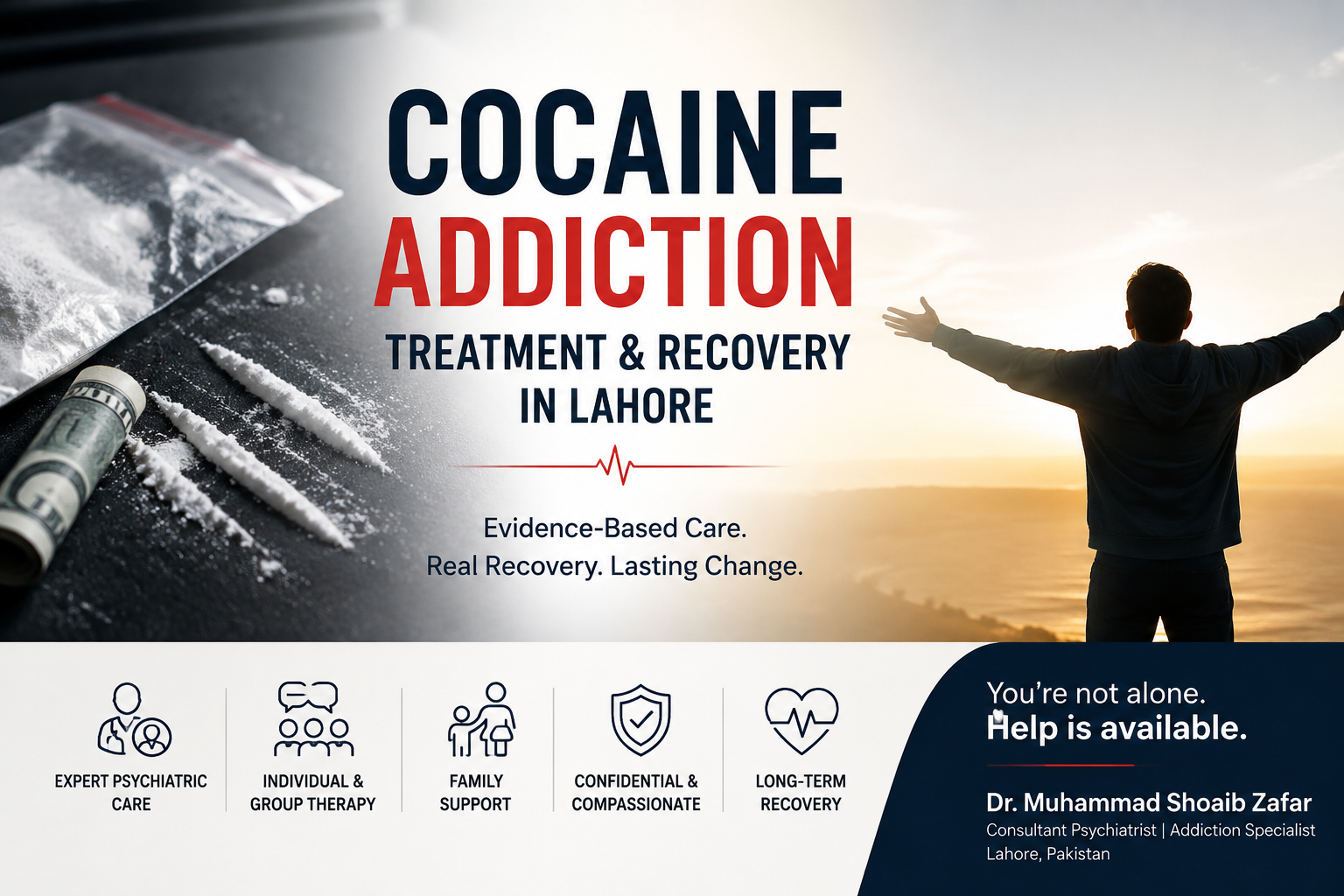
Is Cocaine Addiction Treatable? – Early Professional Help Saves Lives
Cocaine addiction is one of the fastest-progressing stimulant use disorders worldwide. Although cocaine use has traditionally been less common in Pakistan than in North America or Europe, recent international reports indicate that Asia is becoming an emerging market for cocaine trafficking and use. Cocaine seizures across Asia have increased substantially over the past decade, highlighting growing availability of the drug. (UNODC Data)
In Lahore, psychiatrists and addiction specialists are increasingly encountering patients with cocaine use disorder, either alone or combined with crystal meth (ICE), heroin, cannabis, alcohol, or prescription medications. Many individuals initially use cocaine recreationally, believing it to be a “party drug” or a performance enhancer. However, repeated use rapidly changes brain reward pathways, making it difficult to stop without professional treatment.
The encouraging news is that cocaine addiction is a medical condition—not a moral failure—and recovery is possible with evidence-based treatment.
⸻
What Is Cocaine?
Cocaine is a powerful stimulant derived from coca leaves. It stimulates the brain by dramatically increasing dopamine levels, producing intense but short-lived feelings of pleasure, confidence, increased energy, and alertness.
Street names include:
* Coke * Snow * Blow * White Powder * Crack (a smokable form)
The pleasurable effects usually last only 15–60 minutes, leading many users to take repeated doses during the same session, increasing the risk of overdose and dependence.
⸻
How Common Is Cocaine Addiction?
According to the United Nations Office on Drugs and Crime (UNODC), cocaine use continues to rise globally. While North America and Europe remain the largest established markets, Asia is increasingly becoming both a transit route and an emerging consumer market. Recent estimates suggest cocaine use in Asia has approximately doubled over the last decade, although overall prevalence remains lower than in Western countries. (UNODC Data)
Pakistan has historically reported higher rates of opioid and cannabis use than cocaine. However, laboratory data from Pakistan demonstrate increasing demand for drug screening and rising evidence of substance use disorders, emphasizing the need for improved prevention, early identification, and access to evidence-based rehabilitation services. (PLOS)
⸻
Why Do People Become Addicted to Cocaine?
Most patients do not start using cocaine because they want to become addicted.
Common reasons include:
* Curiosity * Peer pressure * Parties and nightlife * Workplace stress * Business pressure * Academic pressure * Depression * Anxiety * Trauma * Relationship problems * Emotional loneliness * Existing addiction to other substances
Over time, the brain becomes dependent on cocaine to produce feelings of pleasure and motivation. This neurobiological change explains why quitting through willpower alone is often unsuccessful.
⸻
Signs and Symptoms of Cocaine Addiction
Early symptoms include:
* Increased confidence * Excessive talking * Hyperactivity * Reduced need for sleep * Increased energy * Dilated pupils * Poor appetite
As addiction progresses, patients may develop:
* Irritability * Mood swings * Aggression * Anxiety * Panic attacks * Depression * Suspiciousness * Financial difficulties * Social isolation * Loss of interest in family * Reduced work performance * Secretive behaviour
Some individuals develop cocaine-induced psychosis, experiencing hallucinations or paranoid beliefs that others are watching or trying to harm them. This requires urgent psychiatric assessment.
⸻
Medical Risks of Cocaine Use
Cocaine affects almost every organ in the body.
Potential complications include:
* Heart attack * Stroke * Dangerous heart rhythm abnormalities * High blood pressure * Seizures * Kidney injury * Nasal damage (when snorted) * Severe weight loss * Anxiety disorders * Depression * Suicidal thoughts * Psychosis * Memory impairment
Even young and otherwise healthy individuals can experience life-threatening complications after cocaine use.
⸻
When Is Inpatient Treatment Necessary?
Many patients ask whether they can recover at home.
Outpatient treatment may be suitable for carefully selected individuals with mild illness and strong family support. However, inpatient rehabilitation is often the safest and most effective option when addiction is moderate to severe.
Admission should be strongly considered if the patient has:
* Daily or frequent cocaine use * Multiple failed attempts to quit * Cocaine use with heroin, ICE, alcohol, or benzodiazepines * Severe cravings * Aggressive behaviour * Depression or suicidal thoughts * Psychosis * Medical complications * Poor family supervision * High relapse risk
An inpatient setting provides 24-hour monitoring, structured therapy, medication management, and protection from easy access to drugs during the critical early phase of recovery.
⸻
Evidence-Based Cocaine Addiction Treatment in Lahore
Effective treatment begins with a comprehensive psychiatric assessment.
At the start of treatment, clinicians evaluate:
* Severity of cocaine dependence * Co-existing psychiatric disorders * Physical health * Family dynamics * Previous treatment attempts * Risk of relapse * Social and occupational functioning
Because cocaine addiction frequently coexists with depression, anxiety, ADHD, bipolar disorder, or trauma-related conditions, treating these underlying disorders is essential for long-term recovery.
Treatment usually combines:
1. Medical Stabilization
Patients are assessed for withdrawal symptoms, sleep disturbance, nutritional deficiencies, and medical complications.
Although there is currently no single medication approved specifically to “cure” cocaine addiction, medications may be prescribed to manage associated symptoms such as insomnia, anxiety, depression, irritability, or other co-occurring psychiatric conditions.
2. Psychological Therapies
Evidence-based psychotherapies include:
* Cognitive Behaviour Therapy (CBT) * Motivational Enhancement Therapy * Relapse Prevention Therapy * Family Therapy * Contingency Management where appropriate * Psychoeducation
These approaches help patients identify triggers, develop healthier coping strategies, and reduce relapse risk.
3. Family Involvement
Family members often experience emotional exhaustion, guilt, anger, or hopelessness.
Family education improves communication, reduces enabling behaviours, and strengthens recovery support.
4. Relapse Prevention
Recovery continues long after discharge.
Patients benefit from:
* Regular psychiatric follow-up * Psychological therapy * Lifestyle modification * Sleep regulation * Stress management * Physical exercise * Family supervision * Support groups when appropriate
⸻
What Happens During Inpatient Rehabilitation?
A structured rehabilitation programme typically includes:
* Comprehensive psychiatric evaluation * Medical monitoring * Individual psychotherapy * Group therapy * Family counselling * Behavioural interventions * Relapse prevention planning * Occupational and recreational activities * Nutritional rehabilitation * Discharge planning with aftercare
A therapeutic, respectful, and confidential environment allows patients to focus fully on recovery while remaining under professional supervision.
⸻
Can Cocaine Addiction Be Cured?
Recovery is possible, but addiction should be viewed as a chronic medical condition that requires ongoing management, much like diabetes or hypertension.
Patients who remain engaged in treatment, attend follow-up appointments, involve their families, and address underlying psychiatric conditions generally achieve significantly better long-term outcomes than those who stop treatment prematurely. International organizations including WHO and UNODC recommend comprehensive, evidence-based treatment systems that integrate medical care, psychological therapies, family support, and long-term follow-up. (World Health Organization)
⸻
Why Early Treatment Matters
Delaying treatment increases the likelihood of:
* Financial losses * Relationship breakdown * Employment problems * Criminal involvement * Serious medical complications * Overdose * Suicide risk * Long-term psychiatric illness
Seeking help early improves the chances of sustained recovery and minimizes long-term harm.
⸻
Cocaine Addiction Treatment in Lahore
If you or someone you love is struggling with cocaine addiction, professional assessment by an addiction psychiatrist is an important first step.
Evidence-based inpatient treatment can provide:
* Confidential care * Comprehensive psychiatric assessment * Medically supervised rehabilitation * Individualized treatment planning * Family involvement * Relapse prevention strategies * Long-term recovery planning
Every patient’s journey is unique, and treatment should be tailored to the individual’s medical, psychological, and social needs.
⸻ Final Message
Cocaine addiction affects individuals, families, and communities—but it is treatable. With timely psychiatric assessment, evidence-based inpatient rehabilitation, family involvement, and structured follow-up, many patients regain their health, rebuild relationships, and return to productive lives.
If you are concerned about cocaine use in yourself or a loved one, seeking professional help early can make a life-changing difference.
Related articles
Opioid Dependence Treatment in Lahore | OAMT & Buprenorphine at Mayo Hospital
Research and evidence