Written by
Dr.Muhammad Shoaib Zafar
- Published:
6 min read
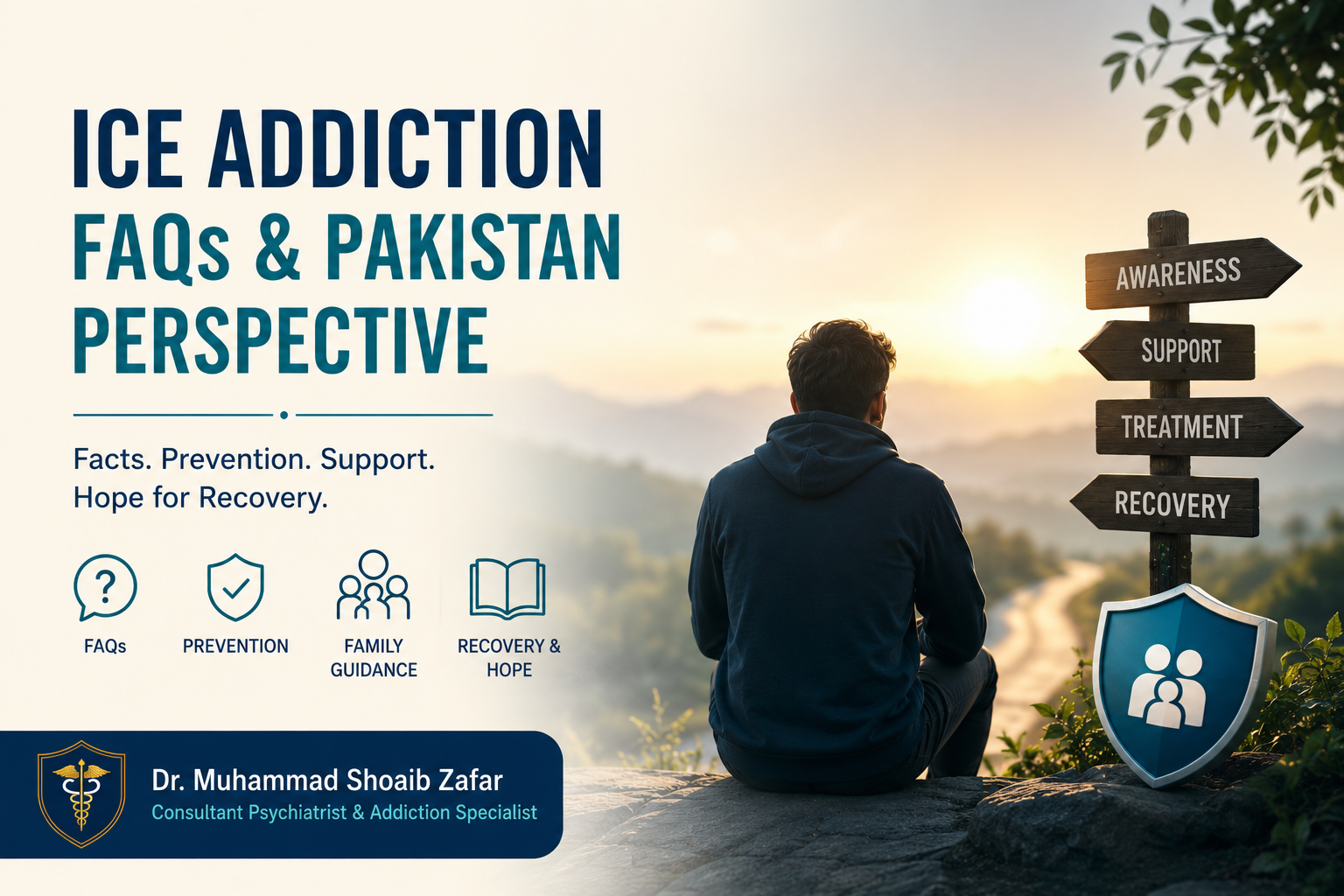
Ice (Crystal Meth) Addiction in Pakistan: Frequently Asked Questions, Prevention, Recovery, and Hope
Ice (crystal methamphetamine) addiction has become an increasing concern in Pakistan, particularly in urban areas where stimulant use is being reported more frequently by healthcare professionals, addiction treatment centres, and law enforcement agencies. Although reliable national prevalence data remain limited because many people do not seek treatment, the growing number of clinical presentations suggests that methamphetamine use is becoming a significant public health challenge.
Stigma, misinformation, and fear often prevent individuals and families from seeking timely help. As a result, many patients present only after serious physical, psychological, financial, or legal complications have developed. Raising awareness and providing evidence-based information are essential steps toward prevention and early intervention.
⸻
Ice Addiction in Pakistan
Several factors may contribute to the increasing misuse of Ice in Pakistan:
* Greater regional availability of methamphetamine. * Curiosity among adolescents and young adults. * Peer influence and social gatherings. * High academic or occupational stress. * Misconceptions that Ice improves concentration or work performance. * Untreated depression, anxiety, trauma, or other mental health conditions. * Limited awareness of the severe long-term consequences.
Because addiction carries considerable stigma, many people continue using the drug in secret until the addiction becomes severe. Encouraging confidential assessment and evidence-based treatment can improve recovery outcomes and reduce long-term harm.
⸻
Common Myths About Ice Addiction
Myth 1: “Ice is safer than heroin.”
Fact: Ice is highly addictive and can cause psychosis, heart attack, stroke, violent behaviour, severe depression, and long-term brain changes.
⸻
Myth 2: “I can stop whenever I want.”
Fact: Methamphetamine changes the brain’s reward pathways, making it increasingly difficult to stop without professional support.
⸻
Myth 3: “Only unemployed or poor people become addicted.”
Fact: Ice addiction affects people from every socioeconomic background, including students, healthcare professionals, business owners, executives, and skilled workers.
⸻
Myth 4: “Detox alone cures addiction.”
Fact: Detoxification is only the first stage of recovery. Long-term success usually requires psychotherapy, rehabilitation, relapse prevention, and ongoing follow-up.
⸻
Myth 5: “Recovery is impossible.”
Fact: Many individuals achieve long-term recovery through comprehensive, evidence-based treatment and sustained support.
⸻
Frequently Asked Questions
Is Ice more addictive than cocaine?
Yes. Methamphetamine generally produces a longer-lasting stimulant effect and more prolonged changes in dopamine pathways, making dependence and relapse particularly challenging.
⸻
Can the brain recover after Ice addiction?
The brain has remarkable capacity to heal. Many cognitive and emotional functions improve over months of sustained abstinence, although recovery varies depending on the duration and severity of drug use.
⸻
Can Ice addiction cause permanent mental illness?
Repeated methamphetamine use increases the risk of depression, anxiety, memory problems, and psychosis. Many symptoms improve with treatment, but prolonged heavy use may leave lasting effects in some individuals.
⸻
Is inpatient rehabilitation necessary?
Not everyone requires residential treatment. However, inpatient rehabilitation is often recommended for individuals with severe dependence, repeated relapses, methamphetamine-induced psychosis, co-occurring mental health disorders, or unsafe home environments.
⸻
How long does recovery take?
Recovery is an ongoing process rather than a single event.
* First weeks: Withdrawal symptoms and intense cravings are most prominent. * First 1–3 months: Mood, sleep, and concentration gradually improve. * Three to twelve months: Brain function and emotional regulation continue to recover. * Beyond one year: Many individuals regain stable relationships, employment, and quality of life with continued support.
⸻
Preventing Ice Addiction
Prevention begins long before addiction develops.
Protective strategies include:
* Open communication within families. * Educating young people about the risks of stimulant drugs. * Early treatment for depression, anxiety, ADHD, and trauma. * Healthy stress management through exercise, sleep, and social support. * Encouraging positive peer relationships. * Avoiding recreational drug use. * Seeking professional help when early warning signs appear.
Communities, schools, healthcare providers, and families all play an important role in prevention.
⸻
Guidance for Families
Families often experience fear, frustration, and helplessness when someone they love develops addiction. Supportive involvement can significantly improve treatment engagement and recovery.
What Families Should Do
* Learn about addiction as a medical condition. * Encourage assessment by a qualified psychiatrist or addiction specialist. * Communicate calmly and respectfully. * Set healthy boundaries. * Participate in family therapy when appropriate. * Support attendance at treatment and follow-up appointments. * Celebrate progress and recovery milestones.
What Families Should Avoid
* Arguing while the person is intoxicated. * Providing money that may be used to purchase drugs. * Covering up harmful behaviours. * Using shame or humiliation as motivation. * Assuming recovery depends only on willpower.
Compassion combined with clear boundaries is often more effective than confrontation.
⸻
Hope for Recovery
One of the most damaging misconceptions surrounding methamphetamine addiction is that recovery is impossible.
Clinical experience and scientific evidence demonstrate the opposite.
With comprehensive treatment, many people:
* Stop using methamphetamine. * Restore physical health. * Improve memory and concentration. * Rebuild family relationships. * Return to work or education. * Regain confidence and purpose. * Maintain long-term recovery.
Recovery is not about becoming perfect—it is about making consistent progress toward a healthier and more meaningful life.
⸻
Conclusion
Ice (crystal methamphetamine) addiction is a serious but treatable medical condition. It affects the brain, behaviour, emotions, and physical health, but early intervention can prevent many devastating complications. Understanding the warning signs, challenging myths, supporting families, and seeking evidence-based treatment are essential steps toward recovery.
No one should face addiction alone. With timely psychiatric assessment, comprehensive rehabilitation, family involvement, and ongoing relapse-prevention support, individuals can overcome methamphetamine addiction and rebuild fulfilling lives.
Recovery begins with a single decision to ask for help—and every day without Ice is a step toward a healthier future.
⸻
About the Author
Dr. Muhammad Shoaib Zafar is a Consultant Psychiatrist, Addiction Specialist, Child & Adolescent Psychiatrist, and Assistant Professor of Psychiatry at King Edward Medical University, Lahore. He has extensive experience in the assessment and treatment of substance use disorders, dual diagnosis, medically supervised detoxification, inpatient rehabilitation, relapse prevention, and family-centred addiction care. His clinical approach combines evidence-based psychiatry with compassionate, confidential, and personalised treatment to support lasting recovery.
⸻
Scientific References
This article is informed by internationally recognised evidence and clinical guidance, including:
* Diagnostic and Statistical Manual of Mental Disorders (DSM-5-TR) – American Psychiatric Association. * National Institute on Drug Abuse (NIDA) – Methamphetamine Research Reports. * World Health Organization (WHO) – Substance Use Disorder Guidelines. * United Nations Office on Drugs and Crime (UNODC) – World Drug Report. * National Institute for Health and Care Excellence (NICE) – Drug Misuse Guidelines. * American Society of Addiction Medicine (ASAM) – Clinical Practice Guidelines. * Substance Abuse and Mental Health Services Administration (SAMHSA) – Treatment Improvement Protocols.
Related articles
Opioid Dependence Treatment in Lahore | OAMT & Buprenorphine at Mayo Hospital
Research and evidence