Written by
Dr.Muhammad Shoaib Zafar
- Published:
21 min read
Pakistan’s Silent Prescription Drug Addiction Epidemic
Introduction
“It’s only a sleeping pill.”
“The doctor prescribed it once, so it must be safe.”
“It’s just a painkiller. I’m not taking heroin.”
These are some of the most common statements heard by psychiatrists and addiction specialists across Pakistan. Unfortunately, they also represent one of the biggest misconceptions surrounding addiction today.
When most people think about drug addiction, they imagine heroin, crystal meth (Ice), cocaine, cannabis, or alcohol. Very few realize that some of the fastest-growing forms of addiction begin not on the streets but inside hospitals, clinics, pharmacies, and even family medicine cabinets.
Medicines prescribed to relieve pain, reduce anxiety, improve sleep, control seizures, or suppress cough can become highly addictive when used without proper medical supervision. Over time, what starts as treatment for a legitimate medical problem may gradually evolve into dependence, tolerance, withdrawal, and eventually addiction.
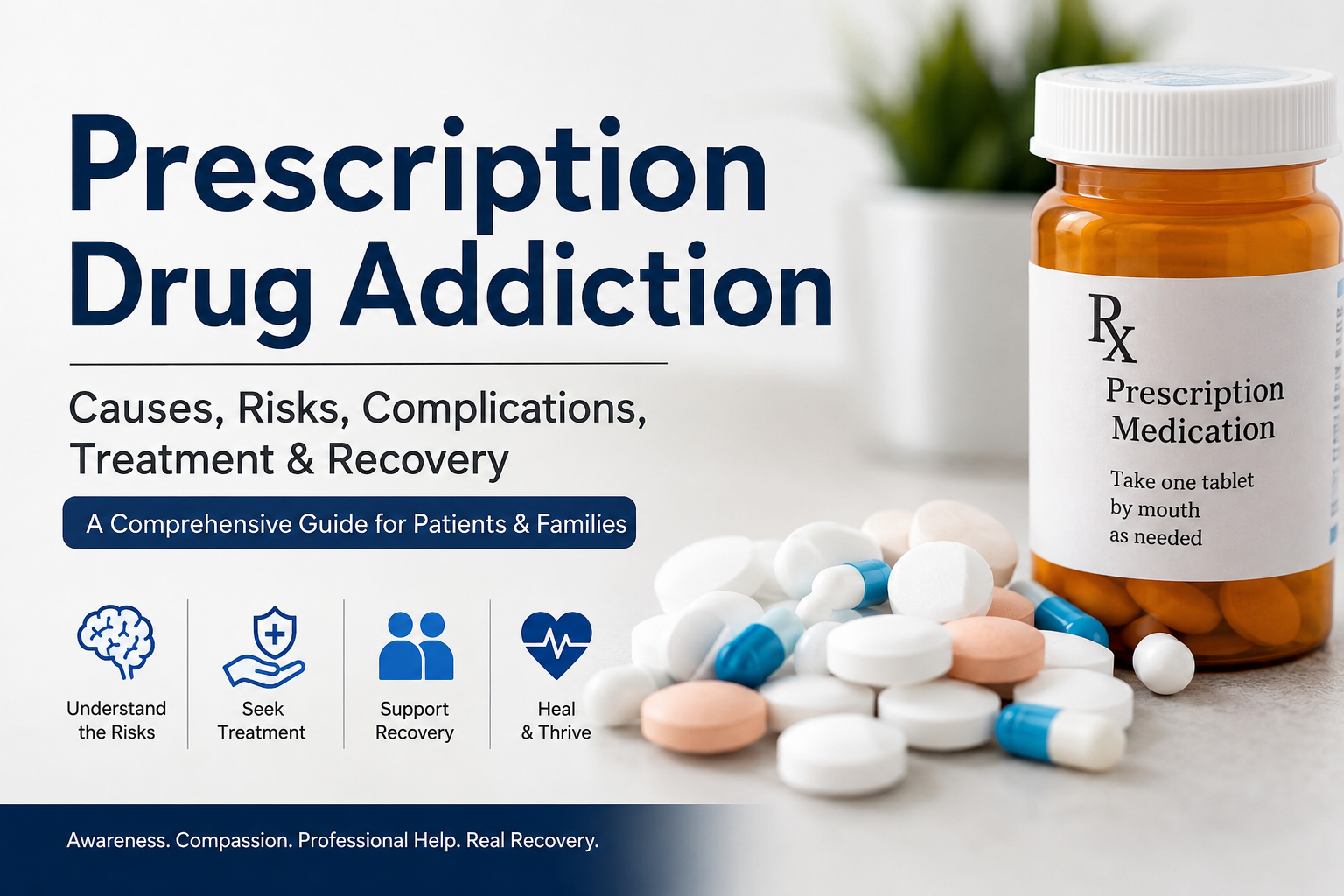
Across Pakistan, addiction specialists are witnessing an increasing number of individuals who have never used traditional illicit drugs but have become dependent on prescription medicines such as benzodiazepines, tramadol, pregabalin (Lyrica), nalbuphine (Nelbin), codeine-containing cough syrups, antihistamines, and several other pharmaceutical drugs. This emerging pattern is particularly concerning because many people continue to believe that medicines obtained from a pharmacy are inherently safe, regardless of how they are used.
Prescription drug addiction is no longer an isolated clinical problem. It has become an important public health challenge affecting adolescents, university students, professionals, healthcare workers, older adults, and even patients who initially received these medicines for genuine medical conditions.
The encouraging news is that prescription drug addiction is treatable. Early recognition, evidence-based treatment, family support, and appropriate rehabilitation can help individuals regain control of their lives and prevent serious medical complications.
In this comprehensive guide, we will explore why pharmaceutical drug abuse is increasing in Pakistan, which medicines are most commonly misused, the dangers of injecting drugs such as nalbuphine (Nelbin), available treatment options, and practical steps families can take to protect their loved ones.
⸻
The Hidden Prescription Drug Addiction Epidemic
Prescription drug addiction is often described as a “hidden epidemic” because it develops quietly and frequently goes unnoticed until serious physical, psychological, or social consequences appear.
Unlike heroin or crystal meth, prescription medicines usually carry an aura of safety. They are manufactured by pharmaceutical companies, dispensed through pharmacies, and often prescribed by healthcare professionals. This creates a false sense of security, leading many individuals to underestimate their addictive potential.
In many cases, addiction does not begin with the intention of getting “high.” Instead, it starts with a legitimate medical problem.
A patient undergoes surgery and receives opioid pain medication for a few days. Another person develops severe anxiety during a stressful period and is prescribed a benzodiazepine to help them sleep. Someone suffering from chronic back pain begins taking tramadol, while another individual with nerve pain is started on pregabalin.
Initially, these medicines provide relief. However, with continued unsupervised use, the body gradually adapts to their effects. The original dose becomes less effective, prompting the person to increase the amount taken. Over time, stopping the medication causes uncomfortable withdrawal symptoms, and the individual continues using it simply to feel “normal.” At this stage, dependence has developed, and without intervention, addiction may soon follow.
Because these medicines are often obtained legally, patients and families may fail to recognize the warning signs until financial problems, relationship difficulties, declining physical health, or mental health complications become obvious.
⸻
Prescription Drug Abuse: A Growing Global Concern
Prescription medicine misuse is not unique to Pakistan. It has become a worldwide public health challenge.
According to the World Health Organization (WHO) and the United Nations Office on Drugs and Crime (UNODC), millions of people worldwide misuse prescription opioids, sedatives, sleeping pills, and other psychoactive medications every year. The misuse of pharmaceutical opioids has contributed significantly to overdose deaths in several countries, particularly where opioid prescribing increased rapidly over the past two decades.
Similarly, non-medical use of benzodiazepines has become increasingly common across Europe, North America, the Middle East, and South Asia. These medicines are often taken without prescriptions, combined with alcohol or opioids, or used recreationally to enhance the effects of other drugs.
Another emerging concern is the growing misuse of pregabalin and gabapentin. Originally introduced as relatively safe treatments for epilepsy, neuropathic pain, and anxiety disorders, these medicines are now increasingly recognized for their abuse potential, especially when combined with opioids or sedative medications.
International health authorities continue to emphasize that prescription drug addiction should be regarded as a medical disorder requiring evidence-based treatment rather than punishment or stigma.
⸻
The Situation in Pakistan
Pakistan faces unique challenges that make prescription drug misuse particularly difficult to control.
Although exact national figures remain limited, clinical experience, regional studies, and reports from addiction treatment centers indicate that the misuse of prescription medicines is steadily increasing.
Several factors contribute to this growing problem:
* Easy availability of many medicines through pharmacies. * Self-medication without medical supervision. * Repeated use of old prescriptions. * Inadequate public awareness regarding addiction. * Limited access to mental health services. * Social stigma associated with psychiatric treatment. * Weak enforcement of prescription regulations in some settings.
Among people who inject drugs, unsafe injection practices have also contributed to the spread of HIV, hepatitis B, and hepatitis C. Public health initiatives have improved awareness in recent years, but injectable prescription opioids and other medicines remain a significant concern in many communities.
Healthcare professionals are also observing an increasing number of patients who misuse combinations of medicines rather than a single drug. For example, benzodiazepines may be combined with tramadol, pregabalin, cough syrups, or antihistamines to enhance sedative effects. Such combinations substantially increase the risk of respiratory depression, overdose, and death.
⸻
Why Prescription Drug Abuse Is Increasing in Pakistan
Prescription medicine addiction is rarely caused by a single factor. Instead, it develops through the interaction of medical, psychological, social, and regulatory issues.
1. Easy Availability of Medicines
One of the most important contributors is the widespread availability of potentially addictive medicines.
Although many medications legally require a prescription, patients are sometimes able to obtain repeat supplies without appropriate medical review. Some individuals also purchase medicines from multiple pharmacies or continue using old prescriptions long after the original medical problem has resolved.
This easy access increases the likelihood of prolonged use and dependence.
2. Self-Medication Culture
Self-medication has become deeply rooted in many communities.
Instead of consulting qualified healthcare professionals, individuals may rely on advice from friends, relatives, social media, or pharmacy workers. Medicines are frequently shared among family members, creating the false impression that they are harmless because someone else has used them before.
Unfortunately, medicines that are safe under medical supervision can become dangerous when taken in higher doses, for longer periods, or for conditions they were never intended to treat.
3. Untreated Mental Health Disorders
Anxiety, depression, insomnia, trauma, and chronic stress are increasingly common but often remain undiagnosed or untreated.
Because of stigma surrounding mental health, some individuals avoid seeing psychiatrists or psychologists and instead attempt to manage their symptoms with sleeping tablets, anti-anxiety medications, or painkillers. While these medicines may provide temporary relief, they rarely address the underlying psychological condition and may ultimately create a second problem—addiction.
4. Chronic Pain and Physical Illness
Patients living with chronic back pain, arthritis, nerve pain, or other long-term medical conditions may use opioid painkillers or pregabalin for extended periods.
Without regular medical monitoring, doses may gradually increase as tolerance develops, placing patients at higher risk of dependence.
5. Social Misconceptions
Several myths continue to fuel prescription drug misuse in Pakistan:
* “If a doctor prescribed it once, it must always be safe.” * “Medicines from a pharmacy cannot cause addiction.” * “Sleeping pills are safer than street drugs.” * “An injection works faster, so it must be better.” * “Stopping the medicine suddenly is harmless.”
These misconceptions delay help-seeking and often allow addiction to progress unnoticed.
6. Peer Influence and Social Pressure
Adolescents and young adults may experiment with medicines because they believe prescription drugs are safer than illicit substances. Some students misuse stimulants or painkillers during examinations, while others use sedatives to cope with stress or sleep deprivation.
Peer influence, curiosity, and misinformation shared through social media can further encourage experimentation.
⸻
Understanding the Difference Between Medical Use, Dependence, and Addiction
Not everyone who takes a prescription medicine becomes addicted.
Understanding the difference between normal medical treatment and addiction is essential.
Appropriate Medical Use
Medicines are taken exactly as prescribed, under regular medical supervision, for a specific condition and duration. The benefits outweigh the risks, and the patient remains in control of their use.
Physical Dependence
With prolonged use, the body adapts to the medicine. If it is stopped suddenly, withdrawal symptoms may occur. Physical dependence can develop even when medicines are used appropriately and does not necessarily mean a person is addicted.
Addiction
Addiction is characterized by a loss of control over medicine use despite harmful consequences. Individuals continue taking the medicine because of cravings, compulsive behaviour, or fear of withdrawal, even when it affects their health, work, finances, or relationships.
Recognizing this distinction is important because addiction is a medical illness—not a sign of weak willpower or poor character.
⸻
Who Is Most at Risk?
Prescription drug addiction can affect anyone, but certain groups are at higher risk:
* Individuals with anxiety or depression * Patients with chronic pain * People suffering from insomnia * Those with a personal or family history of addiction * Adolescents and university students * Healthcare professionals with easy access to medicines * Older adults taking multiple medications * Individuals experiencing trauma or chronic stress * People recovering from surgery or major injuries
Identifying these risk factors allows healthcare professionals and families to intervene before dependence progresses to addiction.
⸻ The Most Commonly Abused Prescription Medicines in Pakistan
When Medicines Become More Dangerous Than Illegal Drugs
When people think about addiction, they often imagine heroin, crystal meth (Ice), or cocaine. However, addiction specialists across Pakistan are increasingly treating patients whose addiction began with medicines prescribed for pain, anxiety, insomnia, or surgery.
Unlike illicit drugs, prescription medicines are often viewed as safe because they are manufactured by pharmaceutical companies and prescribed by doctors. While these medicines are highly effective when used correctly, they can become dangerous when taken without medical supervision, in higher doses, or for longer than recommended.
Many individuals do not start using these medicines to get “high.” They begin taking them to relieve pain, reduce stress, improve sleep, or cope with emotional difficulties. Over time, however, the brain adapts to these drugs, leading to tolerance, dependence, and eventually addiction.
In Pakistan, four groups of medicines account for a large proportion of pharmaceutical drug misuse seen in addiction treatment centres: benzodiazepines, tramadol, pregabalin (Lyrica), and nalbuphine (Nelbin). Understanding these medicines can help patients and families recognize addiction early and seek timely treatment.
⸻
Benzodiazepines (Sleeping Pills and Anti-Anxiety Medicines)
What Are Benzodiazepines?
Benzodiazepines are medicines commonly prescribed for anxiety, panic attacks, insomnia, muscle spasms, and seizures. Frequently used examples in Pakistan include:
* Alprazolam * Clonazepam * Diazepam * Bromazepam * Lorazepam
These medicines can provide rapid relief from anxiety and improve sleep, making them valuable for short-term treatment. However, prolonged use without medical supervision significantly increases the risk of dependence.
Why Do People Become Addicted?
Initially, benzodiazepines produce relaxation, calmness, and improved sleep. Over time, the brain becomes accustomed to their effects, meaning the same dose no longer provides the desired benefit. This phenomenon, known as tolerance, often leads people to increase the dose on their own.
Eventually, many individuals continue taking these medicines not because they feel better, but because stopping them causes withdrawal symptoms.
Warning Signs of Benzodiazepine Addiction
Common signs include:
* Increasing the dose without consulting a doctor * Needing tablets every night to sleep * Anxiety or panic when a dose is missed * Visiting multiple doctors or pharmacies for prescriptions * Difficulty concentrating * Memory problems * Daytime drowsiness * Poor work or academic performance
Health Risks
Long-term misuse may cause:
* Memory impairment * Reduced concentration * Increased risk of falls, especially in older adults * Road traffic accidents due to impaired reaction time * Depression * Emotional blunting * Dependence * Accidental overdose, particularly when combined with opioids or alcohol
Withdrawal Symptoms
Stopping benzodiazepines suddenly can be dangerous. Withdrawal symptoms may include:
* Severe anxiety * Tremors * Sweating * Insomnia * Panic attacks * Irritability * Seizures * Delirium in severe cases
For this reason, benzodiazepines should never be discontinued abruptly without medical supervision.
⸻
Tramadol Addiction
What Is Tramadol?
Tramadol is an opioid painkiller commonly prescribed for moderate to severe pain. It is often considered less potent than morphine, but this does not mean it is free from addiction risk.
Over recent years, tramadol misuse has increased significantly across many countries, including Pakistan.
Why Is Tramadol Misused?
Some people misuse tramadol because it may produce:
* Relaxation * Mild euphoria * Increased confidence * Temporary improvement in mood * Reduced perception of pain
Some individuals also mistakenly believe tramadol improves physical stamina or sexual performance, leading to non-medical use.
Health Risks
Repeated tramadol misuse may result in:
* Physical dependence * Severe cravings * Constipation * Sleep disturbances * Depression * Anxiety * Hormonal disturbances * Sexual dysfunction
Unlike many other opioids, tramadol also increases the risk of seizures, especially when taken in high doses or combined with antidepressants or other medications.
Tramadol Withdrawal
Withdrawal symptoms often resemble those of other opioids and may include:
* Body aches * Runny nose * Sweating * Diarrhoea * Restlessness * Insomnia * Anxiety * Intense cravings
Medical detoxification significantly improves safety and comfort during withdrawal.
⸻
Pregabalin (Lyrica) Addiction
What Is Pregabalin?
Pregabalin is commonly prescribed for:
* Nerve pain * Epilepsy * Fibromyalgia * Generalized anxiety disorder
Although effective for these conditions, pregabalin misuse has become increasingly common in many countries, including Pakistan.
Why Is It Misused?
At high doses, pregabalin may produce:
* Relaxation * Dizziness * Euphoria * Feelings of detachment * Sedation
Because these effects occur relatively quickly, some people begin taking larger doses than prescribed or combine pregabalin with opioids or benzodiazepines.
Why Is Combination Use Dangerous?
Combining pregabalin with opioids, sleeping pills, or alcohol can significantly increase the risk of:
* Respiratory depression * Loss of consciousness * Accidental overdose * Death
Long-Term Effects
Chronic misuse may lead to:
* Dependence * Memory problems * Poor concentration * Emotional instability * Weight gain * Depression * Withdrawal symptoms upon discontinuation
Withdrawal Symptoms
People who suddenly stop pregabalin after prolonged use may experience:
* Anxiety * Insomnia * Sweating * Nausea * Irritability * Tremors * Strong cravings
Gradual tapering under medical supervision is usually recommended.
⸻
Nalbuphine (Nelbin): Pakistan’s Growing Injection Addiction Crisis
What Is Nalbuphine?
Nalbuphine, commonly available as Nelbin, is an injectable opioid pain medicine used to treat moderate to severe pain.
Unfortunately, addiction specialists across Pakistan have observed increasing misuse of this medicine, particularly through intravenous or intramuscular injection.
Why Does Nalbuphine Become Addictive?
Injection produces a rapid effect, providing temporary relief from pain or emotional distress. Repeated use quickly leads to tolerance, requiring larger or more frequent doses to achieve the same effect.
Over time, many individuals begin injecting nalbuphine several times each day simply to avoid withdrawal symptoms.
Why Is Injection Drug Use So Dangerous?
Injecting medicines carries risks far beyond addiction.
Repeated injections may cause:
* Collapsed veins * Painful swelling * Skin ulcers * Cellulitis * Abscess formation * Chronic vein damage
Sharing needles or using contaminated equipment dramatically increases the risk of:
* HIV infection * Hepatitis B * Hepatitis C * Bloodstream infections (septicemia) * Infective endocarditis (infection of the heart valves) * Bone infections * Permanent disability * Death
Many patients require prolonged hospitalization, intravenous antibiotics, surgery, or even heart valve replacement because of these preventable complications.
Nalbuphine Withdrawal
Withdrawal symptoms resemble those of other opioids and commonly include:
* Muscle aches * Sweating * Runny nose * Diarrhoea * Abdominal cramps * Goosebumps * Anxiety * Restlessness * Intense drug cravings
Although opioid withdrawal is rarely life-threatening, it can be extremely distressing and often leads to relapse if not managed appropriately.
⸻
Why Professional Treatment Is Essential
Many people attempt to stop these medicines on their own but return to using them because of severe withdrawal symptoms, untreated mental health conditions, or persistent cravings.
Successful treatment usually begins with a comprehensive medical and psychiatric assessment to identify the underlying reasons for drug use. Evidence-based care may include medically supervised detoxification, treatment of withdrawal symptoms, psychiatric evaluation, medications where appropriate, cognitive behavioural therapy (CBT), motivational interviewing, family counselling, and relapse prevention planning.
Patients with severe dependence, repeated relapse, polysubstance use, or injection drug abuse often benefit from structured inpatient rehabilitation, where they receive round-the-clock medical supervision, counselling, and support in a safe environment.
⸻
Key Messages
Prescription medicines can save lives when used correctly, but they can also cause serious harm when misused. Benzodiazepines, tramadol, pregabalin, and nalbuphine are among the most commonly abused pharmaceutical drugs in Pakistan because of their easy availability and widespread misconceptions regarding their safety.
The good news is that prescription drug addiction is treatable. Early recognition, evidence-based treatment, family support, and timely rehabilitation can help individuals achieve long-term recovery and prevent life-threatening complications.
Other Commonly Misused Prescription Medicines, Warning Signs, and Withdrawal Symptoms
Beyond Painkillers and Sleeping Pills: The Hidden Medicines People Misuse
While benzodiazepines, tramadol, pregabalin (Lyrica), and nalbuphine (Nelbin) account for many cases of prescription drug addiction in Pakistan, they are not the only medicines being misused. Several other prescription and over-the-counter medicines are increasingly abused because they are inexpensive, easily available, or mistakenly believed to be “safe.”
Many individuals combine two or more medicines to intensify their effects, creating a dangerous pattern known as polysubstance pharmaceutical abuse. This significantly increases the risk of overdose, respiratory depression, severe mental health problems, and death.
Understanding these medicines and recognizing early warning signs can help prevent addiction before it becomes life-threatening.
⸻
Cough Syrup Addiction
Why Are Cough Syrups Misused?
Certain cough syrups contain codeine or dextromethorphan (DXM). When taken in larger-than-recommended amounts, these medicines can produce feelings of relaxation, drowsiness, euphoria, or hallucinations.
Among adolescents and young adults, cough syrups are sometimes viewed as harmless because they are sold as medicines rather than illegal drugs. This misconception has contributed to increasing misuse worldwide.
Health Risks
Long-term misuse can lead to:
* Dependence and addiction * Impaired judgment * Poor concentration * Constipation * Liver damage (especially with combination products containing paracetamol) * Respiratory depression * Overdose * Accidents and injuries
When mixed with alcohol, benzodiazepines, or opioids, the risk of fatal overdose rises dramatically.
⸻
Antihistamine Addiction
Commonly Misused Medicines
Some antihistamines frequently misused include:
* Promethazine * Diphenhydramine * Chlorpheniramine
These medicines are intended to treat allergies, nausea, and motion sickness. However, at high doses they may produce sedation, dizziness, or hallucinations.
Why Are They Dangerous?
Many people combine antihistamines with opioids or sleeping pills to enhance sedation. This combination can suppress breathing and increase the risk of unconsciousness and overdose.
Long-term misuse may cause:
* Memory problems * Confusion * Hallucinations * Delirium * Poor concentration * Falls, particularly in older adults
⸻
Gabapentin Misuse
Gabapentin is commonly prescribed for nerve pain and epilepsy.
Although generally considered safe when taken as directed, misuse has increased in recent years, particularly among individuals already dependent on opioids or pregabalin.
High doses may produce:
* Relaxation * Dizziness * Euphoria * Sedation
When combined with opioids or benzodiazepines, gabapentin can significantly increase the risk of respiratory depression and overdose.
⸻
Quetiapine Misuse
Quetiapine is an atypical antipsychotic used to treat schizophrenia, bipolar disorder, and depression.
Some individuals misuse it because of its strong sedative effects, especially to help with sleep or to reduce anxiety.
Unsupervised use may result in:
* Excessive drowsiness * Weight gain * Diabetes * Low blood pressure * Cardiac rhythm disturbances * Reduced alertness * Drug interactions
Quetiapine should only be taken under the supervision of a qualified psychiatrist.
⸻
Trihexyphenidyl Misuse
Trihexyphenidyl is prescribed to manage Parkinson’s disease and medication-induced movement disorders.
At high doses, it may produce:
* Euphoria * Confusion * Hallucinations * Agitation * Delirium
Although less common than opioid or benzodiazepine addiction, misuse can cause significant psychiatric complications and should not be underestimated.
⸻
Tapentadol and Other Prescription Opioids
Tapentadol is a newer opioid pain medication used for moderate to severe pain.
Like tramadol and other opioids, prolonged misuse can result in:
* Tolerance * Dependence * Withdrawal * Respiratory depression * Accidental overdose
Patients should never increase the dose or duration of opioid treatment without medical advice.
⸻
The Danger of Mixing Medicines
One of the most concerning trends in Pakistan is the simultaneous misuse of multiple medicines.
Common combinations include:
* Tramadol + Pregabalin * Pregabalin + Benzodiazepines * Sleeping pills + Alcohol * Nalbuphine + Promethazine * Opioids + Antihistamines * Cough syrups + Sedatives
These combinations can slow breathing, impair consciousness, and greatly increase the risk of fatal overdose.
⸻
How Can Families Recognize Prescription Drug Addiction?
Addiction often develops gradually, making early recognition difficult.
Families should be concerned if a loved one:
* Frequently asks for painkillers or sleeping tablets * Visits multiple doctors or pharmacies * Uses medicines for reasons other than prescribed * Runs out of medication early * Becomes anxious when medicines are unavailable * Appears unusually sleepy or confused * Experiences sudden mood changes * Withdraws from family or friends * Performs poorly at work or school * Has unexplained financial problems * Hides medicines or becomes secretive about their use * Shows needle marks or repeated skin infections
Recognizing these warning signs early can prevent severe addiction and medical complications.
⸻
Withdrawal Symptoms: What Happens When the Medicine Is Stopped?
Withdrawal occurs because the body has adapted to the medicine over time.
Symptoms vary depending on the drug but commonly include:
Benzodiazepines
* Severe anxiety * Insomnia * Tremors * Panic attacks * Seizures
Opioids (Tramadol, Nalbuphine, Tapentadol)
* Body aches * Sweating * Runny nose * Diarrhoea * Abdominal cramps * Goosebumps * Restlessness * Strong cravings
Pregabalin and Gabapentin
* Anxiety * Insomnia * Irritability * Tremors * Nausea * Sweating
Withdrawal should always be managed under medical supervision, especially for benzodiazepines, where sudden discontinuation can be life-threatening.
⸻
Comparison of Commonly Misused Medicines
Medicine Common Medical Use Addiction Potential Major Risks Benzodiazepines Anxiety, insomnia High Dependence, memory problems, seizures during withdrawal Tramadol Pain relief High Seizures, opioid dependence, overdose Pregabalin Nerve pain, anxiety Moderate to High Dependence, respiratory depression with opioids Nalbuphine (Nelbin) Injectable pain relief High Injection-related infections, HIV, hepatitis, overdose Codeine/DXM Cough Syrups Cough suppression Moderate Dependence, overdose, impaired judgment Antihistamines Allergy treatment Low to Moderate Confusion, hallucinations, overdose when combined Gabapentin Nerve pain, epilepsy Moderate Sedation, overdose with opioids Quetiapine Psychiatric disorders Low but increasing Metabolic complications, excessive sedation Trihexyphenidyl Parkinsonism Moderate Hallucinations, confusion Tapentadol Pain relief High Dependence, respiratory depression
⸻
Key Messages
Prescription medicines are valuable treatments when used responsibly, but they can become harmful when misused. In Pakistan, easy availability, self-medication, and poor awareness have contributed to increasing addiction to pharmaceutical drugs.
The most important lesson is simple: “Prescription” does not mean “risk-free.” Any medicine that affects the brain has the potential to cause dependence if taken without proper medical supervision.
If you or someone you know has become dependent on sleeping pills, painkillers, injectable medicines, or other prescription drugs, seeking professional help early offers the best chance of a safe recovery.
⸻
What’s Next?
In Part 2, we will explore the devastating complications of intravenous drug abuse, including HIV, hepatitis B and C, infective endocarditis, septicemia, abscesses, mental health disorders, and the evidence-based treatment approaches used in modern addiction medicine.
This completes the discussion of commonly misused pharmaceutical drugs and provides a natural transition into the next section on intravenous drug use, medical complications, and treatment.
Related articles
Opioid Dependence Treatment in Lahore | OAMT & Buprenorphine at Mayo Hospital
Research and evidence