Written by
Consultant Psychiatrist and Addiction Specialist
MBBS — University of Health Sciences (UHS); MD Psychiatry — King Edward Medical University (KEMU); MPH — Institute of Public Health (IPH); UNODC Certified Addiction Specialist; International Certification of Addiction Professionals (ICAP-P); Formal training/fellowship in Child & Adolescent Psychiatry — King Edward Medical University, Lahore
View profileApproved by
Dr. Muhammad Shoaib Zafar
Super Admin
- Published:
- Last updated:
- Approved:
Emotional Intelligence: Understanding Your Emotions and Building Healthier Relationships
Author: Dr. Muhammad Shoaib Zafar Consultant Psychiatrist and Addiction Specialist
Introduction
Have you ever reacted angrily to a small disagreement, struggled to explain your feelings, or misunderstood someone you care about? Perhaps you knew what you wanted to say but found it difficult to express yourself calmly. These experiences are common and often reflect an important aspect of psychological functioning: emotional intelligence.
Emotional intelligence is the ability to recognise, understand, and manage our own emotions while responding thoughtfully to the emotions of others. It influences how we communicate, cope with stress, resolve conflicts, maintain relationships, and make decisions.
While academic knowledge and intellectual ability are valuable, they do not automatically guarantee emotional maturity. Learning to understand our emotions can be equally important in personal relationships, professional life, parenting, and mental wellbeing.
The good news is that emotional intelligence can be developed through awareness, practice, reflection, and appropriate psychological support.
What Is Emotional Intelligence?
Emotional intelligence, often abbreviated as EQ, refers to a set of emotional and interpersonal abilities that help individuals recognise emotions, understand their causes, regulate their responses, and navigate social situations effectively.
For example, consider two people who receive criticism at work. One immediately becomes defensive, raises their voice, and blames others. The second person notices feelings of embarrassment and frustration, takes a moment to reflect, and asks for specific feedback before responding.
The difference is not necessarily intelligence or professional competence. It may partly reflect how each person recognises and responds to emotional experiences.
Emotional intelligence does not mean suppressing feelings, avoiding difficult conversations, or remaining calm in every situation. It means understanding emotions without allowing every emotional impulse to determine your behaviour.
Why Is Emotional Intelligence Important?
Emotional intelligence plays a meaningful role in everyday psychological and social functioning.
1. Better Emotional Regulation
Everyone experiences anger, sadness, anxiety, disappointment, and frustration. Emotional regulation helps us respond to these feelings without acting impulsively.
For instance, instead of sending an angry message during an argument, a person with stronger emotional regulation may pause, identify the underlying feeling, and communicate after becoming calmer.
This ability can reduce unnecessary conflict and support more considered decision-making.
2. Healthier Personal Relationships
Many relationship difficulties arise from misunderstandings, unexpressed expectations, poor listening, or reactive communication.
Emotional intelligence can help people recognise their own needs while appreciating another person’s perspective. It encourages respectful disagreement, appropriate boundaries, and constructive conflict resolution.
In healthy relationships, empathy does not require agreeing with everything another person says. It means trying to understand their experience while maintaining your own values and boundaries.
3. Improved Stress Management
Stress can affect concentration, sleep, mood, and physical wellbeing. Recognising emotional warning signs early can help people identify when they need rest, problem-solving, social support, or professional assistance.
For example, someone who notices irritability and persistent tension during a demanding week may decide to address their workload, improve their sleep routine, and seek support before the situation becomes overwhelming.
Emotional intelligence does not eliminate stress, but it can help people respond to stressful situations more constructively.
4. Greater Self-Awareness
Self-awareness means recognising what you feel, what triggers your reactions, and how your behaviour affects others.
A person who frequently becomes angry when feeling ignored may discover that the underlying emotion is hurt or insecurity. Understanding this pattern creates an opportunity to communicate more directly rather than reacting defensively.
Self-awareness also helps individuals recognise their strengths, limitations, personal values, and recurring behavioural patterns.
5. More Effective Leadership and Teamwork
In professional environments, emotional intelligence can support communication, collaboration, feedback, and conflict management.
Leaders who listen carefully, regulate their responses, and acknowledge the concerns of colleagues may be better equipped to build trust and manage difficult conversations.
Emotional intelligence is not a substitute for technical knowledge or sound judgement. It complements these abilities by improving how people work with others.
The Five Key Components of Emotional Intelligence
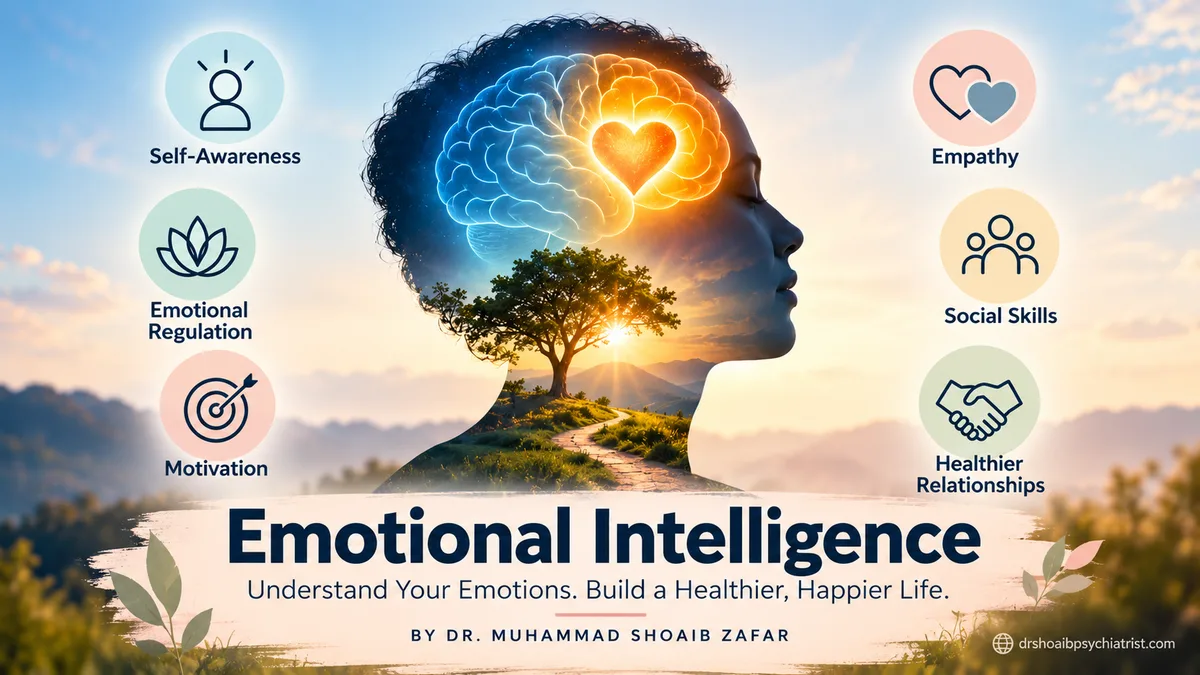
A practical way to understand emotional intelligence is to examine five related abilities.
1. Self-Awareness
Self-awareness is the ability to identify and understand your emotions.
It involves asking questions such as:
* What am I feeling right now? * What happened immediately before I felt this way? * What thoughts are influencing my reaction? * Is my response proportionate to the current situation?
For example, recognising that you feel anxious rather than angry can change how you approach a disagreement.
2. Self-Regulation
Self-regulation is the ability to manage emotional responses and choose behaviour thoughtfully.
It does not mean denying anger or pretending that nothing is wrong. Instead, it involves creating enough space between an emotion and an action to make a deliberate choice.
Helpful strategies include taking a short pause, breathing slowly, delaying a difficult conversation until you are calmer, and considering the consequences of your response.
3. Motivation
Emotional intelligence also involves directing emotions and effort towards meaningful goals.
This may include tolerating temporary frustration while learning a new skill, continuing with a recovery plan despite setbacks, or working towards a long-term objective without being controlled by every passing emotion.
Healthy motivation is supported by realistic expectations, consistent habits, personal values, and self-compassion rather than constant self-criticism.
4. Empathy
Empathy is the ability to understand or appreciate another person’s emotional experience.
A parent may recognise that a child’s anger is partly related to fear or disappointment. A colleague may understand that a defensive response reflects stress rather than deliberate hostility.
Empathy requires curiosity and listening. It does not mean assuming you know exactly how someone feels, excusing harmful behaviour, or accepting mistreatment.
A useful question is: “Can you help me understand what this experience has been like for you?”
5. Social Skills
Social skills help people use emotional awareness and empathy in communication and relationships.
These skills include active listening, assertiveness, giving and receiving feedback, negotiating disagreements, setting boundaries, and repairing relationships after conflict.
Effective communication is not simply about choosing the right words. Tone, timing, listening, and willingness to understand the other person also matter.
How to Improve Emotional Intelligence in Daily Life
Emotional intelligence develops through repeated practice rather than a single decision. The following strategies offer a practical starting point.
1. Name Your Emotions
Instead of saying, “I feel bad,” try to identify the emotion more precisely.
Are you disappointed, embarrassed, lonely, anxious, frustrated, jealous, or overwhelmed?
Naming an emotion can help you understand the experience more clearly and identify what you may need.
For example, loneliness may call for connection, while frustration may call for problem-solving or a change in expectations.
2. Pause Before Reacting
When emotions become intense, give yourself time before responding.
Try the following steps:
1. Stop and notice your immediate reaction. 2. Take a few slow, comfortable breaths. 3. Identify the emotion and the thought associated with it. 4. Consider the likely consequences of acting immediately. 5. Choose a response that fits your values and the situation.
If a conversation becomes hostile, it may be appropriate to request a break and return to it when both people are ready to communicate respectfully.
3. Identify Your Emotional Triggers
Notice situations that repeatedly lead to disproportionate distress or conflict.
Common triggers may include criticism, rejection, uncertainty, feeling ignored, perceived unfairness, or fear of failure.
Keep a brief record of the situation, your emotion, your thoughts, and your response. Over time, patterns may become clearer.
The aim is not to blame yourself for having emotions. It is to understand what influences your reactions so that you can respond more effectively.
4. Practise Active Listening
During conversations, focus on understanding rather than preparing your reply.
Allow the other person to finish speaking. Ask clarifying questions and reflect back what you have understood.
For example, you might say, “It sounds as though you felt unsupported when that happened. Have I understood you correctly?”
This approach can reduce misunderstandings and help others feel heard, even when you disagree with their conclusions.
5. Communicate Assertively
Assertive communication allows you to express your feelings, needs, and boundaries clearly without aggression or unnecessary passivity.
Instead of saying, “You never care about me,” try:
“When our plans change without discussion, I feel disappointed. I would appreciate it if we could talk about changes beforehand.”
This type of statement focuses on a specific situation, describes its impact, and makes a clear request.
6. Develop Empathy Without Losing Boundaries
Understanding another person’s emotions does not require sacrificing your own wellbeing.
You can acknowledge someone’s distress while declining an unreasonable request. You can understand why someone is angry without accepting verbal abuse.
Emotional maturity involves balancing compassion for others with respect for yourself.
7. Reflect on Difficult Experiences
After a challenging interaction, ask yourself:
* What did I feel? * What was I trying to protect or communicate? * How did my response affect the situation? * What could I do differently next time?
Reflection is most useful when it encourages learning rather than rumination or harsh self-judgement.
8. Practise Self-Compassion
People do not develop emotional intelligence by becoming perfect. They develop it by recognising mistakes, taking responsibility, and practising better responses.
If you react poorly, acknowledge the impact, apologise where appropriate, and identify what you can change.
Self-compassion is not an excuse for harmful behaviour. It makes it easier to learn from mistakes without becoming trapped in shame.
Emotional Intelligence in Children and Adolescents
Emotional intelligence is especially important during childhood and adolescence, when young people are developing emotional regulation, social understanding, independence, and coping skills.
Children do not automatically know how to identify or manage strong emotions. These abilities develop through experience, maturation, relationships, and guidance.
Parents and caregivers can help by:
Naming emotions: Help children distinguish between anger, sadness, fear, embarrassment, and disappointment.
Validating feelings: Acknowledge the emotion without necessarily approving the behaviour. For example, “I understand that you are angry, but hitting is not acceptable.”
Modelling emotional regulation: Children learn by observing how adults manage frustration, apologise, and resolve disagreements.
Encouraging problem-solving: Ask children what they think might help after they have had time to calm down.
Supporting age-appropriate independence: Give young people opportunities to make decisions, learn from mistakes, and develop responsibility.
Teaching healthy communication: Encourage them to express needs respectfully, listen to others, and seek help when situations feel overwhelming.
Persistent emotional or behavioural difficulties should not automatically be labelled as poor emotional intelligence. Anxiety, depression, ADHD, autism, trauma, learning difficulties, and other factors may influence how a child experiences and expresses emotions. Assessment should consider the child’s individual circumstances.
Emotional Intelligence and Mental Health
Emotional intelligence and mental health are related, but they are not the same thing.
Emotional awareness and regulation may help people cope with interpersonal stress and recognise when they need support. However, high emotional intelligence does not make someone immune to depression, anxiety disorders, trauma-related difficulties, addiction, or other mental health conditions.
Likewise, experiencing intense emotions does not mean a person lacks emotional intelligence. Emotional responses are influenced by temperament, life experiences, stress, relationships, physical health, and many other factors.
People experiencing persistent low mood, excessive anxiety, severe irritability, emotional outbursts, relationship difficulties, or problems functioning in daily life may benefit from a professional mental health assessment.
Depending on individual needs, treatment may include psychotherapy, skills-based interventions, medication when clinically indicated, or a combination of approaches.
Psychological approaches such as cognitive behavioural therapy (CBT) can help individuals examine the relationship between thoughts, emotions, and behaviour. Other therapeutic approaches may focus on mindfulness, distress tolerance, interpersonal effectiveness, or understanding recurring emotional patterns.
The appropriate approach depends on the person’s difficulties, preferences, circumstances, and clinical assessment.
Emotional Intelligence and Addiction Recovery
Emotional regulation can be an important part of addiction treatment and recovery.
Some individuals use alcohol or other substances to cope with anxiety, loneliness, emotional pain, stress, or difficult memories. When substance use becomes a primary coping strategy, it may provide temporary relief while creating additional problems over time.
Recovery involves more than stopping substance use. It may also require developing healthier ways to manage distress, respond to triggers, communicate needs, and cope with setbacks.
Useful skills may include:
* Recognising emotions and situations associated with cravings. * Identifying the difference between an emotional urge and an action. * Practising alternative coping strategies. * Seeking support from trusted people or recovery professionals. * Developing relapse-prevention plans. * Addressing co-occurring mental health conditions when present.
These skills should be integrated into an appropriate, individualised treatment plan. Emotional intelligence alone is not a treatment for addiction, and medically supervised care may be necessary for withdrawal from certain substances.
Common Myths About Emotional Intelligence
Myth 1: Emotionally intelligent people never get angry.
Reality: They experience anger like other people but may become better at recognising it and responding constructively.
Myth 2: Emotional intelligence means always being nice.
Reality: It can involve difficult conversations, firm boundaries, and respectful disagreement.
Myth 3: People are either born emotionally intelligent or they are not.
Reality: Temperament and early experiences matter, but emotional awareness and interpersonal skills can be practised and developed.
Myth 4: Emotionally intelligent people never experience mental health problems.
Reality: Emotional skills can be helpful, but they do not prevent all psychiatric conditions or replace professional treatment.
Myth 5: Understanding someone’s emotions means agreeing with them.
Reality: You can understand another person’s perspective without sharing their beliefs or accepting their behaviour.
A Simple Seven-Day Emotional Intelligence Practice
You can begin developing emotional awareness through a brief daily exercise.
Day 1 — Emotional awareness: Identify three emotions you experience during the day.
Day 2 — Triggers: Notice one situation that changes your mood and what may have contributed to the reaction.
Day 3 — Pause: Practise taking a brief pause before responding to frustration.
Day 4 — Listening: Have one conversation in which you focus on understanding rather than interrupting or defending yourself.
Day 5 — Empathy: Consider how another person might interpret a situation differently from you.
Day 6 — Communication: Express one feeling or need clearly and respectfully.
Day 7 — Reflection: Review what you learned, what challenged you, and which practice you want to continue.
This is an introductory exercise, not a validated psychological assessment or a substitute for therapy. The goal is consistent practice rather than perfection.
When Should You Seek Professional Help?
Consider consulting a qualified mental health professional if emotional difficulties are persistent, intense, or interfering with relationships, work, education, sleep, or everyday functioning.
Professional support may be particularly helpful when you experience recurring anger outbursts, difficulty managing anxiety, persistent sadness, repeated relationship conflicts, impulsive behaviour, or reliance on substances to cope with emotions.
A psychiatrist or psychologist can help assess contributing factors and recommend an appropriate treatment plan.
Seeking help is not a sign of weakness. It is a practical step towards understanding your difficulties and developing healthier ways to manage them.
Conclusion
Emotional intelligence is an important set of skills that can support self-awareness, emotional regulation, empathy, communication, and healthier relationships. It does not mean eliminating difficult feelings or remaining calm in every situation. It means learning to understand emotional experiences and respond to them with greater awareness and intention.
Whether you are a parent helping a child manage frustration, a professional navigating workplace stress, a person working through relationship difficulties, or someone in addiction recovery, emotional skills can be valuable tools for personal growth.
Start with small steps: identify your emotions, pause before reacting, listen carefully, communicate clearly, and reflect on your experiences. With consistent practice and appropriate support, these abilities can become an increasingly useful part of everyday life.
About the Author
Dr. Muhammad Shoaib Zafar is a Consultant Psychiatrist and Addiction Specialist with clinical interests in psychiatric care, addiction treatment, and psychological wellbeing. His professional work focuses on helping individuals understand mental health difficulties, access appropriate treatment, and develop healthier patterns of coping and recovery.
This article is intended for general educational purposes and does not replace individual psychiatric assessment, diagnosis, or treatment.
Frequently Asked Questions
What is emotional intelligence?
Emotional intelligence, often called EQ, is the ability to recognise, understand and manage your own emotions while responding thoughtfully to the emotions of others. It does not mean suppressing feelings or staying calm all the time.
What are the five key components of emotional intelligence?
The draft describes five related abilities: self-awareness, self-regulation, motivation, empathy and social skills. Together, they help people understand emotions, choose responses and navigate relationships.
How can I improve my emotional intelligence?
Practise naming your emotions, pausing before reacting and noticing recurring emotional triggers. Listening carefully, expressing needs clearly and reflecting on difficult interactions with self-compassion can also help.
Does empathy mean accepting harmful behaviour?
No. Empathy means trying to understand another person's emotional experience, not excusing harmful behaviour. You can acknowledge someone's feelings while setting boundaries and declining unreasonable requests.
About the author
Consultant Psychiatrist and Addiction Specialist
MBBS — University of Health Sciences (UHS); MD Psychiatry — King Edward Medical University (KEMU); MPH — Institute of Public Health (IPH); UNODC Certified Addiction Specialist; International Certification of Addiction Professionals (ICAP-P); Formal training/fellowship in Child & Adolescent Psychiatry — King Edward Medical University, Lahore
King Edward Medical University (KEMU) & Mayo Hospital, Lahore
clinical interests
Adult Psychiatry; Addiction Psychiatry & Rehabilitation; Child & Adolescent Psychiatry; Psychotherapy & Psychological Interventions; Psychiatric Assessment & Consultation
training
Formal training/fellowship in Child & Adolescent Psychiatry, King Edward Medical University, Lahore
memberships
Pakistan Medical & Dental Council (PMDC); Pakistan Psychiatric Society (PPS); International Certification of Addiction Professionals (ICAP)
Dr. Muhammad Shoaib Zafar, MBBS, MD (Psychiatry) Assistant Professor of Psychiatry, King Edward Medical University (KEMU), Lahore