Written by
Dr.Muhammad Shoaib Zafar
- Published:
7 min read
Psychosis Is Treatable – Early Treatment Changes Lives
Receiving a diagnosis of psychosis can be frightening for both patients and their families. Many people immediately fear that life will never return to normal. Others worry about lifelong hospitalization or assume there is no effective treatment.
Fortunately, these fears are often unfounded.
Modern psychiatry has transformed the treatment of psychotic disorders. Today, many individuals experiencing psychosis recover successfully, return to school or work, maintain healthy relationships, and live fulfilling, independent lives. The key is early diagnosis, evidence-based treatment, and ongoing support.
Research consistently shows that people who receive treatment soon after their first episode of psychosis generally experience better long-term outcomes than those whose treatment is delayed.
⸻
How Is Psychosis Diagnosed?
There is no single blood test or brain scan that can diagnose psychosis.
Instead, psychiatrists make the diagnosis through a detailed clinical assessment while also ruling out medical conditions that may cause similar symptoms.
A comprehensive evaluation usually includes:
Medical History
Your psychiatrist will ask about:
* Current symptoms * When symptoms started * Changes in behaviour * Sleep patterns * Substance use * Previous mental health problems * Current medications * Family history of psychiatric illness
This information helps determine the likely cause of psychosis.
⸻
Mental State Examination
A mental state examination evaluates:
* Appearance and behaviour * Speech * Mood and emotions * Thought processes * Delusions * Hallucinations * Memory * Attention * Insight into illness * Judgment
This examination is one of the most important parts of psychiatric assessment.
⸻
Physical Examination
Since medical illnesses can sometimes cause psychosis, a general physical examination is also important.
⸻
Laboratory Investigations
Depending on the patient’s symptoms, investigations may include:
* Complete blood count * Blood glucose * Liver and kidney function tests * Thyroid function tests * Vitamin B12 and folate levels * Urine drug screening * HIV testing * Hepatitis screening * Pregnancy testing when appropriate
These tests help identify treatable medical causes or complications.
⸻
Brain Imaging
CT or MRI scans are not required for every patient but may be recommended if there are concerns about:
* Brain tumours * Stroke * Head injury * Epilepsy * Neurological disorders
⸻
Treatment of Psychosis
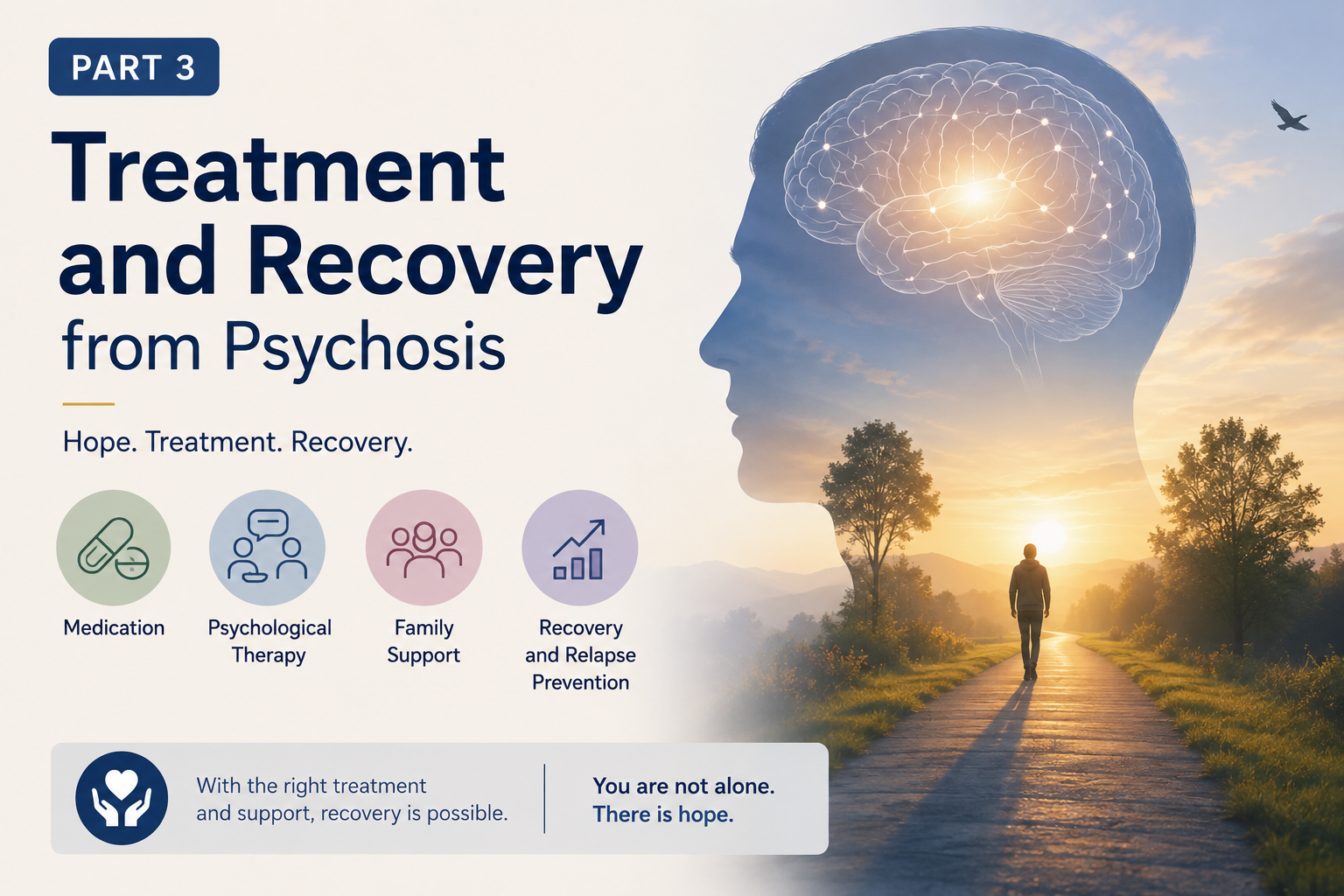
Successful treatment usually combines medication, psychological therapy, family education, and rehabilitation.
Treatment is always individualized because the causes and severity of psychosis differ from person to person.
⸻
Antipsychotic Medicines
Antipsychotic medications are the main treatment for most psychotic disorders.
These medicines help reduce hallucinations, delusions, suspiciousness, agitation, and disorganized thinking.
They work by balancing brain chemicals involved in perception and thinking.
Some commonly prescribed antipsychotics include:
* Risperidone * Olanzapine * Quetiapine * Aripiprazole * Amisulpride * Haloperidol * Clozapine (for treatment-resistant schizophrenia)
The choice of medicine depends on:
* Diagnosis * Age * Physical health * Side-effect profile * Previous response to treatment * Patient preference
Most patients begin to notice improvement within several weeks, although complete recovery may take longer.
⸻
Are Antipsychotic Medicines Safe?
Like all medications, antipsychotics may cause side effects.
Possible side effects include:
* Drowsiness * Weight gain * Increased appetite * Dry mouth * Constipation * Tremors * Muscle stiffness * Restlessness * Elevated blood sugar or cholesterol
Regular follow-up with a psychiatrist helps monitor these effects and adjust treatment when necessary.
Patients should never stop antipsychotic medication suddenly without medical advice, as this significantly increases the risk of relapse.
⸻
Long-Acting Injectable Medicines
Some patients struggle to take tablets regularly.
For suitable individuals, long-acting injectable antipsychotics may be recommended.
These injections are given every few weeks or months and help:
* Improve treatment adherence * Reduce relapse * Lower hospitalization rates * Improve long-term stability
They are particularly helpful for patients who have experienced repeated relapses because of missed medication.
⸻
Psychological Therapies
Medication alone is rarely sufficient.
Psychological treatment helps patients understand their illness, develop healthy coping strategies, and improve everyday functioning.
Evidence-based therapies include:
Cognitive Behavioural Therapy (CBT)
CBT helps patients:
* Understand distressing thoughts. * Reduce anxiety. * Improve coping skills. * Challenge unhelpful beliefs. * Manage stress.
⸻
Family Therapy
Psychosis affects the entire family.
Family education improves communication, reduces conflict, and helps relatives understand how to support recovery while recognizing early warning signs of relapse.
⸻
Psychoeducation
Patients and families learn:
* What psychosis is * Why medication is important * How to identify relapse * Stress management * Healthy lifestyle habits
Education empowers families to become active partners in recovery.
⸻
Hospital Admission
Hospitalization may be necessary when a person:
* Is unable to care for themselves. * Has severe psychosis. * Is suicidal. * Is aggressive or violent. * Refuses food or fluids. * Has severe drug-induced psychosis. * Requires intensive assessment or medication adjustment.
Admission is intended to provide safety, stabilize symptoms, and begin effective treatment—not to punish the patient.
Many patients improve significantly within days or weeks and can continue treatment as outpatients.
⸻
Recovery from Psychosis
Recovery is not simply the disappearance of hallucinations or delusions.
True recovery also includes:
* Returning to work or school. * Rebuilding relationships. * Regaining confidence. * Improving physical health. * Achieving independence. * Developing a meaningful life despite illness.
Recovery looks different for every individual, and progress often occurs gradually.
⸻
Preventing Relapse
Psychotic disorders may relapse if treatment is interrupted.
Fortunately, many relapses can be prevented.
Important strategies include:
* Taking medication exactly as prescribed. * Attending regular psychiatric follow-up appointments. * Avoiding alcohol and recreational drugs. * Getting adequate sleep. * Managing stress. * Maintaining healthy daily routines. * Seeking help early if symptoms return.
Recognizing early warning signs allows treatment adjustments before symptoms become severe.
⸻
Early Warning Signs of Relapse
Families should contact their psychiatrist if they notice:
* Sleep disturbance. * Increasing suspiciousness. * Social withdrawal. * Declining personal hygiene. * Talking to oneself. * Hearing voices again. * Increased irritability. * Neglecting medication. * Declining work or school performance. * Strange or unusual beliefs.
Early intervention often prevents full relapse and reduces the need for hospitalization.
⸻
Can People with Psychosis Work and Study?
Yes.
Many individuals with psychosis successfully:
* Complete university education. * Build professional careers. * Get married. * Raise families. * Live independently.
The likelihood of recovery improves significantly when treatment begins early and continues consistently.
Stigma should never prevent someone from pursuing education, employment, or meaningful relationships.
⸻
Advice for Families
Families play an essential role in recovery.
Helpful approaches include:
* Encourage treatment without arguing about delusions. * Listen calmly and respectfully. * Avoid criticizing or blaming the patient. * Encourage medication adherence. * Attend family counselling sessions. * Reduce unnecessary stress at home. * Learn about psychosis. * Seek help promptly if symptoms worsen.
Supportive families consistently improve treatment outcomes.
⸻
Can Psychosis Be Cured?
The answer depends on the underlying cause.
Some forms of psychosis, such as drug-induced psychosis or brief psychotic disorder, may resolve completely with appropriate treatment.
Chronic illnesses such as schizophrenia usually require long-term management, but many patients achieve excellent symptom control and lead productive lives.
Rather than focusing solely on the word “cure,” psychiatrists aim for recovery, symptom control, improved quality of life, and prevention of relapse.
⸻
Living with Hope
A diagnosis of psychosis does not define a person’s future.
Many individuals who once experienced severe hallucinations or delusions now work, study, care for families, and contribute meaningfully to society.
Recovery requires patience, medical treatment, psychological support, family involvement, and hope. Every person recovers at their own pace, and setbacks do not mean failure.
With the right treatment and continued support, psychosis is no longer the life sentence it was once believed to be.
⸻
Key Takeaways
* Psychosis is a treatable medical condition. * Early diagnosis leads to better outcomes. * Medication and psychotherapy work best when combined. * Family involvement improves recovery. * Avoiding drugs and maintaining treatment reduce relapse. * Many people recover and live healthy, productive lives.
⸻
Coming Next
In Part 4, we will answer the most frequently asked questions about psychosis, discuss common myths and misconceptions, explain how psychosis affects families, explore prevention strategies, and provide practical guidance on when to seek emergency psychiatric care.
Related articles
Part2, Types of Psychosis – Understanding the Different Causes of Losing Touch with Reality
Research and evidence