
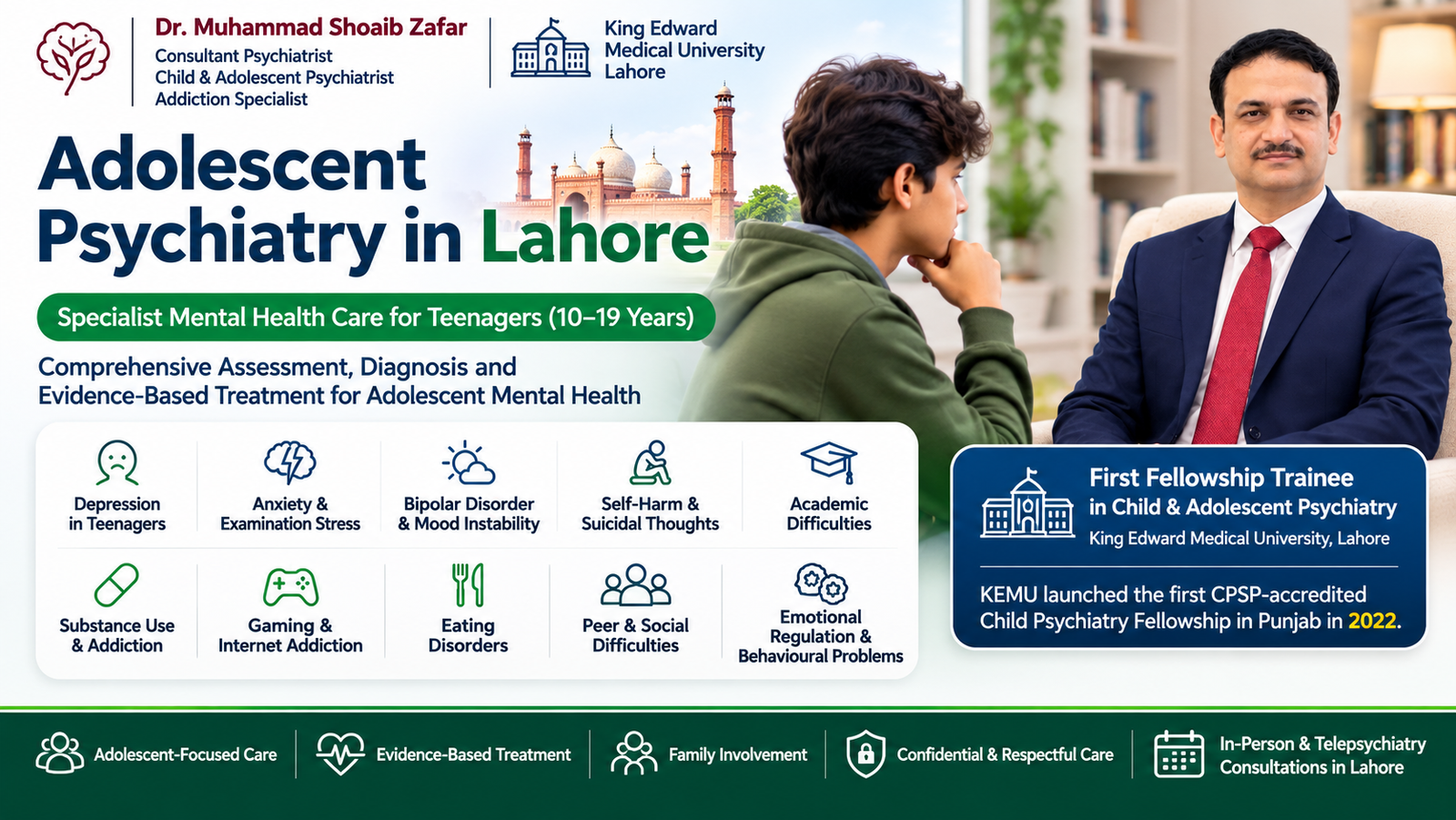
 Medically reviewed by Dr.Muhammad Shoaib Zafar on 3 November 2026
Adolescent Psychiatrist in Lahore – Specialist Adolescent Psychiatry Services
Dr. Muhammad Shoaib Zafar
Consultant Psychiatrist | Child & Adolescent Psychiatrist | Addiction Specialist
Assistant Professor of Psychiatry, King Edward Medical University, Lahore
Consultant Psychiatrist, Mayo Hospital Lahore
Specialist Adolescent Mental Health Assessment and Treatment in Lahore, Pakistan
Adolescence is a critical stage of human development, marked by significant physical, emotional, psychological, cognitive and social changes. Although many teenagers navigate this period successfully, some experience mental health difficulties that affect their education, relationships, family life, emotional well-being and future development.
Depression, anxiety, mood instability, behavioural problems, attention difficulties, substance use, gaming addiction, self-harm and other psychiatric conditions can emerge or become more apparent during adolescence. Without appropriate recognition and treatment, these difficulties may persist into adulthood.
Dr. Muhammad Shoaib Zafar is a Consultant Psychiatrist and formally trained Child & Adolescent Psychiatrist providing specialist adolescent psychiatric assessment, diagnosis and treatment in Lahore, Pakistan. His clinical approach integrates evidence-based psychiatric care, developmental understanding, family involvement and individualized treatment planning.
Through specialist adolescent psychiatry services, teenagers and their families can access professional assessment and treatment in a confidential, supportive and clinically appropriate environment.
Understanding Adolescent Mental Health: A Growing Global and National Priority
Adolescent mental health is an increasingly important public health priority worldwide. The World Health Organization (WHO) estimates that approximately one in seven individuals aged 10–19 years experiences a mental disorder. Depression, anxiety and behavioural disorders are among the leading causes of illness and disability in this age group.
The WHO also identifies suicide as the third leading cause of death among young people aged 15–29 years. Many mental health conditions begin during adolescence, making early recognition and intervention particularly important.
Adolescent Mental Health in Pakistan
Pakistan has a large adolescent population and substantial unmet mental healthcare needs.
According to UNICEF population estimates for 2023, Pakistan had approximately 55 million people aged 10–19 years. This represents a major population group whose mental health needs require greater attention from healthcare professionals, educational institutions, families and policymakers.
Research conducted among 1,124 school-going adolescents aged 11–18 years in Rawalpindi reported probable depression in 17.2% and probable anxiety in 21.4% of participants.
Although this was a regional school-based study rather than a nationally representative survey, it highlights the importance of adolescent mental health as a public health concern in Pakistan.
Challenges in Adolescent Mental Healthcare in Pakistan
Several factors contribute to difficulties in identifying and treating adolescent psychiatric conditions:
- Limited specialist availability: Access to formally trained Child & Adolescent Psychiatrists remains limited compared with the large population requiring services.
- Mental health stigma: Families may interpret depression, anxiety, behavioural difficulties or substance use as weakness, poor discipline or a lack of motivation.
- Delayed recognition: Psychiatric symptoms are sometimes mistaken for ordinary teenage behaviour, academic laziness or temporary emotional changes.
- Academic and examination pressure: Competitive educational environments, parental expectations and fear of academic failure can contribute to psychological distress.
- Digital and behavioural addictions: Excessive gaming, problematic internet use, social media exposure and disrupted sleep can complicate adolescent mental health.
- Limited school-based mental health services: Many educational institutions lack structured mental health screening, early identification and appropriate referral systems.
- Treatment access and continuity: Financial barriers, limited specialist services, inadequate family awareness and fragmented follow-up can interfere with recovery.
- Insufficient local research: Pakistan needs more representative epidemiological studies, adolescent mental health surveillance and research into culturally appropriate interventions.
Addressing these challenges requires specialist psychiatric services, early identification, family education, school collaboration and accessible evidence-based treatment.
Adolescent Psychiatry Services in Lahore
Adolescent psychiatry focuses on the assessment, diagnosis, treatment and prevention of mental health conditions affecting teenagers.
Dr. Muhammad Shoaib Zafar provides specialist adolescent psychiatric services in Lahore, with an individualized approach that considers the adolescent’s developmental stage, psychological needs, family circumstances, educational environment and social functioning.
1. Depression and Mood Disorders in Adolescents
Depression during adolescence may present differently from depression in adults. Persistent sadness is not always the predominant symptom. Irritability, withdrawal, declining academic performance and behavioural changes may be more noticeable.
Clinical assessment and treatment are available for:
- Adolescent depression.
- Persistent depressive symptoms.
- Irritability and mood instability.
- Bipolar disorder and suspected manic or hypomanic episodes.
- Emotional dysregulation.
- Loss of motivation and interest.
- Social withdrawal and isolation.
Treatment is individualized and may include psychotherapy, family interventions, medication when clinically indicated and regular follow-up.
2. Anxiety Disorders and Examination Stress
Anxiety can interfere with education, relationships, confidence and everyday functioning.
Conditions and difficulties addressed include:
- Generalized anxiety disorder.
- Social anxiety disorder.
- Panic attacks and panic disorder.
- Separation anxiety.
- Examination and performance anxiety.
- School avoidance and school refusal.
- Excessive worrying and fear of failure.
- Obsessive-compulsive symptoms.
Assessment focuses on identifying the underlying difficulties and developing an appropriate treatment plan.
3. ADHD and Attention Difficulties in Teenagers
Attention-deficit/hyperactivity disorder may continue into adolescence and adulthood. Its presentation may change with increasing academic and organizational demands.
Common concerns include:
- Poor concentration and distractibility.
- Difficulty completing assignments.
- Disorganization and poor time management.
- Impulsivity and restlessness.
- Academic underachievement.
- Emotional dysregulation.
- Difficulty maintaining relationships.
A comprehensive assessment considers developmental history, symptoms across different settings, educational functioning and possible alternative explanations.
4. Self-Harm and Suicidal Behaviour
Self-harm and suicidal thoughts require careful and timely professional assessment.
Warning signs may include:
- Deliberate self-injury.
- Recurrent thoughts about death.
- Expressions of hopelessness.
- Withdrawal from family and friends.
- Severe emotional distress.
- Previous suicide attempts.
- Sudden behavioural changes.
Assessment includes evaluating suicidal thoughts, intent, planning, previous behaviour, risk factors, protective factors and available family support.
Where immediate danger is present, urgent emergency psychiatric assessment is necessary rather than waiting for a routine appointment.
Treatment may involve safety planning, psychological interventions, family engagement, management of underlying psychiatric conditions and coordinated follow-up.
5. Behavioural and Emotional Problems
Behavioural difficulties may reflect underlying psychiatric, developmental, psychological or environmental problems.
Assessment and management include:
- Oppositional and defiant behaviour.
- Aggressive behaviour.
- Emotional outbursts.
- Impulsivity.
- Anger management difficulties.
- Family conflict.
- Risk-taking behaviour.
- School disciplinary problems.
- Conduct-related difficulties.
The objective is to understand the factors contributing to the behaviour and develop appropriate therapeutic and family-based interventions.
6. Substance Use and Addiction in Adolescents
Early exposure to addictive substances can interfere with brain development, emotional regulation, academic performance and social functioning.
Adolescent addiction assessment and treatment may address:
- Cannabis use.
- Alcohol use.
- Tobacco and nicotine dependence.
- Vaping.
- Prescription medication misuse.
- Multiple substance use.
- Gaming disorder.
- Problematic internet use.
- Other behavioural addictions.
Dr. Shoaib Zafar’s experience in Addiction Psychiatry and medically supervised addiction treatment provides an additional clinical perspective when adolescent mental health conditions coexist with substance use.
Treatment is age-appropriate, developmentally informed and may involve family interventions, psychological treatment, management of coexisting psychiatric conditions and specialist referral when required.
7. Gaming, Internet and Digital Behavioural Problems
Digital technology is an important part of adolescent life. However, problematic patterns of use may interfere with sleep, education, physical activity, family relationships and emotional well-being.
Clinical concerns include:
- Gaming disorder.
- Excessive gaming.
- Problematic internet use.
- Compulsive digital behaviour.
- Sleep disruption.
- Social withdrawal.
- Academic deterioration associated with excessive screen use.
Assessment distinguishes normal recreational technology use from persistent problematic behaviour associated with significant impairment.
8. Eating Disorders and Body Image Difficulties
Adolescents may develop unhealthy relationships with food, weight, appearance and body image.
Clinical assessment may address:
- Anorexia nervosa.
- Bulimia nervosa.
- Binge-eating disorder.
- Restrictive eating patterns.
- Body image concerns.
- Emotional eating.
- Anxiety associated with weight and appearance.
Eating disorders can have serious medical consequences. Appropriate psychiatric assessment and coordination with medical and nutritional specialists are important.
9. Early Psychosis and Severe Psychiatric Conditions
Some psychiatric disorders may first emerge during adolescence. Early identification is important when teenagers develop significant changes in perception, thinking, behaviour or functioning.
Clinical concerns include:
- Hallucinations.
- Suspiciousness and unusual beliefs.
- Disorganized behaviour.
- Significant social withdrawal.
- Marked decline in academic functioning.
- Emerging psychotic symptoms.
- Suspected schizophrenia-spectrum disorders.
Assessment includes consideration of mood disorders, substance use, medical conditions and other possible explanations.
Early specialist intervention can help reduce delays in diagnosis and treatment.
10. Academic Stress, Social and Relationship Difficulties
Academic pressure, peer relationships, family expectations and social challenges can significantly affect adolescent psychological well-being.
Consultations may address:
- Examination anxiety.
- Academic burnout.
- School refusal.
- Bullying and peer conflict.
- Low self-esteem.
- Social isolation.
- Family disagreements.
- Emotional regulation difficulties.
- Adjustment problems.
- Stress associated with major life changes.
The assessment aims to distinguish developmental challenges from psychiatric conditions requiring specific treatment.
When Should Parents Consult a Child & Adolescent Psychiatrist?
Not every emotional or behavioural change during adolescence indicates a psychiatric disorder. However, persistent symptoms, significant changes in functioning or concerning behaviour should not be ignored.
Parents should consider specialist psychiatric consultation when a teenager demonstrates:
- Persistent sadness, irritability or frequent mood changes.
- Loss of interest in previously enjoyable activities.
- Excessive anxiety, panic or persistent worrying.
- Declining academic performance or school avoidance.
- Significant sleep or appetite disturbances.
- Social withdrawal and reduced communication.
- Aggressive behaviour or repeated emotional outbursts.
- Poor concentration, impulsivity or suspected ADHD.
- Excessive gaming or problematic internet use.
- Alcohol, cannabis or other substance use.
- Self-harm or expressions of hopelessness.
- Suspiciousness, hallucinations or unusual beliefs.
- Significant changes in eating behaviour or body image.
- Difficulties affecting family relationships and everyday functioning.
An important principle: Parents do not need to wait until symptoms become severe. Early consultation can help clarify whether a teenager is experiencing normal developmental difficulties, psychological distress or a psychiatric condition requiring treatment.
If there is immediate risk of suicide, serious self-harm, violence, severe intoxication or acute psychosis, seek emergency medical care immediately.
Why a Specialist Child & Adolescent Psychiatrist?
Child and Adolescent Psychiatry is a specialized area of psychiatry requiring an understanding of developmental psychology, childhood psychiatric disorders, adolescent mental health, family systems and age-appropriate treatment.
Adolescents are not simply younger adults. Their psychiatric assessment requires consideration of brain development, emotional maturity, family relationships, educational functioning, peer influences and safeguarding needs.
A specialist assessment may include:
- Detailed psychiatric history.
- Developmental and family history.
- Assessment of emotional and behavioural symptoms.
- Evaluation of academic and social functioning.
- Mental state examination.
- Assessment of substance use and associated risks.
- Evaluation of family and environmental factors.
- Diagnostic formulation.
- Individualized treatment recommendations.
Where appropriate, information from parents, caregivers, schools and other healthcare professionals may contribute to a comprehensive understanding of the adolescent’s difficulties.
Academic Excellence and Specialist Training in Child & Adolescent Psychiatry at King Edward Medical University
King Edward Medical University (KEMU), Lahore, has played a pioneering role in the development of specialist Child and Adolescent Psychiatry training in Punjab.
In 2022, the Department of Child and Family Psychiatry at KEMU initiated its College of Physicians and Surgeons Pakistan (CPSP)-accredited Child Psychiatry subspecialty fellowship, establishing the first pioneering fellowship department of its kind in Punjab.
This development represented an important step towards strengthening specialist training, clinical services, research and professional capacity in child and adolescent mental healthcare.
Dr. Muhammad Shoaib Zafar: First Fellowship Trainee
Dr. Muhammad Shoaib Zafar was the first fellowship trainee of the Child & Adolescent Psychiatry fellowship programme at King Edward Medical University, which commenced in 2022.
His formal fellowship training represents an important professional milestone in the development of this specialty in Punjab.
His professional background combines:
- MBBS.
- MD Psychiatry, King Edward Medical University.
- Master of Public Health (MPH).
- Formal Child & Adolescent Psychiatry fellowship training at King Edward Medical University.
- Specialist training and experience in Addiction Psychiatry.
- Academic and clinical experience in psychiatry.
As an Assistant Professor of Psychiatry at King Edward Medical University and Consultant Psychiatrist at Mayo Hospital Lahore, Dr. Zafar combines academic psychiatry with clinical practice.
His clinical interests include developmental and behavioural disorders, adolescent depression and anxiety, ADHD, autism, mood disorders, substance use and complex psychiatric presentations.
His additional experience in addiction treatment is particularly relevant when adolescent psychiatric conditions coexist with substance use or behavioural addictions.
A Comprehensive and Individualized Approach to Adolescent Treatment
Effective adolescent psychiatric treatment requires more than identifying symptoms or prescribing medication.
Treatment should be based on an accurate diagnosis, developmental considerations, individual needs and the involvement of appropriate support systems.
Depending on the clinical presentation, treatment may include:
Psychiatric Management
- Comprehensive psychiatric evaluation.
- Diagnostic assessment.
- Medication when clinically indicated.
- Monitoring of treatment response.
- Assessment of side effects.
- Management of coexisting psychiatric conditions.
Psychological Interventions
- Cognitive Behavioural Therapy (CBT).
- Supportive psychotherapy.
- Emotional regulation interventions.
- Behavioural interventions.
- Stress management.
- Relapse prevention when indicated.
Family-Based Interventions
- Parent guidance.
- Family psychoeducation.
- Parent management strategies.
- Improving family communication.
- Behavioural management plans.
- Supporting treatment adherence.
Multidisciplinary Collaboration
Some adolescents require coordinated care involving clinical psychologists, paediatricians, neurologists, speech and language therapists, educational professionals, nutrition specialists or other healthcare providers.
Referral and collaboration are arranged according to individual clinical needs.
Confidentiality, Consent and Family Involvement in Adolescent Psychiatry
Confidentiality is an important component of adolescent psychiatric care.
Teenagers need an environment in which they can discuss sensitive emotional, psychological and social concerns without unnecessary fear of judgment.
At the same time, parents and caregivers often play an essential role in supporting treatment.
The consultation approach aims to balance:
- Respect for the adolescent’s privacy.
- Appropriate parental or guardian involvement.
- Developmentally appropriate participation in treatment decisions.
- Informed consent and assent, as applicable.
- Protection and safeguarding.
- Clear communication regarding the limits of confidentiality.
Confidentiality cannot be absolute when there are significant concerns about immediate safety, abuse, exploitation or serious risk of harm. These situations require appropriate protective action in accordance with professional and legal responsibilities.
Opportunities for Improving Adolescent Mental Healthcare in Lahore and Pakistan
Pakistan has a significant opportunity to strengthen adolescent mental healthcare through early intervention, specialist training and better integration of psychiatric services.
Important areas for development include:
- Early identification: Improving recognition of psychiatric symptoms in schools, primary healthcare and family settings.
- Specialist workforce development: Expanding formal training in Child & Adolescent Psychiatry.
- School mental health programmes: Establishing appropriate referral pathways between educational institutions and mental health professionals.
- Family education: Improving parental understanding of adolescent depression, anxiety, behavioural problems and addiction.
- Addiction prevention: Addressing early substance exposure, vaping, gaming disorder and other behavioural addictions.
- Evidence-based treatment: Increasing access to appropriate psychiatric and psychological interventions.
- Research and epidemiology: Developing representative national data on adolescent mental health and treatment needs.
- Continuity of care: Strengthening follow-up, relapse prevention and transition from adolescent to adult mental health services.
- Accessible specialist services: Expanding in-person and appropriate telepsychiatry services for families in Lahore and other parts of Pakistan.
Investing in adolescent mental health is an investment in the future health, education, productivity and well-being of the next generation.
Adolescent Psychiatric Consultation in Lahore
If your teenager is experiencing emotional difficulties, behavioural changes, academic decline, depression, anxiety, attention problems, substance use or other psychological concerns, professional assessment can help identify the underlying problem and guide appropriate treatment.
Dr. Muhammad Shoaib Zafar provides specialist Child & Adolescent Psychiatry consultations in Lahore, with a focus on comprehensive assessment, evidence-based treatment, family guidance and individualized clinical care.
The objective is to help adolescents improve psychological well-being, emotional regulation, social functioning, educational participation and overall quality of life.
Location: Lahore, Punjab, Pakistan
Specialty: Child & Adolescent Psychiatry
Consultant: Dr. Muhammad Shoaib Zafar
Clinical focus: Adolescent depression, anxiety, ADHD, mood disorders, behavioural problems, self-harm, substance use and behavioural addictions.
Families from other cities in Pakistan may enquire about appropriate telepsychiatry consultations and follow-up where clinically suitable.
Book an Adolescent Psychiatric Consultation in Lahore
Early recognition, specialist assessment and appropriate treatment can make a meaningful difference in an adolescent’s development and future.
Frequently Asked Questions
1. Who is an adolescent psychiatrist in Lahore?
An adolescent psychiatrist is a medical specialist trained to assess and treat mental health conditions affecting teenagers. Dr. Muhammad Shoaib Zafar provides specialist Child & Adolescent Psychiatry consultations in Lahore.
2. When should I take my teenager to a psychiatrist?
Consult a psychiatrist when emotional, behavioural or psychological symptoms persist, become severe or interfere with education, relationships, sleep, family life or everyday functioning. Self-harm, suicidal thoughts, psychotic symptoms and serious behavioural changes require prompt assessment.
3. What mental health conditions are treated in adolescent psychiatry?
These include depression, anxiety disorders, bipolar disorder, ADHD, OCD, behavioural disorders, eating disorders, substance use disorders, gaming disorder and psychotic disorders.
4. Can a psychiatrist help with teenage depression and anxiety?
Yes. A specialist can evaluate symptoms, establish a diagnosis, assess associated difficulties and recommend appropriate treatment, including psychotherapy, family interventions and medication when indicated.
5. Does adolescent psychiatry include ADHD and autism?
Yes. Child and Adolescent Psychiatrists assess neurodevelopmental conditions such as ADHD and autism, although the assessment may require collaboration with other specialists depending on individual needs.
6. Does Dr. Muhammad Shoaib Zafar provide addiction treatment for teenagers?
His clinical expertise includes Addiction Psychiatry. Adolescents with substance use or behavioural addiction concerns can be assessed for appropriate, age-sensitive psychiatric management and treatment.
7. Are parents involved in adolescent psychiatric treatment?
Parents and caregivers are often important partners in treatment. Their involvement is balanced with the adolescent’s developmental maturity, privacy, consent and safeguarding requirements.
8. Is online adolescent psychiatric consultation available?
Telepsychiatry may be appropriate for selected adolescents, depending on clinical needs, privacy, location, risk and the availability of suitable local emergency support. Some presentations require an in-person assessment.
9. Where can I find a specialist adolescent psychiatrist in Lahore?
Dr. Muhammad Shoaib Zafar provides Child & Adolescent Psychiatry consultations in Lahore. Families can enquire about appointments through his official website.
10. Why is specialist Child & Adolescent Psychiatry training important?
Specialist training develops the knowledge and clinical skills needed to understand developmental, emotional, behavioural and psychiatric conditions in children and teenagers. King Edward Medical University initiated the CPSP-accredited Child Psychiatry subspecialty fellowship in 2022, becoming a pioneer training department in Punjab.
References and Further Reading
- World Health Organization. Mental Health of Adolescents. 2025. https://www.who.int/news-room/fact-sheets/detail/adolescent-mental-health
- World Health Organization. Adolescent and Young Adult Health. https://www.who.int/news-room/fact-sheets/detail/adolescents-health-risks-and-solutions
- UNICEF Data. Pakistan: Child-Related Sustainable Development Goals and Population Data. https://data.unicef.org/sdgs/country/pak/
- UNICEF. Improving Adolescent Lives in Pakistan (2015–2019): An Impact Evaluation. https://www.unicef.org/pakistan/documents/improving-adolescent-lives-pakistan-2015-2019
- Adolescents’ mental health and well-being in developing countries: A cross-sectional survey from Pakistan. PubMed. https://pubmed.ncbi.nlm.nih.gov/30451053/
- King Edward Medical University. Department of Child and Family Psychiatry. https://kemu.edu.pk/department-of-child-psychiatry/
Medical disclaimer: This page provides general educational information and does not replace an individualized psychiatric assessment, diagnosis or treatment. In a mental health emergency, seek immediate medical attention.
Related care
Child & Adolescent Psychiatry