
Written by
Consultant Psychiatrist and Addiction Specialist
MBBS — University of Health Sciences (UHS); MD Psychiatry — King Edward Medical University (KEMU); MPH — Institute of Public Health (IPH); UNODC Certified Addiction Specialist; International Certification of Addiction Professionals (ICAP-P); Formal training/fellowship in Child & Adolescent Psychiatry — King Edward Medical University, Lahore
View profileApproved by
Dr. Muhammad Shoaib Zafar
Super Admin
- Published:
- Last updated:
- Approved:
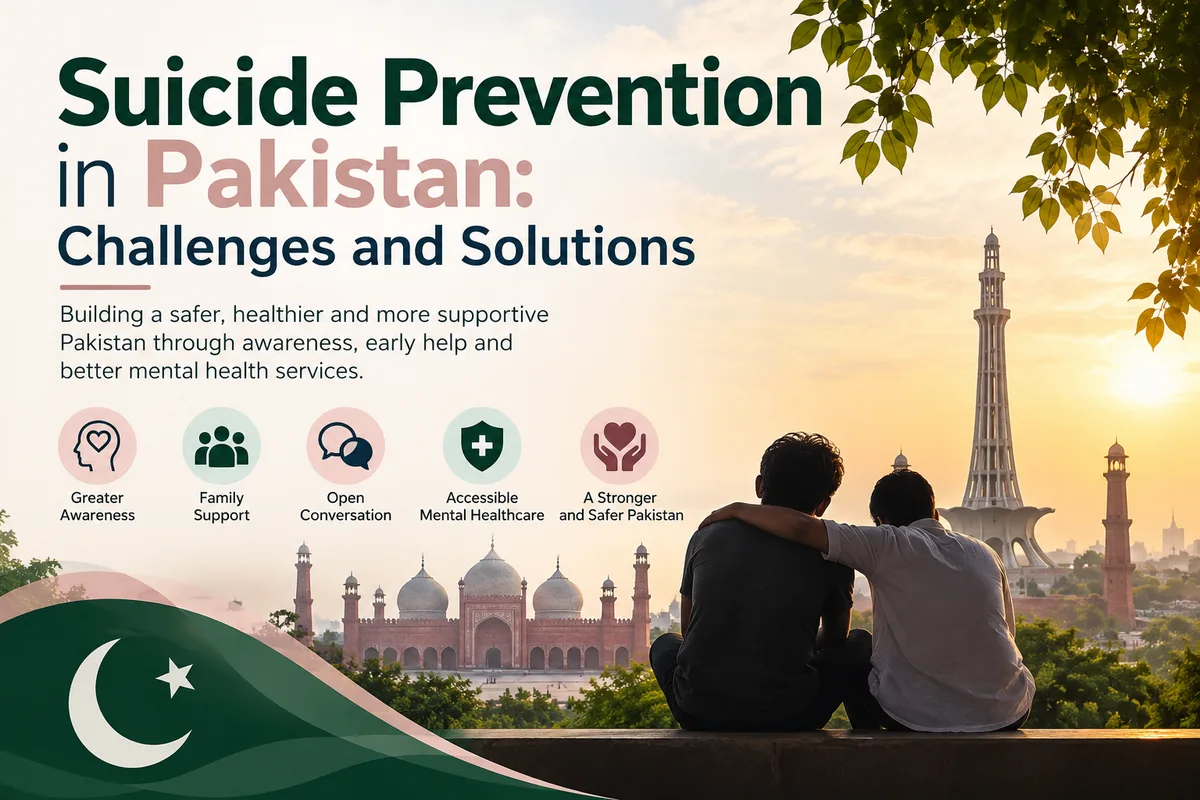
Suicide Prevention in Pakistan: Challenges, Evidence-Based Solutions and How to Seek Help
Author: Dr. Muhammad Shoaib Zafar Consultant Psychiatrist & Addiction Specialist Lahore, Pakistan
Reading time: 6–7 minutes Category: Mental Health Awareness / Psychiatry / Suicide Prevention
Introduction: Suicide Prevention Is a Public Health Responsibility
Suicide is one of the most serious and preventable public health challenges worldwide. It affects individuals, families and communities, leaving profound psychological, social and economic consequences.
In Pakistan, suicide prevention requires particular attention because of the interaction between mental health problems, social pressures, economic hardship, cultural stigma and limited access to professional psychiatric services.
People experiencing severe emotional distress may remain silent because they fear judgement, rejection, family dishonour or social consequences. In some families, psychological suffering is misunderstood as weakness, lack of faith or a temporary personal problem rather than a condition that may require professional treatment.
These misconceptions can delay help-seeking and allow treatable mental health problems to deteriorate.
Suicide prevention in Pakistan should therefore extend beyond individual treatment. It requires stronger healthcare services, community awareness, early identification, responsible media reporting, family education and accessible psychiatric care.
The central message is simple: Suicide prevention is possible, and seeking mental health treatment should be encouraged rather than stigmatised.
1. Understanding Suicide in the Pakistani Context
Suicide is a complex phenomenon that cannot be explained by one cause or a single life event.
It may arise from the interaction of psychiatric disorders, psychological distress, interpersonal difficulties, social circumstances and environmental factors.
In Pakistan, several circumstances may contribute to vulnerability:
* Untreated depression and other psychiatric disorders. * Family conflict, marital difficulties and relationship breakdown. * Domestic violence, abuse and interpersonal trauma. * Academic pressure and examination-related distress. * Unemployment, financial insecurity and debt. * Substance use and addiction. * Social isolation, loneliness and lack of emotional support.
* Chronic physical illness and persistent pain. * Bullying, discrimination and social rejection.
These factors do not inevitably lead to suicidal behaviour. However, they may increase psychological distress, particularly when an individual already has a mental health disorder or lacks appropriate support.
It is also important to understand that people from different socioeconomic backgrounds, age groups and communities may experience suicidal thoughts.
Suicide prevention must therefore be inclusive and accessible.
What does the research tell us about Pakistan?
A major challenge in understanding suicide in Pakistan is the limited availability of reliable, comprehensive and nationally representative surveillance data.
Stigma, underreporting, differences in death registration and inconsistent reporting practices make it difficult to establish the true national burden.
Consequently, isolated media reports or individual hospital studies should not be interpreted as accurate national suicide rates.
A 2025 study published in BMC Public Health, titled Co-developing Suicide Prevention Guidelines for Pakistan: A Mixed-Methods Delphi Consensus Study, brought together 45 professional experts and 27 individuals with lived experience to develop culturally relevant suicide prevention recommendations.
The study highlighted the importance of addressing stigma, improving community awareness, recognising culturally specific warning signs, strengthening first-response support and developing appropriate safety plans.
This is an important development because suicide prevention strategies should reflect Pakistan’s social, cultural and healthcare realities rather than simply importing interventions without adaptation.
2. Why Is Suicide Prevention Particularly Challenging in Pakistan?
A. Mental health stigma and social judgement
Stigma remains one of the major obstacles to psychiatric treatment.
People may hesitate to disclose depression, suicidal thoughts or previous self-harm because they fear being labelled mentally unstable, weak or socially unacceptable.
Families may also avoid professional consultation because of concerns about reputation, marriage prospects or community judgement.
This can result in delayed diagnosis and missed opportunities for early intervention.
Mental illness is a health condition, not a moral failure. A person experiencing suicidal thoughts deserves compassionate assessment and appropriate treatment.
B. Limited access to psychiatric services
Pakistan has a substantial shortage of trained mental health professionals relative to its population.
Psychiatric and psychological services are also unevenly distributed, with specialist facilities concentrated in larger urban centres.
For people living in rural communities and smaller cities, accessing qualified psychiatric care may involve considerable financial and geographical difficulties.
A 2024 review of mental health services in Pakistan highlighted workforce shortages, inadequate funding, cultural stigma and insufficient service availability as major healthcare-system challenges.
Improving access to psychiatrists, clinical psychologists, trained primary-care professionals and emergency mental health services is essential.
C. Economic pressures and unemployment
Financial hardship, unemployment, debt and uncertainty about the future can contribute to psychological distress.
For some individuals, economic difficulties may coexist with depression, anxiety, family conflict and substance use.
It is important not to assume that financial problems alone explain suicidal behaviour. A comprehensive assessment should identify the psychological and psychiatric consequences of these stressors.
D. Family conflict and relationship-related distress
Family relationships are central to social support in Pakistan, but family environments can also become sources of significant psychological distress.
Marital conflict, domestic violence, forced relationships, rejection, intergenerational disagreements and unrealistic expectations can contribute to emotional suffering.
Young people may experience particular difficulties when they feel unable to communicate openly with parents or other family members.
Families should aim to provide emotional safety rather than responding to psychological distress with threats, blame or humiliation.
E. Misconceptions about religion and mental illness
Religious and spiritual beliefs are important to many individuals in Pakistan and may provide comfort, meaning and social support.
However, religious advice should never be used to shame or frighten someone experiencing suicidal thoughts.
Telling a distressed person that they are weak, sinful or insufficiently faithful may increase guilt and discourage disclosure.
Faith-based support can complement professional treatment when it is compassionate and welcomed by the individual.
It should not replace necessary psychiatric or emergency care.
3. Early Identification: Recognising When Someone Needs Help
Suicide prevention begins with recognising significant changes in a person’s emotional state, behaviour and functioning.
Families, teachers, employers, healthcare workers and community members can all contribute to early identification.
Warning signs may include:
* Persistent sadness, hopelessness or feelings of worthlessness. * Statements suggesting that life has become unbearable. * Withdrawal from family, friends and social activities. * Sudden deterioration in academic or occupational performance. * Increasing alcohol or drug consumption. * Severe anxiety, agitation or disturbed sleep.
* Expressions of feeling trapped, rejected or like a burden. * Previous self-harm or suicide attempts. * Talking about suicide or expressing a wish to die.
Not everyone communicates suicidal thoughts openly. Some individuals may conceal their distress because of shame, fear or concerns about how others will react.
When there is concern, it is appropriate to ask directly and compassionately whether the person is thinking about suicide.
Asking does not implant suicidal ideas.
A positive response should lead to further professional assessment, not criticism or confrontation.
4. Evidence-Based Suicide Prevention: What Actually Works?
Suicide prevention requires interventions at individual, family, community and healthcare-system levels.
The World Health Organization’s LIVE LIFE approach identifies four key evidence-based population interventions.
1. Restricting access to potentially harmful means
Reducing access to potentially lethal means during periods of crisis is an important suicide prevention strategy.
At an individual and family level, this may involve:
* Secure storage of medicines and potentially dangerous substances. * Limiting unnecessary quantities of medications available at home.
* Safely securing firearms where legally present. * Appropriate supervision and support during periods of acute distress.
These precautions should be discussed sensitively and incorporated into an individualised safety plan.
2. Responsible media reporting
News organisations, digital platforms and social media users have an important responsibility in suicide prevention.
Sensationalised headlines, romanticised narratives, graphic imagery and unnecessary descriptions of suicide methods can contribute to harm.
Responsible reporting should:
* Avoid sensationalism and unnecessary detail. * Avoid presenting suicide as a solution to personal problems. * Protect the privacy and dignity of affected families. * Emphasise prevention, recovery and available treatment.
* Include reliable information about where people can seek help.
Media coverage can instead promote mental health literacy and encourage people to seek professional assistance.
3. Developing emotional and social skills among young people
Schools, colleges and universities should strengthen programmes that promote:
* Emotional regulation. * Problem-solving abilities.
* Healthy communication. * Coping with academic pressure. * Conflict resolution. * Resilience and appropriate help-seeking. * Recognition of bullying and psychological distress.
These skills can help young people manage difficult circumstances and seek support before a crisis develops.
4. Early identification, assessment and follow-up
People experiencing suicidal thoughts or self-harm should receive timely assessment and appropriate intervention.
This involves identifying underlying psychiatric disorders, assessing immediate safety, developing a treatment plan and ensuring continued follow-up.
A single consultation or emergency visit should not be considered sufficient when ongoing clinical risk remains.
Continuity of care is particularly important following psychiatric hospitalisation, self-harm or a significant deterioration in mental health.
5. What Can Families Do to Prevent Suicide?
In Pakistan, family members often represent the first opportunity for identifying psychological distress and connecting someone with professional help.
Families should adopt a supportive, non-judgemental approach.
Listen without criticism: Allow the individual to communicate their distress without interrupting, blaming or dismissing their concerns.
Take suicidal statements seriously: Avoid assuming that someone is seeking attention or making threats without genuine distress.
Encourage psychiatric consultation: Help arrange an appointment with a qualified psychiatrist or mental health professional.
Do not promise absolute secrecy: If someone is at immediate risk, involve appropriate healthcare professionals and trusted support persons.
Reduce immediate danger: Where safe, secure potentially harmful substances and medicines and ensure that the person is not left alone during an acute crisis.
Support treatment adherence: Encourage follow-up appointments, prescribed treatment and psychological interventions.
Avoid confrontation: Threats, humiliation, punishment and emotional blackmail are not appropriate responses to suicidal distress.
For adolescents, parents and caregivers should pay particular attention to bullying, academic stress, family conflict, social withdrawal and sudden behavioural changes.
6. Psychiatric Treatment: How Can Professional Help Reduce Suicide Risk?
Suicidal thoughts are a clinical concern that may be associated with depression, bipolar disorder, psychosis, anxiety disorders, substance use disorders, trauma and other psychiatric conditions.
Effective treatment depends on identifying the underlying problems and addressing immediate safety needs.
Psychiatric assessment
A psychiatrist evaluates suicidal thoughts and behaviour, previous attempts, mental health history, substance use, current stressors, available support and immediate safety concerns.
Clinical assessment should be individualised rather than based solely on a numerical risk score.
Treatment of underlying psychiatric disorders
Depression, bipolar disorder, psychosis, severe anxiety and substance use disorders require appropriate diagnosis and evidence-based management.
Treatment may include medication, psychotherapy or a combination, depending on the clinical presentation.
Psychological interventions
Psychotherapy can help individuals develop healthier coping strategies, improve emotional regulation and manage psychological distress.
Depending on the patient’s needs, interventions may include:
* Cognitive Behavioural Therapy (CBT). * Dialectical Behaviour Therapy (DBT), where indicated. * Problem-solving therapy. * Supportive psychotherapy. * Trauma-informed psychological interventions. * Relapse prevention and addiction counselling.
Safety planning
A collaborative safety plan identifies warning signs, personal coping strategies, trusted support persons and professional contacts.
It also includes practical measures to reduce access to potentially harmful means.
Safety planning is not simply asking someone to promise that they will not harm themselves. It is a structured clinical intervention.
Hospital-based treatment
Some patients require emergency psychiatric assessment or hospital admission, particularly when there is an immediate danger to their safety, severe psychiatric illness, significant behavioural disturbance or an inability to maintain safety outside a supervised environment.
Hospital care can provide medical stabilisation, observation, psychiatric treatment and appropriate discharge planning.
7. Suicide Prevention in Pakistan: What Should the Healthcare System Do?
Individual treatment is essential, but a sustainable national suicide prevention strategy requires broader healthcare and policy reforms.
The following priorities deserve attention:
A. Develop a coordinated national suicide prevention strategy
Pakistan needs a comprehensive framework with clearly defined responsibilities for federal and provincial health departments, hospitals, educational institutions and community organisations.
B. Strengthen mental health services at primary-care level
General practitioners, emergency physicians and other frontline healthcare workers should receive appropriate training to recognise depression, self-harm and suicide risk.
C. Improve emergency psychiatric services
Hospitals should have clear protocols for the assessment, treatment and follow-up of people presenting after self-harm or with suicidal thoughts.
D. Establish reliable national surveillance
Standardised data collection, confidential reporting and appropriate research are necessary to understand the burden and evaluate prevention programmes.
E. Expand school and university mental health services
Educational institutions should have accessible counselling pathways, trained safeguarding staff and referral arrangements with qualified mental health professionals.
F. Increase investment in mental health
Greater funding is required for psychiatric facilities, professional training, community mental health services and affordable psychological treatment.
G. Promote culturally appropriate public education
Suicide prevention campaigns should be developed in Urdu and regional languages, with appropriate cultural sensitivity and clear information about professional help.
8. Where Can People Seek Help in Pakistan?
People experiencing suicidal thoughts should not have to wait until their condition becomes an emergency before seeking professional help.
Appropriate routes to treatment include:
* Consultation with a qualified psychiatrist. * Assessment by a clinical psychologist for appropriate psychological treatment. * Psychiatric outpatient departments at recognised hospitals. * Emergency departments when immediate safety is in question. * Specialist addiction services when substance use is contributing to psychological distress.
For individuals and families in Lahore
People in Lahore can seek psychiatric assessment for depression, anxiety, mood disorders, addiction, self-harm and suicidal thoughts through established hospital services and qualified private psychiatric practitioners.
Dr. Muhammad Shoaib Zafar, Consultant Psychiatrist and Addiction Specialist in Lahore, provides specialist psychiatric assessment and treatment for mental health and addiction-related conditions.
Clinical areas include depression, mood disorders, substance use disorders, dual diagnosis, psychiatric assessment and addiction treatment.
When there is immediate danger, an attempted suicide, current suicidal intent or an inability to maintain safety, seek emergency medical care immediately. Do not wait for a routine appointment.
In Punjab, Rescue 1122 provides emergency ambulance assistance.
Contact 1122 when emergency transport is required. Take the individual to the nearest emergency department and ensure that a responsible person stays with them.
9. A Message to Families: Seeking Help Is a Sign of Strength
A person experiencing suicidal thoughts does not need judgement, blame or social isolation. They need understanding, professional assessment and appropriate support.
Depression, addiction and other psychiatric disorders are treatable conditions. Early identification and timely intervention can improve outcomes and help people regain emotional stability and functioning.
Families should remember that listening, taking concerns seriously and facilitating access to qualified psychiatric care can make an important difference.
Suicide prevention should become a shared responsibility across homes, schools, hospitals, workplaces, communities and government institutions.
Every person deserves access to compassionate mental healthcare. Asking for help can be the beginning of recovery.
⸻
Frequently Asked Questions About Suicide Prevention in Pakistan
1. What are the major causes of suicide in Pakistan?
Suicide is multifactorial. Associated factors include depression and other psychiatric disorders, substance use, family conflict, domestic violence, economic hardship, social isolation, relationship difficulties and untreated psychological distress. No single factor explains every case.
2. Is suicide preventable?
Many suicidal crises can be prevented through early identification, appropriate psychiatric treatment, psychological support, safety planning, responsible media reporting and reducing access to potentially harmful means.
3. Where can someone get help for suicidal thoughts in Pakistan?
Individuals can seek help through qualified psychiatrists, clinical psychologists, recognised hospital psychiatric departments and emergency medical services. Anyone facing immediate danger should attend the nearest emergency department. In Punjab, Rescue 1122 can provide emergency ambulance assistance.
4. Can depression cause suicidal thoughts?
Yes. Depression may involve hopelessness, severe emotional distress, feelings of worthlessness and thoughts of death or suicide. Appropriate psychiatric assessment and treatment are important.
5. How can parents prevent suicide among teenagers?
Parents should maintain open communication, recognise changes in mood and behaviour, address bullying and academic stress, take suicidal statements seriously and arrange timely professional assessment.
Adolescents at immediate risk should not be left alone.
6. Does talking about suicide increase suicide risk?
Asking someone directly and compassionately about suicidal thoughts does not implant the idea. It can create an opportunity for disclosure and timely intervention. Avoid judgement, confrontation and dismissive responses.
7. What is a suicide safety plan?
A suicide safety plan is a collaborative written plan that identifies personal warning signs, coping strategies, supportive contacts, professional resources and steps to reduce access to potentially harmful means.
8. Which doctor should be consulted for suicide prevention?
A qualified psychiatrist is appropriate for assessing suicidal thoughts, underlying psychiatric conditions and treatment needs.
A clinical psychologist may also provide evidence-based psychotherapy as part of a coordinated care plan.
9. Is psychiatric treatment necessary after a suicide attempt?
Yes. Anyone who has attempted suicide requires immediate medical assessment and a comprehensive psychiatric evaluation, followed by an appropriate treatment and follow-up plan.
10.
Where can I consult a psychiatrist for suicide prevention in Lahore?
Dr. Muhammad Shoaib Zafar is a Consultant Psychiatrist and Addiction Specialist in Lahore. Individuals and families can seek psychiatric assessment for depression, mood disorders, addiction, dual diagnosis and suicidal thoughts.
⸻
References and Evidence Base
1. Kiran T, Colucci E, Shahid S, et al.
Co-developing suicide prevention guidelines for Pakistan: a mixed-methods Delphi consensus study. BMC Public Health. 2025;25:3536. doi:10.1186/s12889-025-23942-3. 2. Ali SAAZ, Saleem T, Ventriglio A. Clinicians’ perspectives on strategies for suicide prevention in Pakistan: a qualitative inquiry. International Review of Psychiatry. 2025;37(3–4):368–377. doi:10.1080/09540261.2024.2401064.
3. World Health Organization. Suicide prevention: LIVE LIFE implementation guide. https://www.who.int/initiatives/live-life-initiative-for-suicide-prevention 4. World Health Organization. Suicide. https://www.who.int/news-room/fact-sheets/detail/suicide 5. World Health Organization. mhGAP Evidence Centre: Self-harm and suicide. https://www.who.int/teams/mental-health-and-substance-use/treatment-care/mental-health-gap-action-programme/evidence-centre/self-harm-and-suicide
6. Mental health services in Pakistan. International Review of Psychiatry. 2024. doi:10.1080/09540261.2024.2391796. 7. Nazeer A, Imran N, Naveed S, et al. Developing suicide screening and prevention guideline for the children and adolescents of Pakistan: the first step. Asian Journal of Psychiatry. 2025;110:104586. doi:10.1016/j.ajp.2025.104586.
Medical disclaimer: This article provides general educational information and is not a substitute for individual medical advice, psychiatric diagnosis or emergency treatment.
Anyone experiencing immediate suicidal danger requires urgent professional medical assistance.
Frequently Asked Questions
What warning signs may indicate someone needs help?
Warning signs include persistent hopelessness, withdrawal from others, feeling trapped or like a burden, increased substance use, severe agitation, and talking about suicide or wanting to die. Take suicidal statements seriously and seek professional assessment.
Is it appropriate to ask someone directly about suicidal thoughts?
Yes. Ask directly and compassionately if you are concerned. Asking does not implant suicidal ideas. If the person says yes, respond without criticism and help them access professional assessment.
How can families support suicide prevention?
Listen without blame or judgement, take suicidal statements seriously, and help arrange mental health care. Secure medicines and dangerous substances as part of an individualised safety plan, and support continued follow-up.
Can faith-based support replace mental health treatment?
No. Compassionate faith-based support can complement treatment when welcomed by the individual, but it should not replace necessary psychiatric or emergency care. Avoid using religious advice to shame or frighten someone in distress.
About the author
Consultant Psychiatrist and Addiction Specialist
MBBS — University of Health Sciences (UHS); MD Psychiatry — King Edward Medical University (KEMU); MPH — Institute of Public Health (IPH); UNODC Certified Addiction Specialist; International Certification of Addiction Professionals (ICAP-P); Formal training/fellowship in Child & Adolescent Psychiatry — King Edward Medical University, Lahore
King Edward Medical University (KEMU) & Mayo Hospital, Lahore
clinical interests
Adult Psychiatry; Addiction Psychiatry & Rehabilitation; Child & Adolescent Psychiatry; Psychotherapy & Psychological Interventions; Psychiatric Assessment & Consultation
training
Formal training/fellowship in Child & Adolescent Psychiatry, King Edward Medical University, Lahore
memberships
Pakistan Medical & Dental Council (PMDC); Pakistan Psychiatric Society (PPS); International Certification of Addiction Professionals (ICAP)
Dr. Muhammad Shoaib Zafar, MBBS, MD (Psychiatry) Assistant Professor of Psychiatry, King Edward Medical University (KEMU), Lahore