 Medically reviewed by Dr.Muhammad Shoaib Zafar on 3 November 2026
Bipolar Disorder in Adolescents: Symptoms, Diagnosis and Treatment in Lahore
Dr. Muhammad Shoaib Zafar
Consultant Psychiatrist | Child & Adolescent Psychiatrist | Addiction Specialist
Assistant Professor of Psychiatry, King Edward Medical University, Lahore
Consultant Psychiatrist, Mayo Hospital Lahore
Specialist Assessment and Treatment of Bipolar Disorder in Teenagers
Adolescence is a period of significant emotional, psychological, cognitive and social development. During these years, teenagers may experience changes in mood, energy, sleep patterns, behaviour and relationships. While occasional emotional fluctuations are a normal part of development, persistent or extreme changes in mood and behaviour may indicate an underlying psychiatric condition.
Bipolar disorder is a serious but treatable mood disorder characterized by distinct episodes of mania or hypomania and depression. These episodes involve significant changes in mood, energy, activity, sleep, thinking and everyday functioning.
In adolescents, bipolar disorder can sometimes be difficult to recognize because its symptoms overlap with depression, attention-deficit/hyperactivity disorder (ADHD), anxiety disorders, behavioural difficulties and other psychiatric conditions.
Early recognition, accurate diagnosis and appropriate treatment are important for reducing the impact of bipolar disorder on education, family relationships, social development and long-term psychological well-being.
Dr. Muhammad Shoaib Zafar is a Consultant Psychiatrist and formally trained Child & Adolescent Psychiatrist providing specialist psychiatric assessment and treatment in Lahore, Pakistan. His clinical approach emphasizes comprehensive diagnostic evaluation, evidence-based treatment, family involvement and individualized follow-up.
What Is Bipolar Disorder in Adolescents?
Bipolar disorder is a mood disorder in which individuals experience distinct episodes of abnormal mood and changes in energy and activity levels.
These episodes may include:
- Mania: A period of abnormally elevated, expansive or irritable mood accompanied by increased energy, activity and other characteristic symptoms, with significant impairment in functioning.
- Hypomania: A less severe period of elevated or irritable mood and increased activity or energy that represents a clear change from the person’s usual functioning.
- Depression: A period of persistent low mood or loss of interest and pleasure, often accompanied by changes in sleep, appetite, energy, concentration and self-esteem.
Some individuals experience episodes of mania and depression, while others experience depressive episodes alongside periods of hypomania.
Bipolar disorder is classified into different types, principally bipolar I disorder and bipolar II disorder. The distinction depends on the nature and severity of mood episodes.
It is important to understand that bipolar disorder is not simply a condition of being happy one day and sad the next. Diagnosis requires evidence of characteristic mood episodes, their duration, associated symptoms, change from baseline functioning and clinical significance.
How Common Is Bipolar Disorder? Global and Adolescent Mental Health Context
Bipolar disorder is an important psychiatric condition worldwide. According to the World Health Organization, approximately 36 million people experienced bipolar disorder globally in 2023, including an estimated 3.3 million adolescents aged 10–19 years.
The WHO identifies bipolar disorder as a condition associated with substantial psychological, social and functional difficulties, but effective treatments are available.
Adolescence is particularly important for early recognition because mood disorders may first become clinically apparent during this developmental period.
However, estimates of bipolar disorder prevalence vary according to diagnostic criteria, study populations, age groups and assessment methods. The global figures should not be interpreted as Pakistan-specific prevalence estimates.
Bipolar Disorder and Adolescent Mental Health in Pakistan
Pakistan has a large adolescent population, with significant unmet mental healthcare needs.
Several factors can make the recognition and treatment of bipolar disorder particularly challenging:
- Limited availability of formally trained Child & Adolescent Psychiatrists.
- Misinterpretation of mood symptoms as normal teenage behaviour.
- Stigma associated with psychiatric diagnoses.
- Delayed consultation and inaccurate initial diagnoses.
- Limited awareness of mania and hypomania among families.
- Academic pressure and associated psychological difficulties.
- Substance use and other coexisting psychiatric conditions.
- Limited continuity of specialist psychiatric care.
In many families, adolescents with significant mood changes may initially be labelled as lazy, aggressive, irresponsible, overly emotional or difficult to manage.
Such interpretations can delay appropriate assessment.
Greater awareness, specialist evaluation and family education are important for improving adolescent bipolar disorder care in Pakistan.
Symptoms of Bipolar Disorder in Teenagers
The symptoms of bipolar disorder vary depending on the type of mood episode.
A teenager experiencing mania may behave very differently from their usual personality and functioning. During depressive episodes, the same individual may experience marked sadness, reduced motivation, social withdrawal and loss of interest.
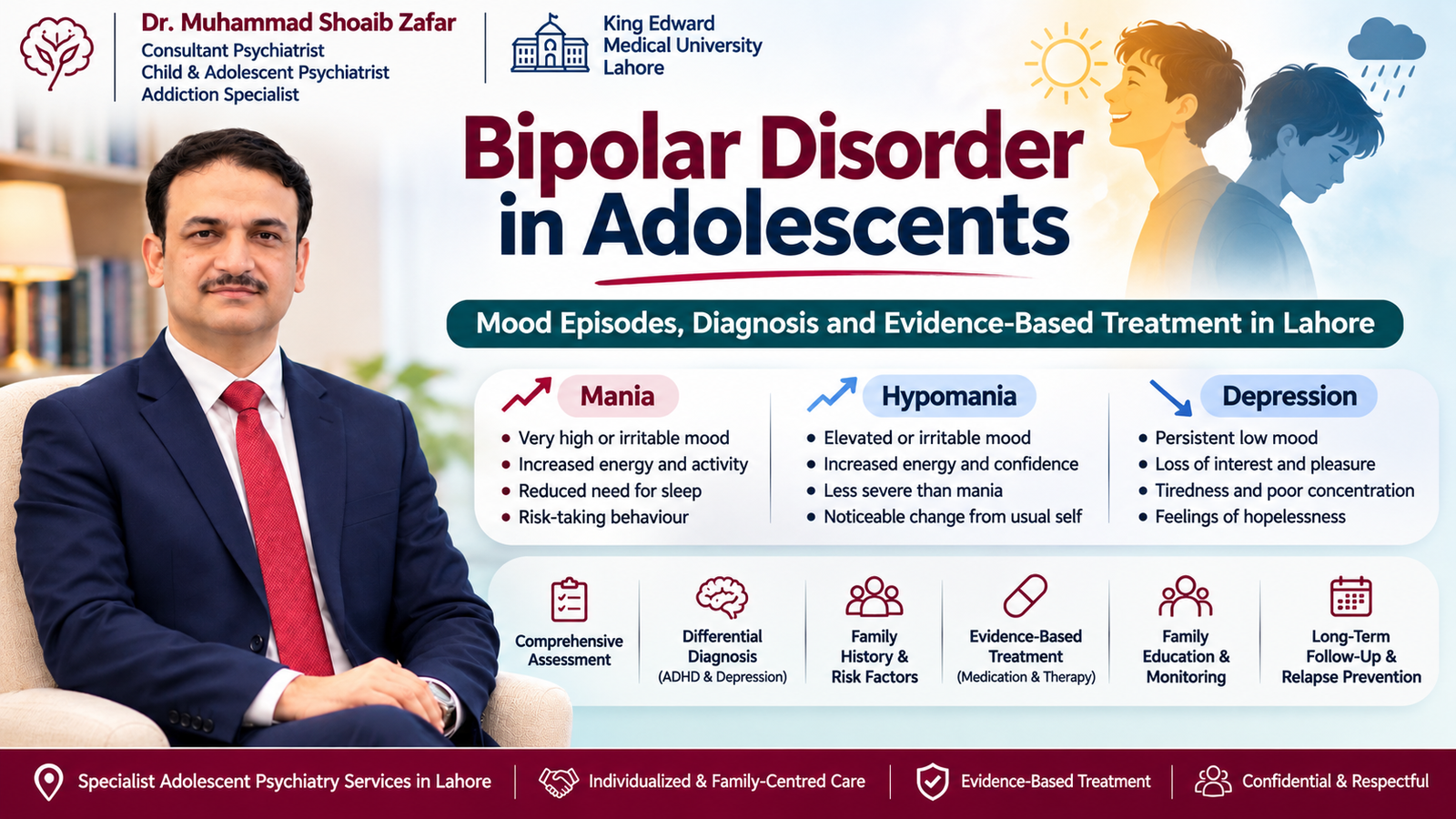
1. Symptoms of Mania in Adolescents
Mania is a significant elevation or disturbance of mood accompanied by increased energy and activity.
Possible symptoms include:
- Unusually elevated, expansive or excessively excited mood.
- Markedly increased energy and activity.
- Reduced need for sleep without feeling tired.
- Talking excessively or much faster than usual.
- Racing thoughts.
- Increased distractibility.
- Inflated self-esteem or grandiose beliefs.
- Excessive involvement in multiple activities.
- Impulsive spending or risky decisions.
- Increased sexual risk-taking.
- Poor judgment and impaired decision-making.
- Severe irritability or agitation.
In some adolescents, manic symptoms may be associated with significant academic, social or family disruption.
Severe manic episodes may include psychotic symptoms such as delusions or hallucinations and may require urgent psychiatric assessment or hospital treatment.
2. Symptoms of Hypomania in Teenagers
Hypomania involves a distinct period of elevated or irritable mood and increased energy or activity that represents a noticeable change from the individual’s usual behaviour.
Possible symptoms include:
- Unusually high energy.
- Reduced need for sleep.
- Increased talkativeness.
- Increased confidence.
- Racing thoughts.
- Greater involvement in activities.
- Increased sociability.
- Uncharacteristic impulsive decisions.
- Increased goal-directed behaviour.
Hypomania is less severe than mania and does not produce the marked functional impairment, hospitalization or psychosis characteristic of mania.
However, hypomanic episodes are clinically important, particularly when accompanied by depressive episodes.
3. Symptoms of Bipolar Depression in Adolescents
Depressive episodes may be particularly difficult to identify in teenagers because depression can present through irritability, behavioural changes and academic deterioration rather than obvious sadness alone.
Common symptoms include:
- Persistent sadness or irritability.
- Loss of interest in previously enjoyable activities.
- Reduced energy and motivation.
- Excessive sleeping or insomnia.
- Changes in appetite and weight.
- Difficulty concentrating.
- Declining academic performance.
- Feelings of guilt or worthlessness.
- Social withdrawal.
- Hopelessness.
- Thoughts of death or suicide.
Suicidal thoughts, self-harm and severe hopelessness require prompt professional assessment.
Irritability and Mood Swings: Does Every Emotional Teenager Have Bipolar Disorder?
No.
Irritability, anger, emotional sensitivity and mood fluctuations are common during adolescence. They may be associated with developmental changes, family conflict, academic stress, sleep deprivation, anxiety, depression or other psychiatric conditions.
Bipolar disorder should not be diagnosed simply because a teenager:
- Gets angry frequently.
- Has temper outbursts.
- Experiences mood swings.
- Becomes argumentative.
- Sleeps late.
- Shows occasional impulsivity.
- Has difficulty managing emotions.
The important clinical distinction is whether there are distinct episodes of abnormal mood and increased energy or activity, accompanied by characteristic symptoms and a clear change from the individual’s usual functioning.
Episodic Mood Changes Versus Chronic Irritability
In bipolar disorder, clinicians look for identifiable episodes of mood disturbance, changes in energy, sleep and activity, and associated symptoms.
By contrast, some adolescents experience persistent irritability, emotional dysregulation or recurrent behavioural outbursts without distinct manic or hypomanic episodes.
These presentations may be associated with conditions such as:
- ADHD.
- Disruptive mood dysregulation disorder.
- Oppositional defiant disorder.
- Anxiety disorders.
- Trauma-related conditions.
- Depression.
- Sleep disorders.
A careful clinical assessment is necessary to distinguish these conditions.
Bipolar Disorder Types in Adolescents
Bipolar I Disorder
Bipolar I disorder is characterized by at least one manic episode.
A depressive episode may also occur, but it is not essential for establishing a bipolar I diagnosis.
Mania may involve severe changes in mood, energy, sleep, judgment and behaviour, sometimes requiring hospitalization.
Bipolar II Disorder
Bipolar II disorder involves episodes of hypomania and major depression without a history of a full manic episode.
The depressive episodes may cause substantial impairment in education, relationships and everyday functioning.
Other Specified and Unspecified Bipolar and Related Disorders
Some adolescents experience clinically significant bipolar-spectrum symptoms that do not fully meet the duration or symptom requirements for bipolar I or bipolar II disorder.
Such presentations require careful assessment and should not automatically be labelled as bipolar disorder.
Why Is Bipolar Disorder Difficult to Diagnose in Adolescents?
Accurate diagnosis is particularly important because several psychiatric conditions can produce symptoms that resemble bipolar disorder.
A teenager with ADHD, depression, anxiety or emotional dysregulation may appear restless, irritable, impulsive or emotionally unstable.
However, these symptoms alone do not establish bipolar disorder.
A specialist evaluation should consider the pattern, duration, severity and context of symptoms.
1. Bipolar Disorder Versus ADHD
ADHD and bipolar disorder share several clinical features, including:
- Distractibility.
- Impulsivity.
- Increased activity.
- Difficulty concentrating.
- Irritability.
- Poor organization.
However, ADHD is generally characterized by a persistent pattern of symptoms beginning during childhood and occurring across different settings.
Bipolar disorder involves distinct mood episodes representing a change from the individual’s usual functioning.
Both conditions can coexist, making comprehensive assessment important.
2. Bipolar Disorder Versus Depression
Adolescents with depression may experience irritability, reduced concentration, sleep disturbances and emotional instability.
However, depressive symptoms alone do not establish bipolar disorder.
A history of mania or hypomania must be carefully investigated before a bipolar diagnosis is made.
This distinction is particularly important because treatment strategies for unipolar depression and bipolar depression may differ.
3. Bipolar Disorder Versus Disruptive Mood Dysregulation Disorder
Disruptive mood dysregulation disorder (DMDD) involves persistent irritability and recurrent severe temper outbursts.
Unlike bipolar disorder, DMDD is not characterized by distinct episodes of mania or hypomania.
The distinction is clinically important because chronic irritability should not automatically be interpreted as bipolar disorder.
4. Bipolar Disorder Versus Anxiety and Trauma-Related Conditions
Anxiety disorders and trauma-related conditions may cause:
- Sleep disturbances.
- Irritability.
- Increased arousal.
- Difficulty concentrating.
- Emotional instability.
- Restlessness.
These symptoms can resemble aspects of mood disorders.
Assessment should consider the relationship between symptoms, stressful events, sleep, mood and changes in everyday functioning.
5. Substance-Induced Mood Symptoms
Cannabis, stimulants, other psychoactive substances and certain medications may produce mood elevation, agitation, sleep disturbances or psychotic symptoms.
Substance use must be assessed carefully, particularly in teenagers presenting with new or unusual behavioural changes.
Causes and Risk Factors of Bipolar Disorder in Adolescents
The exact cause of bipolar disorder is not fully understood. Current evidence suggests that it develops through interactions between genetic vulnerability, brain-related factors and environmental influences.
1. Genetic Factors and Family History
Bipolar disorder has a substantial genetic component.
Adolescents with a close family member who has bipolar disorder may have an increased risk of developing the condition.
However, having a parent or sibling with bipolar disorder does not mean that a teenager will necessarily develop it.
Family history is one component of assessment, not a diagnosis.
2. Brain Development and Neurobiology
Research suggests that bipolar disorder is associated with differences in brain networks involved in:
- Emotional regulation.
- Reward processing.
- Impulse control.
- Decision-making.
- Sleep and circadian regulation.
Adolescence is also a period of ongoing brain maturation, making developmental context important when interpreting mood and behavioural symptoms.
3. Sleep and Circadian Rhythm Disturbances
Sleep disruption can influence mood regulation and may contribute to the onset or worsening of mood episodes in vulnerable individuals.
Reduced need for sleep is particularly important when assessing possible mania.
Maintaining regular sleep and wake times is an important component of ongoing management.
4. Stressful Life Events and Environmental Factors
Stressful experiences, family difficulties, trauma, social adversity and major life changes may influence the course of illness in susceptible individuals.
These factors should be explored during psychiatric assessment without assuming that any single stressful event causes bipolar disorder.
How Is Bipolar Disorder Diagnosed in Teenagers?
There is no single blood test, brain scan or questionnaire that independently establishes a diagnosis of bipolar disorder.
Diagnosis requires a comprehensive psychiatric evaluation by a qualified professional with experience in adolescent mental health.
1. Detailed Psychiatric History
The psychiatrist explores:
- Current emotional symptoms.
- Previous episodes of mood elevation or depression.
- Changes in energy and activity.
- Sleep patterns.
- Impulsivity and risk-taking behaviour.
- Academic and social functioning.
- Previous psychiatric treatment.
- Substance use.
- Previous self-harm or suicidal behaviour.
2. Longitudinal Mood Assessment
A particularly important aspect of adolescent bipolar disorder assessment is understanding how symptoms develop over time.
Parents and teenagers may be asked to describe:
- When mood changes first appeared.
- How long individual episodes lasted.
- Whether symptoms occur continuously or episodically.
- Changes in sleep and energy.
- Periods of recovery between episodes.
- Changes in academic and social functioning.
NICE recommends prospective longitudinal monitoring by a trained and experienced professional or multidisciplinary team when diagnosing bipolar disorder in children and young people.
This reduces the risk of misdiagnosis based on isolated behavioural symptoms.
3. Family History
Assessment includes relevant family psychiatric history, particularly:
- Bipolar disorder.
- Depression.
- Psychiatric hospitalization.
- Suicide and self-harm.
- Substance use disorders.
- Other significant psychiatric conditions.
A family history of bipolar disorder increases clinical suspicion in some circumstances but is not sufficient to establish the diagnosis.
4. Parent and Caregiver Interviews
Parents or caregivers can provide valuable information about changes in mood, sleep, energy, behaviour and functioning.
Their observations are particularly useful when teenagers have difficulty recognizing or describing changes in their own behaviour.
The adolescent should also have an appropriate opportunity to discuss concerns privately.
5. Mental State Examination and Risk Assessment
The clinical assessment includes evaluation of:
- Mood and affect.
- Thought processes.
- Psychotic symptoms.
- Insight and judgment.
- Cognitive functioning.
- Suicidal thoughts.
- Self-harm risk.
- Impulsivity and behavioural risks.
6. Medical and Substance-Related Assessment
Depending on the clinical presentation, investigations may be needed to exclude relevant medical conditions, medication effects or substance-related causes of mood symptoms.
Blood tests and other investigations are selected according to clinical indications. They do not independently diagnose bipolar disorder.
Evidence-Based Treatment of Bipolar Disorder in Adolescents
Bipolar disorder requires individualized, developmentally appropriate and often long-term management.
Treatment depends on:
- Whether the adolescent is experiencing mania, hypomania or depression.
- The severity of symptoms.
- The presence of psychotic features.
- Suicide and self-harm risk.
- Coexisting psychiatric conditions.
- Previous treatment response.
- Family circumstances and support.
- Physical health and medication safety.
The treatment plan should be developed collaboratively with the adolescent and family, taking account of age, maturity, capacity and applicable consent requirements.
1. Psychiatric Medication
Medication can be an important component of treatment, particularly during acute manic episodes and for ongoing mood stabilization.
Depending on the diagnosis, clinical circumstances and applicable regulatory guidance, a specialist may consider:
Mood stabilizers
Lithium and other mood-stabilizing medicines may be considered in appropriate clinical circumstances.
Lithium requires careful monitoring, including serum levels, renal function, thyroid function and other relevant physical health parameters.
Atypical antipsychotics
Certain second-generation antipsychotic medications may be used for the management of manic or mixed episodes, depending on age, indication and clinical suitability.
Potential adverse effects include weight gain, metabolic changes, sedation and movement-related adverse effects. Monitoring should be planned accordingly.
Treatment of bipolar depression
Depressive episodes require particular care because treatment approaches differ from those used for uncomplicated unipolar depression.
Antidepressants should not be prescribed as routine stand-alone treatment for bipolar disorder without appropriate specialist consideration because of the potential for mood switching or destabilization.
Medication decisions in adolescents must account for age-specific evidence, licensing, safety, physical health and individual risk. Some treatments may be off-label depending on the country and clinical indication.
Valproate has important reproductive and developmental safety considerations and requires particular caution in adolescents, especially girls who may become pregnant. Current prescribing restrictions and local regulatory requirements must be followed.
Medication should never be started, stopped or adjusted without medical supervision.
2. Cognitive Behavioural Therapy (CBT)
CBT may help adolescents understand and manage depressive symptoms, negative thinking patterns, stress and associated emotional difficulties.
It can also support:
- Recognition of mood changes.
- Coping skills.
- Problem-solving.
- Emotional regulation.
- Management of anxiety.
- Improved daily functioning.
CBT is generally used as part of a broader treatment plan rather than as a replacement for necessary treatment of acute mania.
3. Family-Focused Therapy
Family involvement is particularly important in adolescent bipolar disorder.
Family-focused interventions may help:
- Improve communication.
- Reduce family conflict.
- Recognize early warning signs.
- Improve treatment adherence.
- Develop problem-solving skills.
- Support relapse prevention.
- Improve understanding of the illness.
Family education can also reduce blame, stigma and misunderstandings surrounding mood episodes.
4. Psychoeducation
Psychoeducation helps adolescents and families understand:
- The nature of bipolar disorder.
- Differences between mania, hypomania and depression.
- Common triggers and warning signs.
- The importance of regular sleep.
- Medication adherence.
- Early recognition of relapse.
- When to seek urgent professional help.
Understanding the illness can improve participation in treatment and long-term management.
5. Sleep and Lifestyle Management
Regular daily routines are an important component of bipolar disorder management.
Recommendations may include:
- Maintaining consistent sleeping and waking times.
- Avoiding sleep deprivation.
- Reducing excessive nighttime screen use.
- Maintaining regular physical activity.
- Following balanced nutritional habits.
- Avoiding alcohol, cannabis and other psychoactive substances.
- Developing healthy stress-management strategies.
Lifestyle interventions complement, rather than replace, appropriate psychiatric treatment.
6. Treatment of Coexisting Conditions
Adolescents with bipolar disorder may also experience ADHD, anxiety, substance use disorders, sleep problems and other psychiatric difficulties.
These conditions should be identified and managed carefully.
Treatment planning must consider the potential effects of interventions for coexisting conditions on mood stability.
Family Education and Monitoring: An Essential Part of Treatment
Parents and caregivers are important partners in the long-term management of adolescent bipolar disorder.
Families should understand that bipolar disorder is a medical condition and should not be interpreted simply as a lack of discipline, poor character or deliberate misbehaviour.
Recognizing Early Warning Signs
Families can learn to identify changes that may indicate an emerging mood episode.
Possible warning signs include:
- A noticeable reduction in sleep.
- Increasing energy or unusual excitement.
- Excessive talking.
- Increased irritability.
- Uncharacteristic risk-taking.
- Increasing withdrawal.
- Loss of interest.
- Declining academic functioning.
- Changes in appetite and daily routine.
Mood and Sleep Monitoring
A daily mood and sleep chart can help adolescents and families identify patterns.
Useful information includes:
- Mood.
- Energy.
- Sleep duration.
- Daily activities.
- Medication adherence.
- Significant stressful events.
- Changes in behaviour.
This information can help the treating psychiatrist evaluate treatment response and recognize early signs of relapse.
Supporting the Adolescent
Parents should:
- Maintain open and non-judgmental communication.
- Encourage adherence to treatment.
- Avoid unnecessary confrontation during mood episodes.
- Support regular routines.
- Monitor safety and concerning behavioural changes.
- Encourage educational and social participation as clinically appropriate.
- Seek professional advice when symptoms change.
Caregivers should also attend to their own psychological well-being and seek support when needed.
When Should Parents Consult a Psychiatrist for Bipolar Disorder?
Parents should consider specialist psychiatric assessment when a teenager experiences:
- Repeated periods of unusually elevated or irritable mood.
- Markedly reduced need for sleep without tiredness.
- Unusually high energy and increased activity.
- Excessive talking and racing thoughts.
- Uncharacteristic impulsive or risky behaviour.
- Episodes of depression associated with significant functional impairment.
- Recurrent mood episodes affecting school or family life.
- A history of psychiatric symptoms alongside a family history of bipolar disorder.
- Suspected mania, hypomania or mixed mood symptoms.
- Significant behavioural changes that are difficult to explain.
Seek urgent medical attention if an adolescent develops severe mania, psychosis, suicidal intent, serious self-harm, dangerous impulsivity or an inability to maintain personal safety.
A specialist assessment should not be delayed when severe symptoms or safety concerns are present.
Bipolar Disorder Treatment in Lahore: Specialist Adolescent Psychiatric Care
Families seeking bipolar disorder assessment and treatment in Lahore should consider consultation with a psychiatrist experienced in Child & Adolescent Psychiatry.
Dr. Muhammad Shoaib Zafar provides specialist psychiatric assessment and treatment for adolescents presenting with mood instability, suspected bipolar disorder, depression, anxiety, ADHD, behavioural difficulties and coexisting addiction-related concerns.
His clinical approach focuses on:
- Comprehensive psychiatric assessment.
- Developmentally informed diagnostic evaluation.
- Identification of manic, hypomanic and depressive episodes.
- Differential diagnosis of ADHD and other psychiatric conditions.
- Assessment of family and developmental history.
- Evidence-based pharmacological management when indicated.
- Psychological and family-based interventions.
- Monitoring of treatment response and medication safety.
- Relapse prevention and continuity of care.
His experience in Addiction Psychiatry is also relevant when substance use or behavioural addictions coexist with mood instability.
Consultations are intended to provide an appropriate clinical evaluation and individualized treatment recommendations rather than relying on symptoms alone to establish a diagnosis.
Why Choose a Child & Adolescent Psychiatrist?
Bipolar disorder in teenagers requires an understanding of developmental psychiatry, mood disorders, family dynamics and adolescent psychological functioning.
An experienced Child & Adolescent Psychiatrist can help distinguish bipolar disorder from ADHD, depression, anxiety, disruptive mood dysregulation and other conditions with overlapping symptoms.
Dr. Muhammad Shoaib Zafar has formal fellowship training in Child & Adolescent Psychiatry from King Edward Medical University, Lahore, alongside academic and clinical experience in psychiatry and addiction treatment.
His clinical interests include adolescent mood disorders, ADHD, autism, behavioural difficulties, depression, anxiety, substance use and complex psychiatric presentations.
Location: Lahore, Punjab, Pakistan
Specialty: Child & Adolescent Psychiatry
Clinical focus: Bipolar disorder, mania, hypomania, adolescent depression, mood instability and associated psychiatric conditions.
Families from other parts of Pakistan may enquire about telepsychiatry consultations where clinically appropriate. Severe mania, psychosis and immediate safety concerns require suitable local urgent or emergency assessment.
Frequently Asked Questions About Bipolar Disorder in Adolescents
1. What are the early signs of bipolar disorder in teenagers?
Early signs may include distinct periods of unusually elevated or irritable mood, increased energy, reduced need for sleep, racing thoughts, excessive talking and uncharacteristic risk-taking. Depressive episodes may also occur. A comprehensive psychiatric assessment is necessary to establish the diagnosis.
2. Is bipolar disorder common in teenagers?
Bipolar disorder can develop during adolescence, although prevalence estimates vary between populations and diagnostic methods. The WHO estimates that approximately 3.3 million adolescents aged 10–19 years experienced bipolar disorder globally in 2023.
3. How is bipolar disorder different from normal teenage mood swings?
Normal adolescent mood changes are generally related to developmental, social and environmental factors. Bipolar disorder involves distinct episodes of abnormal mood and changes in energy, activity and functioning, with characteristic associated symptoms.
4. Can ADHD be mistaken for bipolar disorder?
Yes. Both conditions may involve distractibility, impulsivity, restlessness and irritability. ADHD generally has a persistent developmental pattern, whereas bipolar disorder involves distinct mood episodes. Both conditions can coexist.
5. What is the difference between mania and hypomania?
Mania is a more severe mood episode associated with significant functional impairment, possible psychosis or hospitalization. Hypomania involves a less severe but noticeable period of elevated or irritable mood and increased energy without the marked impairment characteristic of mania.
6. Can bipolar disorder in adolescents be treated?
Yes. Treatment may include appropriate mood-stabilizing medication, selected antipsychotic medicines, psychotherapy, family-focused interventions, psychoeducation and ongoing monitoring. Treatment is individualized according to age, diagnosis and clinical severity.
7. Does bipolar disorder in teenagers require lifelong medication?
Not every adolescent will have the same treatment needs. Duration and choice of medication depend on the diagnosis, episode history, severity, treatment response and risk of recurrence. Medication decisions require ongoing specialist review.
8. Can bipolar disorder occur with ADHD?
Yes. Bipolar disorder and ADHD can coexist. When both conditions are present, treatment needs careful sequencing and monitoring because some ADHD treatments may affect mood stability.
9. Should parents be involved in bipolar disorder treatment?
Yes. Family involvement is often beneficial in adolescent treatment. Parents can support medication adherence, identify early warning signs, maintain routines and assist with safety planning while respecting the adolescent’s privacy and developmental autonomy.
10. When does an adolescent with bipolar disorder need hospitalization?
Hospital assessment may be necessary during severe mania, psychosis, suicidal behaviour, serious self-harm, dangerous impulsivity or situations in which the adolescent cannot maintain safety in the community.
11. Can an adolescent with bipolar disorder continue education?
Yes. With appropriate treatment, monitoring and educational support, many adolescents can continue their education and participate in normal developmental activities. Adjustments may be needed during periods of illness.
12. Where can I consult a psychiatrist for bipolar disorder in Lahore?
Dr. Muhammad Shoaib Zafar provides Child & Adolescent Psychiatry consultations in Lahore for teenagers with suspected bipolar disorder, mood instability, depression and related psychiatric concerns. Families can enquire about appointments through his official website.
Conclusion
Bipolar disorder in adolescents is a clinically important mood disorder that requires careful recognition, accurate diagnosis and individualized treatment.
The distinction between normal teenage emotional changes, chronic irritability, ADHD, depression and genuine manic or hypomanic episodes is particularly important.
With specialist psychiatric care, appropriate medication when indicated, psychological interventions, family education and regular monitoring, adolescents with bipolar disorder can improve their emotional stability, educational functioning, relationships and overall quality of life.
If your teenager is experiencing significant mood changes, unusually high energy, reduced need for sleep, recurrent depression or risky behaviour, consider a specialist adolescent psychiatric assessment in Lahore. Early and accurate evaluation can make a meaningful difference.
Dr. Muhammad Shoaib Zafar
Consultant Psychiatrist & Child and Adolescent Psychiatrist
Lahore, Pakistan
References and Evidence-Based Resources
- National Institute for Health and Care Excellence (NICE). Bipolar disorder: assessment and management. Clinical Guideline CG185. Updated 2 September 2025. https://www.nice.org.uk/guidance/cg185
- National Institute of Mental Health (NIMH). Bipolar Disorder in Children and Teens. https://www.nimh.nih.gov/health/publications/bipolar-disorder-in-children-and-teens
- National Institute of Mental Health (NIMH). Bipolar Disorder in Teens and Young Adults: Know the Signs. https://www.nimh.nih.gov/health/publications/bipolar-disorder-in-teens-and-young-adults-know-the-signs
- World Health Organization (WHO). Mental Disorders: Bipolar Disorder. https://www.who.int/news-room/fact-sheets/detail/mental-disorders
- World Health Organization (WHO). Mental Health of Adolescents. 1 September 2025. https://www.who.int/news-room/fact-sheets/detail/adolescent-mental-health
- Keramatian K, Chithra NK, Yatham LN. The CANMAT and ISBD Guidelines for the Treatment of Bipolar Disorder: Summary and a 2023 Update of Evidence. Focus. 2023. https://pmc.ncbi.nlm.nih.gov/articles/PMC11058959/
- American Academy of Child and Adolescent Psychiatry (AACAP). Bipolar Disorder Resource Center and Clinical Practice Parameters. https://www.aacap.org/
Medical disclaimer: This article provides general educational information and is not a substitute for individual psychiatric assessment, diagnosis or treatment. Medication should only be prescribed and monitored by an appropriately qualified clinician. In emergencies involving suicidal intent, severe mania, psychosis or immediate risk of harm, seek urgent medical attention.
Related care
Child & Adolescent Psychiatry