
Written by
Consultant Psychiatrist and Addiction Specialist
MBBS — University of Health Sciences (UHS); MD Psychiatry — King Edward Medical University (KEMU); MPH — Institute of Public Health (IPH); UNODC Certified Addiction Specialist; International Certification of Addiction Professionals (ICAP-P); Formal training/fellowship in Child & Adolescent Psychiatry — King Edward Medical University, Lahore
View profileApproved by
Dr. Muhammad Shoaib Zafar
Super Admin
- Published:
- Last updated:
- Approved:
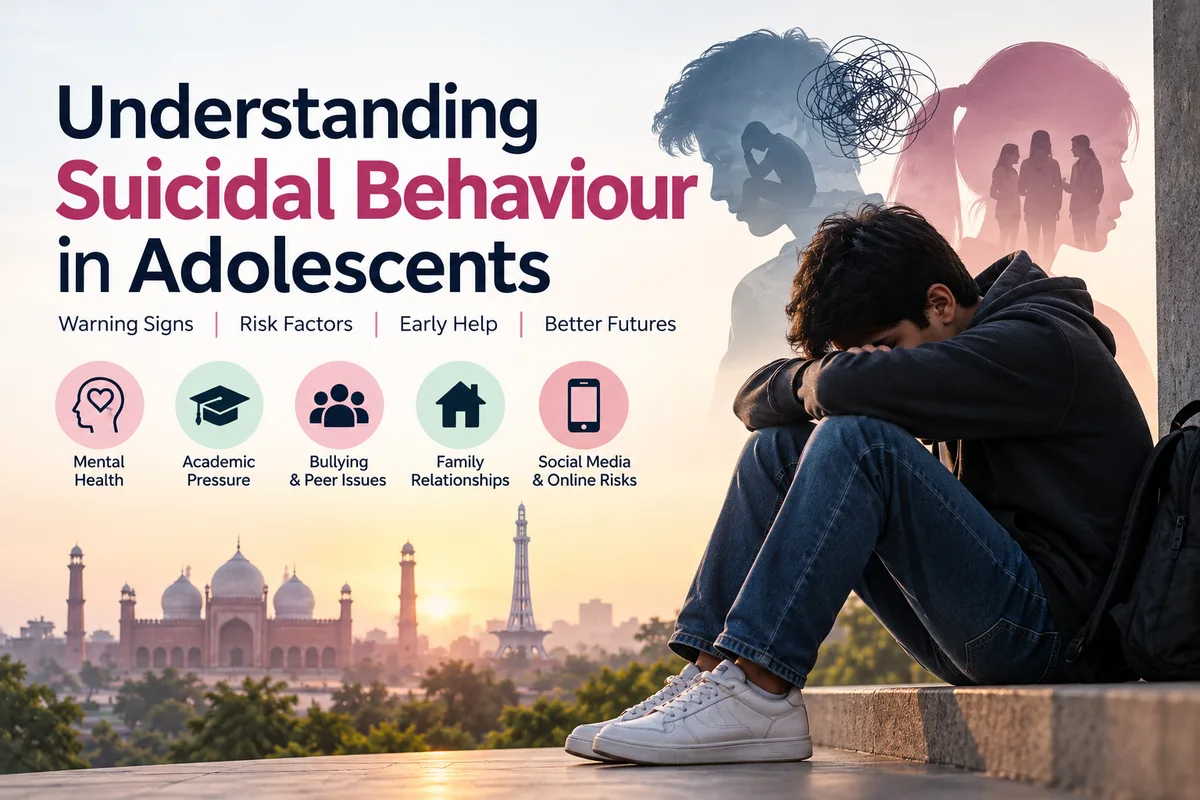
Understanding Suicidal Behaviour in Adolescents: Warning Signs, Risk Factors and Early Psychiatric Intervention
Author: Dr. Muhammad Shoaib Zafar Consultant Psychiatrist | Child & Adolescent Mental Health Lahore, Pakistan
Reading time: 6–7 minutes Category: Child & Adolescent Psychiatry Subcategory: Adolescent Mental Health / Suicide Prevention
Introduction: Why Adolescent Suicidal Behaviour Needs Special Attention
Adolescence is a critical period of emotional, psychological, social and neurological development. Between the ages of 10 and 19 years, young people experience significant changes in identity, relationships, emotional regulation, independence and their understanding of the world.
Although this period offers opportunities for growth, it can also involve considerable psychological vulnerability.
Some adolescents experience overwhelming emotional distress, hopelessness, rejection, loneliness or difficulty managing interpersonal conflicts. When these experiences occur alongside depression, anxiety, trauma, bullying or other psychiatric difficulties, suicidal thoughts and self-harming behaviours may emerge.
Unlike adults, adolescents may have difficulty communicating emotional suffering, understanding their own feelings or seeking help independently. Their distress may instead appear as irritability, anger, school avoidance, social withdrawal, impulsive behaviour or sudden changes in relationships.
In Pakistan, academic expectations, family pressures, social stigma, limited access to child and adolescent mental health services and increasing digital exposure create additional challenges.
Understanding suicidal behaviour in adolescents requires more than identifying warning signs. It requires understanding the young person’s developmental stage, emotional experiences, family environment, school circumstances and underlying psychiatric conditions.
Early recognition and appropriate child and adolescent psychiatric intervention can create important opportunities for prevention and recovery.
1. Understanding Suicidal Behaviour During Adolescence
Suicidal behaviour is not a single clinical phenomenon. It includes a range of experiences and behaviours that require careful individual assessment.
These may include:
Suicidal thoughts: Thoughts about death, not wanting to live or considering ending one’s life.
Suicidal intent: An intention to act on suicidal thoughts, which requires urgent clinical assessment.
Suicidal behaviour: Actions undertaken with at least some intention to end one’s life.
Non-suicidal self-injury (NSSI): Deliberate self-injury without an intention to die. Some adolescents engage in self-harm to regulate overwhelming emotions, express psychological distress or cope with feelings they cannot communicate.
An important clinical distinction is that self-harm does not always indicate suicidal intent.
However, non-suicidal self-injury is associated with increased future suicide risk and must never be dismissed as attention-seeking or harmless behaviour.
An adolescent’s reasons for self-harm may also change over time. Each episode deserves an individual assessment.
2. Why Are Adolescents Vulnerable to Suicidal Thoughts?
Adolescent development involves changes in emotional regulation, impulse control, reward processing, social relationships and decision-making.
The ability to manage intense emotions and evaluate long-term consequences continues to develop during this period.
Consequently, some adolescents may experience interpersonal rejection, academic failure or family conflict as overwhelming experiences, particularly when they have limited coping resources or inadequate emotional support.
Important contributing factors include:
A. Emotional dysregulation
Some adolescents experience intense emotions that are difficult to identify, communicate or regulate.
Anger, shame, frustration, rejection and sadness may develop rapidly, particularly during interpersonal conflicts.
When healthy coping strategies are limited, self-harm or suicidal thinking may emerge as part of a broader pattern of psychological distress.
B. Academic pressure and examination stress
Academic performance has considerable importance in many Pakistani families.
Board examinations, entry tests, competitive academic environments and parental expectations can create substantial pressure.
Some adolescents begin to associate their personal worth with examination results, grades or admission to prestigious institutions.
A perceived academic failure may trigger feelings of shame, hopelessness or fear of disappointing the family.
Academic difficulties should therefore be explored in the context of the adolescent’s emotional well-being rather than treated simply as a disciplinary or educational problem.
C. Bullying, rejection and peer relationships
Peer acceptance becomes increasingly important during adolescence.
Bullying, humiliation, social exclusion, friendship breakdown, romantic rejection and cyberbullying can significantly affect self-esteem and psychological functioning.
Adolescents may hesitate to discuss these experiences because they fear further embarrassment or parental criticism.
Schools and families should take repeated bullying and social victimisation seriously.
D. Family conflict and parenting difficulties
Family relationships can either protect adolescent mental health or contribute to psychological vulnerability.
Potentially harmful circumstances include:
* Excessively controlling or punitive parenting. * Repeated criticism and humiliation. * Domestic violence and parental conflict. * Emotional neglect and lack of communication.
* Unrealistic academic and behavioural expectations. * Abuse or unsafe family environments. * Rejection of an adolescent’s emotional experiences.
A child who repeatedly hears that their feelings are unimportant may eventually stop communicating psychological distress.
Supportive parenting requires listening, emotional validation, appropriate boundaries and timely professional intervention.
E. Social media and digital exposure
Digital platforms have become an important part of adolescent social life.
Although they offer opportunities for communication and learning, excessive or harmful online experiences may contribute to psychological distress.
These include:
* Cyberbullying and online harassment. * Social comparison and unrealistic appearance expectations.
* Exposure to self-harm-related content. * Online humiliation and public embarrassment. * Sleep disruption associated with excessive screen use. * Social isolation despite frequent online interaction.
The relationship between social media and suicidal behaviour is complex. Screen time alone cannot explain an adolescent’s mental health condition. The content, context, patterns of use and the adolescent’s existing vulnerabilities must also be considered.
3. Psychiatric Conditions Associated With Suicidal Behaviour in Adolescents
Suicidal thoughts and self-harm may occur alongside several psychiatric and neurodevelopmental conditions.
Recognising these conditions is important because treatment must address the underlying clinical problems rather than focusing exclusively on the behaviour.
Depression: Persistent sadness, irritability, hopelessness, loss of interest, guilt, sleep disturbances and reduced functioning may accompany suicidal thoughts.
Anxiety disorders: Severe anxiety, panic, social fears and persistent worry can contribute to emotional exhaustion and psychological distress.
Bipolar disorder: Significant mood disturbances, depressive episodes and periods of increased energy or impulsivity may require specialist assessment.
ADHD: Difficulties with emotional regulation, impulsivity, frustration tolerance and interpersonal functioning may complicate suicide risk assessment, particularly when additional psychiatric problems are present.
Autism spectrum disorder (ASD): Social communication difficulties, bullying, sensory distress, social isolation and coexisting depression or anxiety may contribute to vulnerability in some autistic adolescents.
Trauma-related disorders: Abuse, violence, neglect and other traumatic experiences may contribute to emotional dysregulation, depression, anxiety and self-harming behaviour.
Substance use disorders: Alcohol, cannabis and other substances can impair judgement, increase impulsivity and complicate psychiatric assessment.
Not every adolescent with these diagnoses experiences suicidal thoughts. Equally, suicidal behaviour should not automatically be attributed to one psychiatric diagnosis.
A comprehensive child and adolescent psychiatric evaluation is essential.
4. Warning Signs Parents and Teachers Should Recognise
Adolescent psychological distress may not always present as obvious sadness.
Sometimes the first signs are behavioural or academic changes.
Parents, teachers and caregivers should pay attention to:
* Persistent withdrawal from family and friends. * Sudden loss of interest in previously enjoyed activities.
* Increasing irritability, anger or emotional outbursts. * Repeated statements of worthlessness or hopelessness. * Declining academic performance or school avoidance. * Significant changes in sleep and eating patterns. * Repeated self-harm or unexplained injuries. * Talking about death or suicide. * Increasing isolation and giving up previously important activities.
* Sudden behavioural changes following bullying, rejection or a major loss.
Some adolescents may conceal their distress or minimise their symptoms when questioned.
A direct, calm and non-judgemental conversation about suicidal thoughts is appropriate. Asking does not create suicidal ideas. It can help an adolescent disclose distress and receive timely support.
If an adolescent reports current suicidal intent, has recently attempted suicide or cannot be kept safe, immediate emergency assessment is required.
5. How Should Suicidal Behaviour Be Assessed in Adolescents?
Assessment of suicidal behaviour in young people requires a developmentally appropriate and comprehensive approach.
It should be conducted by a mental health professional with experience in child and adolescent mental health.
A clinical assessment should explore:
1. Emotional and psychological experiences
The clinician explores mood, hopelessness, anxiety, emotional regulation, self-esteem and the adolescent’s understanding of their difficulties.
2. Suicidal thoughts and self-harming behaviour
The assessment explores the presence and nature of suicidal thoughts, intent, previous attempts, self-injury, recent changes and immediate safety concerns.
3. Family environment
Parenting patterns, family conflict, communication, domestic violence, emotional support and safeguarding concerns are considered.
4. School and peer relationships
Academic stress, bullying, friendship difficulties, school attendance and social functioning are evaluated.
5. Digital and online experiences
The clinician explores cyberbullying, online harassment, social media use and exposure to harmful content.
6. Psychiatric and developmental history
Depression, anxiety, ADHD, autism spectrum disorder, bipolar disorder, trauma and substance use are assessed where clinically relevant.
7. Protective factors
Supportive relationships, trusted adults, positive school connections, personal strengths, interests and willingness to engage in treatment are identified.
A key principle is that suicide risk cannot be reliably predicted using a numerical score or a simple low-, medium- or high-risk label. NICE recommends individualised psychosocial assessment and clinical formulation rather than using risk scales to predict future suicide.
6. Evidence-Based Treatment for Suicidal Behaviour in Adolescents
Treatment should be tailored to the adolescent’s developmental needs, psychiatric diagnosis, family circumstances and immediate safety requirements.
It is not sufficient to simply advise a young person to avoid negative thoughts or become more positive.
A. Child and adolescent psychiatric treatment
A specialist psychiatrist assesses underlying mental health conditions and determines whether medication, psychotherapy, family interventions or a combination is appropriate.
Medication may be indicated for certain diagnosed psychiatric disorders, but there is no medication that should be prescribed simply as a universal treatment for suicidal behaviour.
Treatment requires appropriate monitoring, particularly when starting or changing psychiatric medication.
B. Cognitive Behavioural Therapy (CBT)
CBT helps adolescents recognise unhelpful thinking patterns and develop healthier ways of responding to psychological stress.
It may address:
* Negative self-beliefs. * Hopelessness and excessive self-criticism.
* Anxiety and emotional distress. * Problem-solving difficulties. * Coping with rejection and academic pressure.
C. Dialectical Behaviour Therapy for Adolescents (DBT-A)
DBT adapted for adolescents is an important evidence-based psychological intervention, particularly for young people with recurrent self-harm and significant emotional dysregulation.
It focuses on developing:
* Emotional regulation skills. * Distress tolerance. * Mindfulness. * Interpersonal effectiveness. * Healthier communication. * Alternatives to self-harming behaviour.
NICE recommends considering DBT adapted for adolescents in young people with significant emotional dysregulation and frequent self-harm.
D. Family-based interventions
Parents and caregivers can play an important role in adolescent recovery.
Family interventions may help improve communication, reduce conflict, develop supportive parenting strategies and establish appropriate boundaries.
The aim is not to blame parents or adolescents but to improve the environment in which the young person is developing.
E. Individualised safety planning
A collaborative safety plan identifies:
* Personal warning signs. * Situations that increase emotional distress. * Healthy coping strategies. * Trusted adults and supportive contacts. * Professional and emergency contacts. * Practical steps to reduce access to potentially harmful means.
A safety plan should be accessible to the adolescent and coordinated with appropriate caregivers and professionals.
F. Hospital-based treatment when necessary
Some adolescents require emergency medical care or psychiatric hospitalisation.
This may be necessary following a suicide attempt, when there is immediate suicidal intent, severe psychiatric disturbance or an inability to maintain safety in the community.
Hospital treatment should be followed by an appropriate discharge plan, family support and continuing psychiatric care.
7. The Role of Schools, Teachers and Parents in Suicide Prevention
Schools and families are important parts of an adolescent’s support system.
In Pakistan, schools and colleges can contribute to early identification by developing appropriate mental health awareness and referral systems.
Important measures include:
School mental health programmes: Provide age-appropriate education about emotional well-being, stress management and help-seeking.
Anti-bullying policies: Establish clear procedures for recognising and responding to bullying, harassment and cyberbullying.
Teacher training: Help teachers recognise changes in behaviour, academic performance and emotional functioning.
Parent education: Encourage supportive parenting, effective communication and early psychiatric consultation.
Referral pathways: Establish links with qualified child psychiatrists, clinical psychologists and appropriate emergency services.
Confidentiality and safeguarding: Protect adolescent privacy while ensuring that serious safety concerns are communicated to the appropriate responsible adults and professionals.
These measures can help create an environment in which adolescents feel safer discussing psychological difficulties.
8. When Should Parents Consult a Child and Adolescent Psychiatrist in Lahore?
Parents should consider specialist assessment when an adolescent experiences:
* Recurrent self-harming behaviour. * Suicidal thoughts or expressions of hopelessness. * Persistent depression or severe anxiety. * Significant behavioural or emotional changes. * School refusal or substantial academic deterioration.
* Severe family conflict affecting psychological well-being. * Bullying-related psychological distress. * ADHD, autism or other developmental difficulties accompanied by emotional problems. * Repeated psychiatric crises or previous suicide attempts.
Early consultation is particularly important when symptoms interfere with education, relationships, sleep or everyday functioning.
Specialist Child and Adolescent Mental Health Care in Lahore
Dr. Muhammad Shoaib Zafar is a Consultant Psychiatrist with specialist training in Child and Adolescent Psychiatry and clinical experience in psychiatric assessment and treatment.
His areas of clinical interest include:
* Adolescent depression and anxiety. * Suicidal thoughts and self-harming behaviour.
* Emotional and behavioural difficulties. * ADHD and autism spectrum disorder. * Adolescent psychiatric assessment. * Family-related psychological difficulties. * Addiction and co-occurring psychiatric disorders.
The clinical approach involves understanding the adolescent’s developmental, psychological, family and educational circumstances before developing an individualised treatment plan.
Parents and caregivers seeking professional help in Lahore can arrange psychiatric assessment for adolescents experiencing emotional distress, behavioural changes or other mental health difficulties.
If an adolescent has attempted suicide, expresses current intent to die or cannot be kept safe, do not wait for an outpatient appointment. Seek immediate emergency medical care.
Do not leave the young person alone during an acute crisis, and arrange safe supervision and urgent psychiatric assessment.
Conclusion: Listen Early, Understand Better and Intervene in Time
Adolescent suicidal behaviour should never be dismissed as a temporary phase, manipulation or simply a behavioural problem.
Behind self-harm, emotional outbursts, school refusal and social withdrawal, there may be significant psychological distress or an untreated psychiatric condition.
Parents, teachers and healthcare professionals have an important responsibility to recognise these difficulties and facilitate timely intervention.
Pakistan needs stronger child and adolescent mental health services, better school-based prevention programmes, trained professionals and greater public awareness.
Most importantly, adolescents need environments where they can express their emotions without fear of humiliation, punishment or rejection.
Listening to an adolescent today may help prevent a psychiatric crisis tomorrow. Early assessment, compassionate family support and appropriate treatment can make a meaningful difference.
⸻
Frequently Asked Questions (FAQs)
1. What are the early signs of suicidal behaviour in adolescents?
Early signs may include persistent hopelessness, social withdrawal, irritability, loss of interest, academic deterioration, self-harm, sleep disturbances and talking about death or suicide.
Significant behavioural changes should be taken seriously.
2. Why do teenagers develop suicidal thoughts?
There is no single explanation. Depression, anxiety, bullying, academic pressure, family conflict, trauma, social rejection, substance use and difficulties with emotional regulation may contribute. Several factors may coexist.
3. Is self-harm always a suicide attempt?
No. Some adolescents engage in non-suicidal self-injury as a way of managing emotional distress without intending to die. However, self-harm is associated with increased future suicide risk and requires professional assessment.
4. Can academic pressure cause suicidal thoughts in students?
Academic pressure may contribute to severe psychological distress, particularly when combined with perfectionism, family expectations, depression, anxiety or fear of failure.
Supportive parenting and early mental health intervention are important.
5. Does social media increase suicide risk among teenagers?
Certain online experiences, including cyberbullying, harassment, harmful content and social comparison, may contribute to psychological distress. The relationship is complex and should be assessed in the context of the adolescent’s overall mental health.
6. What is the best treatment for adolescent self-harm?
Treatment depends on the underlying difficulties. Psychological interventions such as CBT and, in selected adolescents with recurrent self-harm and emotional dysregulation, DBT adapted for adolescents may be appropriate. Psychiatric treatment and family involvement may also be necessary.
7.
Should parents consult a psychiatrist if their teenager talks about suicide?
Yes. Suicidal statements should always be taken seriously. Arrange prompt psychiatric assessment. If there is current intent, a recent attempt or immediate danger, seek emergency medical care rather than waiting for an appointment.
8. Can depression in teenagers be treated?
Yes. Depression in adolescents is treatable. Depending on severity and clinical assessment, treatment may include psychological therapy, family support, medication and regular psychiatric follow-up.
9. Which doctor treats suicidal behaviour in adolescents?
A child and adolescent psychiatrist is particularly appropriate for evaluating suicidal thoughts, self-harm, depression, emotional dysregulation and other psychiatric conditions in young people.
Clinical psychologists may also provide appropriate evidence-based psychotherapy.
10. Where can parents find an adolescent psychiatrist in Lahore?
Parents can seek specialist child and adolescent psychiatric assessment in Lahore. Dr. Muhammad Shoaib Zafar, Consultant Psychiatrist with specialist training in Child and Adolescent Psychiatry, provides assessment and treatment for adolescent mental health difficulties.
⸻
References and Evidence Base
1. Nazeer A, Imran N, Naveed S, AlMuraikhi M, Haider II, Javed A. Developing suicide screening and prevention guideline for the children and adolescents of Pakistan: The first step. Asian Journal of Psychiatry. 2025;110:104586. doi:10.1016/j.ajp.2025.104586. 2. World Health Organization. Mental health of adolescents.
Updated September 2025. https://www.who.int/news-room/fact-sheets/detail/adolescent-mental-health 3. National Institute for Health and Care Excellence (NICE). Self-harm: assessment, management and preventing recurrence. NG225. 2022. https://www.nice.org.uk/guidance/ng225 4. National Institute for Health and Care Excellence (NICE). Recommendations on psychosocial assessment and interventions for children and young people who self-harm.
NG225. https://www.nice.org.uk/guidance/ng225/chapter/recommendations 5. National Institute for Health and Care Excellence (NICE). Depression in children and young people: identification and management. NG134. https://www.nice.org.uk/guidance/ng134 6. World Health Organization. LIVE LIFE: An implementation guide for suicide prevention in countries. https://www.who.int/initiatives/live-life-initiative-for-suicide-prevention
Medical disclaimer: This article is intended for educational purposes and does not replace individual psychiatric assessment, diagnosis or treatment. Suicidal intent, a suicide attempt or immediate danger requires urgent medical attention.
Frequently Asked Questions
What warning signs should parents and teachers look for?
Warning signs include withdrawal, loss of interest, increasing irritability, hopelessness, school avoidance, changes in sleep or eating, unexplained injuries, self-harm and talking about death or suicide.
Does self-harm always mean an adolescent intends to die?
No. Non-suicidal self-injury occurs without an intention to die, but it is associated with increased future suicide risk. It should never be dismissed, and each episode deserves an individual assessment.
Can asking about suicide put the idea into an adolescent’s mind?
No. Asking calmly and without judgement does not create suicidal ideas. It can help an adolescent share their distress and receive timely support.
When does an adolescent need emergency assessment?
Immediate emergency assessment is required if an adolescent reports current suicidal intent, has recently attempted suicide or cannot be kept safe.
About the author
Consultant Psychiatrist and Addiction Specialist
MBBS — University of Health Sciences (UHS); MD Psychiatry — King Edward Medical University (KEMU); MPH — Institute of Public Health (IPH); UNODC Certified Addiction Specialist; International Certification of Addiction Professionals (ICAP-P); Formal training/fellowship in Child & Adolescent Psychiatry — King Edward Medical University, Lahore
King Edward Medical University (KEMU) & Mayo Hospital, Lahore
clinical interests
Adult Psychiatry; Addiction Psychiatry & Rehabilitation; Child & Adolescent Psychiatry; Psychotherapy & Psychological Interventions; Psychiatric Assessment & Consultation
training
Formal training/fellowship in Child & Adolescent Psychiatry, King Edward Medical University, Lahore
memberships
Pakistan Medical & Dental Council (PMDC); Pakistan Psychiatric Society (PPS); International Certification of Addiction Professionals (ICAP)
Dr. Muhammad Shoaib Zafar, MBBS, MD (Psychiatry) Assistant Professor of Psychiatry, King Edward Medical University (KEMU), Lahore
Related clinical services
Related articles


Tags
Frequently asked questions
What conditions does a child and adolescent psychiatrist treat?
Child and adolescent psychiatric services may address: * Attention-deficit/hyperactivity disorder (ADHD) * Autism spectrum disorder (ASD) and associated difficulties * Anxiety disorders and childhood fears * Depression and mood disorders * Obsessive-compulsive disorder (OCD) * Behavioural and emotional difficulties * School refusal and school-related distress * Sleep and adjustment difficulties * Developmental and learning-related concerns * Adolescent substance use and behavioural addictions * Self-harm and other significant mental-health concerns The appropriate assessment and treatment depend on the individual’s symptoms, developmental stage and circumstances.