Written by
Dr. Muhammad Shoaib Zafar
- Published:
8 min read
Psychosis: Symptoms, Causes, Early Warning Signs, and Treatment – A Complete Guide for Patients and Families
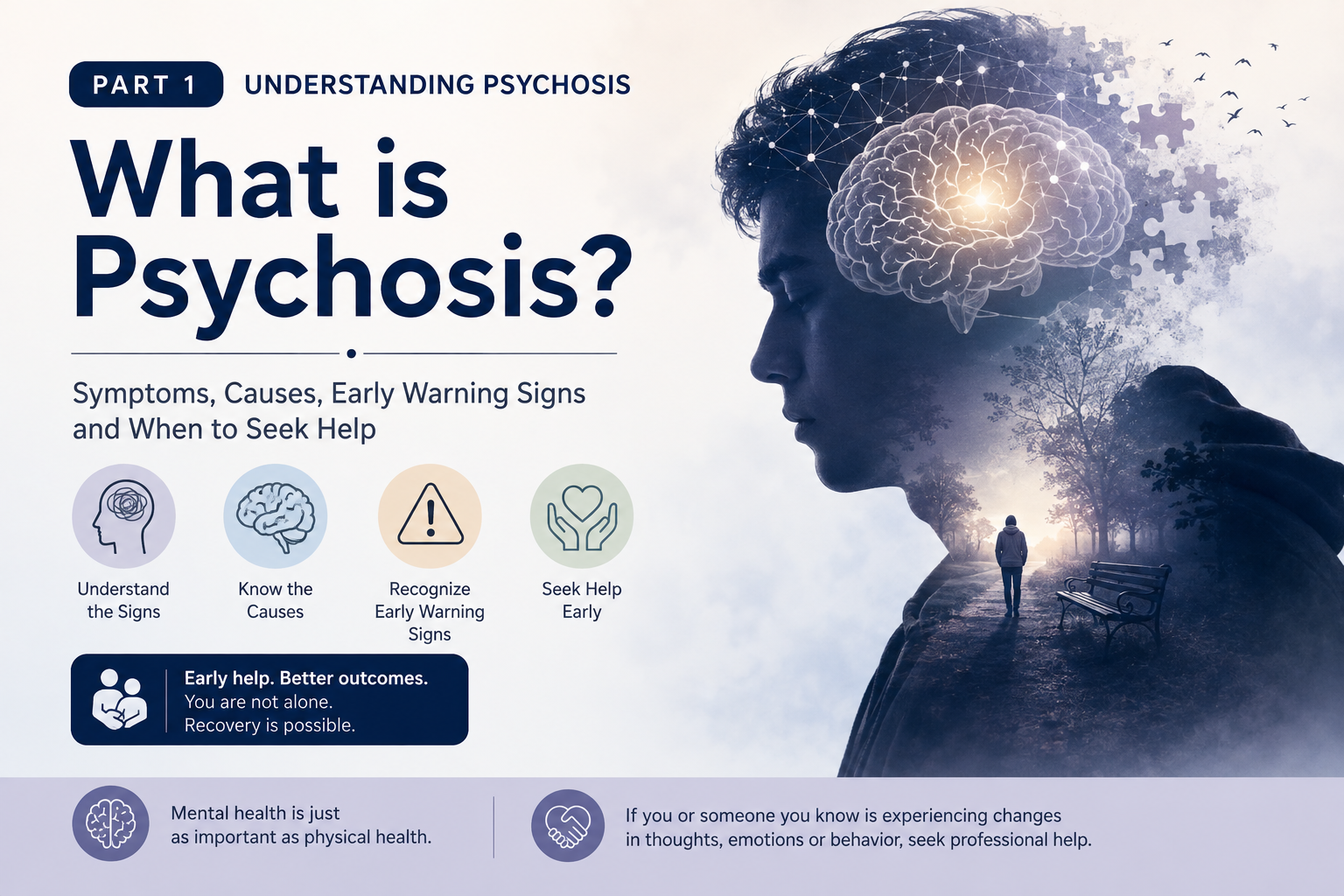
Part 1: Understanding Psychosis and Recognizing Early Warning Signs
Introduction
“My son says someone is following him, but no one else can see them.”
“My daughter keeps hearing voices when she is alone.”
“My husband believes people are spying on him through his phone, even though there is no evidence.”
These experiences can be frightening—not only for the person affected but also for their family. Many people assume such symptoms are caused by stress, black magic, or supernatural forces. Others delay seeking medical help because they fear stigma or do not recognize these experiences as signs of a treatable mental health condition.
One of the conditions that can cause these symptoms is psychosis.
Psychosis is not a disease itself, but a group of symptoms in which a person loses contact with reality. It can occur as part of several mental illnesses, certain medical conditions, or after using drugs such as cannabis, crystal meth (Ice), cocaine, or amphetamines.
The good news is that psychosis is treatable, especially when recognized early. Advances in psychiatry have transformed the outlook for many patients. With timely diagnosis, appropriate medication, psychological support, and family involvement, many individuals recover and return to school, work, and family life.
In this guide, we explain what psychosis is, its symptoms, causes, risk factors, and the importance of early treatment. Whether you are experiencing symptoms yourself or are concerned about someone you love, understanding psychosis is the first step toward recovery.
⸻
What Is Psychosis?
Psychosis is a condition in which a person has difficulty distinguishing what is real from what is not. Their thoughts, perceptions, and beliefs become altered, causing them to interpret the world differently from those around them.
A person experiencing psychosis may:
* Hear voices that others cannot hear. * See things that are not actually present. * Believe false ideas despite clear evidence to the contrary. * Become suspicious of family, friends, or strangers. * Speak in a way that seems confusing or difficult to follow. * Behave in ways that appear unusual or out of character.
These experiences feel completely real to the individual, which is why arguing or trying to “prove them wrong” is usually ineffective.
Psychosis can develop gradually over weeks or months, or it can appear suddenly over a few days, depending on the underlying cause.
⸻
Is Psychosis the Same as Schizophrenia?
No.
This is one of the most common misconceptions.
Psychosis is a symptom or syndrome, whereas schizophrenia is one specific mental illness that can cause psychosis.
Think of psychosis as a fever. Just as a fever can result from many different illnesses, psychosis can occur in several psychiatric and medical conditions.
Psychosis may occur in:
* Schizophrenia * Bipolar disorder * Severe depression with psychotic features * Substance-induced psychosis * Brief psychotic disorder * Medical illnesses affecting the brain * Certain neurological disorders
This distinction is important because treatment depends on identifying the underlying cause rather than simply treating the symptoms.
⸻
How Common Is Psychosis?
Psychosis affects people throughout the world and can occur at almost any age, although it most commonly begins during late adolescence or early adulthood.
International research suggests that approximately 3% of people experience at least one episode of psychosis during their lifetime, while schizophrenia affects about 1% of the global population.
In Pakistan, reliable national statistics remain limited, but psychiatrists are seeing increasing numbers of patients with psychosis due to:
* Better awareness of mental illness. * Rising substance misuse, particularly crystal meth (Ice) and cannabis. * Increasing stress and urbanization. * Earlier recognition and referral to mental health services.
Drug-induced psychosis has become an important concern, especially among young adults using crystal methamphetamine, cannabis, and other recreational substances.
⸻
Early Warning Signs of Psychosis
Psychosis rarely appears without warning.
In many individuals, subtle changes develop weeks or even months before the first obvious psychotic episode.
Recognizing these warning signs allows treatment to begin earlier, often improving long-term outcomes.
Common early signs include:
Social Withdrawal
A previously outgoing person may begin avoiding friends, family, school, or work.
Declining Academic or Work Performance
Students may lose concentration and grades may suddenly fall. Adults may struggle to complete routine tasks or miss work frequently.
Sleep Disturbance
Difficulty sleeping, staying awake all night, or major changes in sleep patterns are common early symptoms.
Increasing Suspiciousness
The individual may become unusually mistrustful or believe that others are talking about them without evidence.
Emotional Changes
Family members may notice:
* Irritability * Anxiety * Depression * Emotional flatness * Reduced motivation
Difficulty Concentrating
Simple tasks become harder to complete, and conversations may be difficult to follow.
Neglect of Personal Hygiene
Bathing, changing clothes, grooming, or maintaining personal appearance may gradually decline.
Unusual Ideas
The person may develop strange beliefs that seem unrealistic but are not yet fully fixed.
These early changes are often mistaken for laziness, stress, or teenage behaviour, delaying appropriate treatment.
⸻
Symptoms of Psychosis
Psychosis affects people differently, but symptoms generally fall into three major categories.
Positive Symptoms
In psychiatry, positive symptoms are experiences added to normal functioning.
Hallucinations
Hallucinations occur when someone experiences sensations without an external stimulus.
The most common type is hearing voices, but hallucinations can also involve:
* Seeing things others cannot see. * Smelling unusual odors. * Feeling insects crawling on the skin. * Tasting things that are not present.
Auditory hallucinations are particularly common in schizophrenia and other psychotic disorders.
⸻
Delusions
Delusions are firmly held false beliefs that persist despite clear evidence against them.
Examples include:
* Believing someone is trying to harm them. * Thinking neighbours are spying on them. * Believing television programs contain secret personal messages. * Thinking they possess special powers or are a famous historical figure.
Because these beliefs feel completely real, simply arguing with the person rarely changes their mind.
⸻
Disorganized Thinking
Thoughts become difficult to organize.
Speech may become:
* Tangential * Difficult to follow * Illogical * Rapidly changing from one topic to another
Family members often notice that conversations no longer make sense.
⸻
Negative Symptoms
Negative symptoms represent a reduction or loss of normal functioning.
These may include:
* Reduced emotional expression * Lack of motivation * Social withdrawal * Reduced speech * Poor self-care * Loss of interest in enjoyable activities
Negative symptoms are often mistaken for depression or laziness.
⸻
Cognitive Symptoms
Psychosis may also affect thinking and memory.
Patients may experience:
* Poor attention * Difficulty making decisions * Impaired memory * Reduced problem-solving ability * Slower thinking
These difficulties can interfere with education, employment, and daily functioning even after hallucinations or delusions improve.
⸻
What Causes Psychosis?
Psychosis is a complex condition with multiple contributing factors. In most cases, it develops because of an interaction between biological, psychological, and environmental influences.
Common causes include:
Mental Health Disorders
* Schizophrenia * Bipolar disorder * Severe depression * Schizoaffective disorder
Substance Use
Certain drugs significantly increase the risk of psychosis, including:
* Crystal meth (Ice) * Cannabis * Cocaine * Amphetamines * LSD * MDMA * Some prescription medicines when misused
Medical Conditions
Less commonly, psychosis may result from:
* Brain infections * Epilepsy * Autoimmune disorders * Thyroid disease * Vitamin deficiencies * Brain tumors * Dementia
For this reason, a comprehensive medical assessment is important before making a psychiatric diagnosis.
⸻
Who Is at Higher Risk?
Although psychosis can affect anyone, some people have a higher risk.
Risk factors include:
* Family history of psychotic disorders. * Heavy cannabis use during adolescence. * Crystal meth or cocaine use. * Severe psychological trauma. * Childhood abuse or neglect. * Chronic stress. * Sleep deprivation. * Certain neurological illnesses.
Having one or more risk factors does not mean a person will definitely develop psychosis, but awareness allows earlier recognition and intervention.
⸻
Why Early Treatment Matters
Psychosis should never be ignored.
Without treatment, symptoms may worsen, relationships may deteriorate, education and employment may suffer, and the risk of self-harm or harm due to impaired judgment may increase.
Research consistently shows that early diagnosis and treatment improve recovery, reduce relapse, and help people return to normal life more quickly.
Families should seek professional assessment as soon as they notice persistent hallucinations, unusual beliefs, severe behavioural changes, or marked deterioration in functioning.
⸻
Looking Ahead
In Part 2, we will explore the different types of psychosis, including schizophrenia, bipolar disorder with psychosis, psychotic depression, drug-induced psychosis caused by cannabis and crystal meth (Ice), brief psychotic disorder, and medical conditions that can mimic psychosis. Understanding the underlying cause is essential because treatment and long-term outcomes vary depending on the diagnosis.
Related articles
Part 3: Diagnosis, Treatment, Recovery, and Living with Psychosis
Part2, Types of Psychosis – Understanding the Different Causes of Losing Touch with Reality
Research and evidence