Written by
Dr.Muhammad Shoaib Zafar
- Published:
7 min read
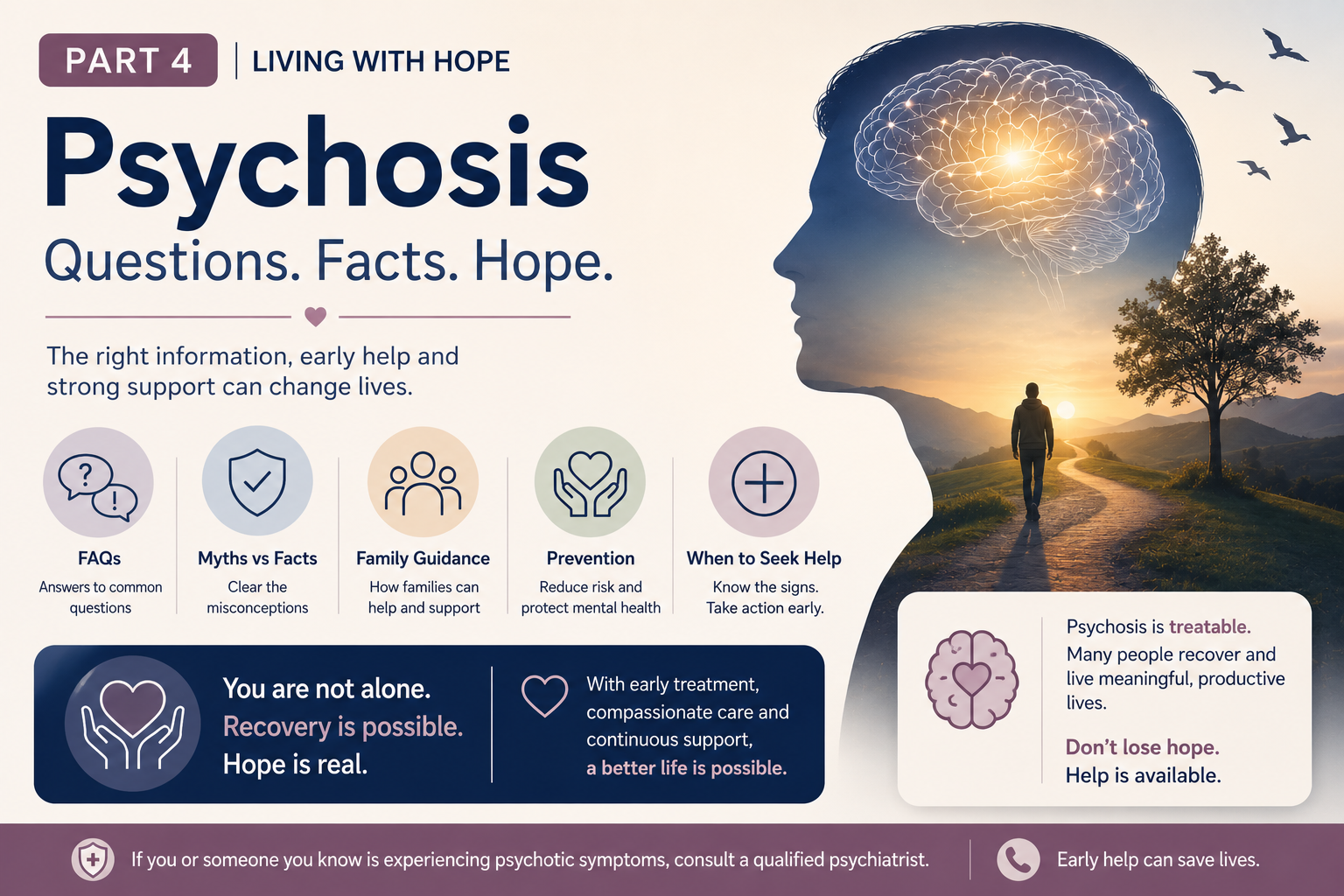
Part 4: Frequently Asked Questions, Myths, Prevention, and Living Well with Psychosis
Understanding Psychosis Can Save Lives
For many people, psychosis is one of the most misunderstood mental health conditions. Fear, stigma, and misinformation often delay treatment, causing unnecessary suffering for patients and their families.
The reality is very different.
Psychosis is a treatable medical condition, and with early diagnosis, appropriate medication, psychological therapy, and family support, many people recover and lead fulfilling, productive lives.
This final section answers the most common questions patients and families ask while correcting myths that continue to surround psychotic illnesses.
⸻
Frequently Asked Questions (FAQs)
1. Is psychosis the same as schizophrenia?
No.
Psychosis is a group of symptoms in which a person loses touch with reality, whereas schizophrenia is one mental illness that can cause psychosis.
Psychosis may also occur in bipolar disorder, severe depression, substance-induced psychosis, certain medical illnesses, and neurological disorders.
⸻
2. Can psychosis be cured?
The answer depends on its cause.
Some people recover completely after a single episode, especially if psychosis is caused by drugs, severe stress, or a treatable medical illness.
Others, such as individuals with schizophrenia, may require long-term treatment but can still achieve excellent recovery and lead independent lives.
⸻
3. What is the first sign of psychosis?
Early warning signs often include:
* Social withdrawal * Sleep problems * Increasing suspiciousness * Difficulty concentrating * Poor self-care * Unusual beliefs * Declining school or work performance
Recognizing these symptoms early can significantly improve recovery.
⸻
4. Can stress cause psychosis?
Severe emotional stress alone rarely causes psychosis in healthy individuals, but it may trigger psychosis in people who are already vulnerable because of genetic, psychological, or biological factors.
⸻
5. Can cannabis cause psychosis?
Yes.
Heavy cannabis use, particularly during adolescence, has been linked to an increased risk of psychosis and schizophrenia in susceptible individuals.
The risk appears higher with frequent use and high-potency cannabis products.
⸻
6. Can crystal meth (Ice) cause psychosis?
Yes.
Crystal methamphetamine is one of the most common causes of drug-induced psychosis.
People may develop hallucinations, severe paranoia, aggression, insomnia, and bizarre behaviour.
Repeated use can result in recurrent psychotic episodes, even after stopping the drug.
⸻
7. Are people with psychosis violent?
Most people with psychosis are not violent.
Many are frightened, confused, and socially withdrawn rather than aggressive.
The risk of violence may increase if psychosis is untreated, accompanied by substance misuse, or associated with severe agitation, but the vast majority of patients pose no danger to others.
Unfortunately, media portrayals often reinforce unfair stereotypes.
⸻
8. Can children develop psychosis?
Yes, although childhood psychosis is uncommon.
Persistent hallucinations, unusual beliefs, severe behavioural changes, or marked decline in functioning should always be evaluated by a child and adolescent psychiatrist.
Early intervention improves long-term outcomes.
⸻
9. How long does treatment last?
Treatment duration varies depending on the diagnosis.
Some patients require medication for several months after a first episode, while others with chronic illnesses such as schizophrenia may benefit from long-term treatment to reduce the risk of relapse.
Never stop medication without discussing it with your psychiatrist.
⸻
10. Can someone with psychosis marry, study, or work?
Absolutely.
With appropriate treatment and ongoing support, many people with psychosis:
* Complete higher education. * Build successful careers. * Get married. * Raise families. * Live independently.
Recovery is about restoring quality of life, not simply reducing symptoms.
⸻
Common Myths About Psychosis
Myth: Psychosis means someone is “mad.”
Fact: Psychosis is a medical condition affecting brain function. It is not a sign of personal weakness or poor character.
⸻
Myth: Hearing voices always means schizophrenia.
Fact: Hallucinations can occur in several psychiatric and medical conditions, not just schizophrenia.
⸻
Myth: People with psychosis never recover.
Fact: Many individuals recover well with early diagnosis, medication, psychotherapy, and family support.
⸻
Myth: Medication changes a person’s personality.
Fact: Properly prescribed medication helps reduce distressing symptoms and improve functioning. The goal is to help people return to their usual selves, not change who they are.
⸻
Myth: Psychosis is caused by supernatural forces or black magic.
Fact: Psychosis results from complex interactions between genetics, brain chemistry, psychological factors, and environmental influences. While cultural beliefs vary, scientific evidence supports medical and psychological treatment.
⸻
Myth: Families are responsible for causing psychosis.
Fact: Families do not cause psychosis. However, supportive family involvement is one of the strongest predictors of successful recovery.
⸻
Can Psychosis Be Prevented?
Not every case can be prevented, but several steps may reduce risk or improve early detection.
Avoid Recreational Drugs
Avoiding cannabis, crystal meth (Ice), cocaine, amphetamines, and other psychoactive substances is one of the most effective ways to reduce the risk of drug-induced psychosis.
Prioritize Mental Health
Early treatment of anxiety, depression, trauma, and other mental health conditions may reduce psychological stress and improve overall wellbeing.
Maintain Healthy Sleep
Chronic sleep deprivation can worsen mental health and may contribute to psychiatric symptoms in vulnerable individuals.
Manage Stress
Healthy coping strategies such as regular exercise, mindfulness, social support, and psychotherapy help protect mental health.
Seek Help Early
The sooner psychosis is identified and treated, the better the chances of recovery.
⸻
When Should You Seek Emergency Medical Help?
Immediate psychiatric assessment is recommended if someone:
* Becomes suicidal. * Expresses thoughts of harming others. * Cannot distinguish reality from hallucinations or delusions. * Becomes severely agitated or aggressive. * Refuses food or water. * Wanders aimlessly or becomes unable to care for themselves. * Develops psychotic symptoms after using drugs. * Experiences sudden confusion accompanied by fever, seizures, or neurological symptoms.
Psychosis should always be taken seriously. Early medical attention can prevent complications and save lives.
⸻
Supporting a Loved One with Psychosis
Families often ask what they should do when someone develops psychosis.
Helpful approaches include:
* Remain calm and speak in a reassuring manner. * Avoid arguing about hallucinations or delusions. * Encourage professional treatment. * Ensure medications are taken as prescribed. * Attend family therapy or psychoeducation sessions. * Watch for early warning signs of relapse. * Offer emotional support without criticism or blame. * Take care of your own mental health as well.
Recovery is usually strongest when patients and families work together with their treatment team.
⸻
Key Messages
* Psychosis is a symptom, not a diagnosis. * Early recognition and treatment significantly improve recovery. * Hallucinations and delusions require professional assessment. * Recreational drugs such as cannabis and crystal meth can trigger psychosis. * Medication, psychotherapy, family support, and rehabilitation all play important roles in recovery. * Most people with psychosis are not violent and can live productive, meaningful lives. * Seeking help early offers the best chance of long-term recovery.
⸻
Conclusion
Psychosis can be frightening, but it is not hopeless.
Modern psychiatric treatment has transformed the outlook for people living with psychotic disorders. Many individuals recover, return to work or education, rebuild relationships, and enjoy fulfilling lives.
The greatest obstacle is often not the illness itself but the delay in seeking treatment because of stigma, fear, or misinformation.
If you or someone you know is experiencing hallucinations, delusions, severe suspiciousness, or marked behavioural changes, do not ignore these symptoms. Early consultation with a qualified psychiatrist can make a life-changing difference.
Remember, psychosis is treatable, recovery is possible, and no one should face this journey alone.
⸻
About the Author
Dr. Muhammad Shoaib Zafar is a Consultant Psychiatrist, Addiction Specialist, Child & Adolescent Psychiatrist, and Psychotherapist based in Lahore, Pakistan. He has extensive experience in diagnosing and treating psychotic disorders, schizophrenia, bipolar disorder, substance-induced psychosis, and other severe mental illnesses. His clinical practice focuses on evidence-based, compassionate, and individualized care to help patients recover and improve their quality of life.
⸻
Scientific References
Support the article with evidence from:
* World Health Organization (WHO) * National Institute of Mental Health (NIMH) * National Institute on Drug Abuse (NIDA) * American Psychiatric Association (APA) * National Institute for Health and Care Excellence (NICE) * The Lancet Psychiatry * JAMA Psychiatry * British Journal of Psychiatry * Pakistan Journal of Medical Sciences * Journal of the Pakistan Medical sciences
Related articles
Part 3: Diagnosis, Treatment, Recovery, and Living with Psychosis
Part2, Types of Psychosis – Understanding the Different Causes of Losing Touch with Reality
Research and evidence