Written by
Dr.Muhammad Shoaib Zafar
- Published:
7 min read
Not Every Person with Psychosis Has Schizophrenia
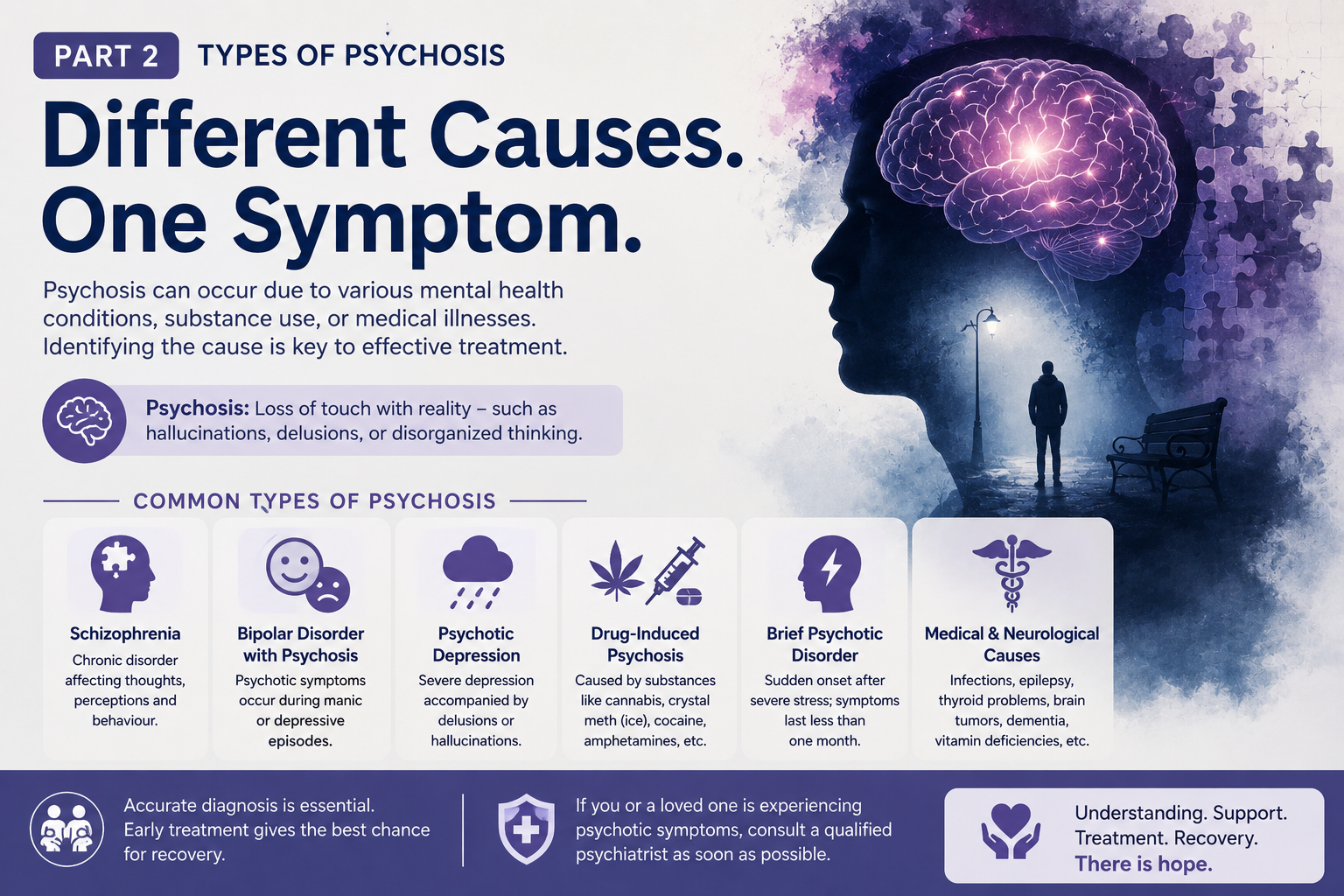
One of the biggest misconceptions about psychosis is that everyone experiencing hallucinations or delusions has schizophrenia. In reality, psychosis is a symptom, not a diagnosis. It can occur in several psychiatric illnesses, medical conditions, and even after the use of certain drugs.
Identifying the underlying cause is one of the most important steps in treatment because recovery, medications, and long-term outcomes vary considerably depending on the diagnosis.
In this section, we will explore the most common types of psychosis, helping patients and families understand why psychosis develops and why a thorough psychiatric evaluation is essential.
⸻
Schizophrenia
Schizophrenia is one of the best-known causes of psychosis. It is a chronic psychiatric disorder that affects how a person thinks, feels, behaves, and interprets reality.
Symptoms usually begin between the late teenage years and the early thirties, although the age of onset varies.
People with schizophrenia may experience:
* Hearing voices that others cannot hear. * Strong false beliefs (delusions). * Disorganized thinking and speech. * Social withdrawal. * Reduced emotional expression. * Lack of motivation. * Difficulty maintaining relationships, education, or employment.
Contrary to popular belief, schizophrenia does not mean having multiple personalities. Most people with schizophrenia are not violent. In fact, they are far more likely to withdraw from others than to harm them.
With early diagnosis, antipsychotic medication, psychological therapy, family education, and rehabilitation, many people with schizophrenia can lead productive and meaningful lives.
⸻
Bipolar Disorder with Psychotic Features
Bipolar disorder is characterized by episodes of mania and depression.
During severe manic or depressive episodes, some individuals develop psychotic symptoms.
A person experiencing manic psychosis may believe they possess extraordinary abilities, have a special mission, or are exceptionally wealthy or powerful. They may sleep very little, speak rapidly, become unusually energetic, spend excessive amounts of money, or engage in risky behaviours.
During severe depression, psychosis may present as intense guilt, hopelessness, or false beliefs that the person has committed an unforgivable crime or has a serious illness despite medical reassurance.
Importantly, psychotic symptoms in bipolar disorder usually occur only during mood episodes, unlike schizophrenia, where psychosis may occur independently of mood changes.
⸻
Major Depressive Disorder with Psychotic Features
Severe depression can sometimes become so intense that a person loses touch with reality.
This condition is known as psychotic depression.
Individuals may experience:
* Hearing critical or accusing voices. * Believing they are responsible for disasters. * Thinking they are beyond help or deserve punishment. * Feeling convinced they have an incurable disease despite normal medical investigations.
Because psychotic depression carries a higher risk of suicide than depression without psychosis, prompt psychiatric assessment is essential.
Treatment often combines antidepressants, antipsychotic medication, psychotherapy, and, in selected severe cases, electroconvulsive therapy (ECT).
⸻
Drug-Induced Psychosis
Drug-induced psychosis is becoming increasingly common, particularly among young adults.
Certain recreational drugs directly affect brain chemicals involved in thinking, perception, and behaviour. In some individuals, they trigger temporary psychotic symptoms, while in others they may unmask an underlying psychiatric illness.
Crystal Meth (Ice)
Crystal methamphetamine is one of the strongest causes of drug-induced psychosis.
Individuals may experience:
* Extreme suspiciousness. * Believing someone is following or watching them. * Hearing threatening voices. * Seeing people or insects that are not present. * Aggressive or unpredictable behaviour. * Severe insomnia.
Repeated methamphetamine use substantially increases the likelihood of recurrent psychotic episodes, even after periods of abstinence.
⸻
Cannabis-Induced Psychosis
Many people incorrectly believe cannabis is harmless.
Research has shown that heavy cannabis use, especially during adolescence, increases the risk of psychosis, particularly in individuals with a genetic vulnerability.
Symptoms may include:
* Paranoia. * Hallucinations. * Severe anxiety. * Confusion. * Delusional beliefs.
For some individuals, symptoms disappear after stopping cannabis. For others, cannabis may trigger long-term psychiatric illness requiring ongoing treatment.
⸻
Cocaine and Amphetamines
Cocaine and amphetamine misuse can produce psychotic symptoms similar to those seen in schizophrenia.
Common symptoms include:
* Hearing voices. * Feeling watched. * Severe agitation. * Paranoid beliefs. * Aggressive behaviour.
Emergency medical assessment is often required because these substances can also cause heart attacks, strokes, seizures, and dangerously high body temperatures.
⸻
Hallucinogenic Drugs
Substances such as LSD, MDMA (Ecstasy), PCP, and synthetic recreational drugs may also produce hallucinations, altered perception, and psychotic behaviour.
Although symptoms often improve after the drug leaves the body, some individuals experience persistent psychosis requiring long-term psychiatric care.
⸻
Brief Psychotic Disorder
Sometimes psychosis develops suddenly after an overwhelming stressful event.
Examples include:
* Sudden bereavement. * Serious accidents. * Natural disasters. * Physical assault. * Major emotional trauma.
Symptoms usually develop rapidly and last less than one month, followed by complete recovery.
Although many patients recover fully, psychiatric follow-up remains important because some individuals later develop other psychotic disorders.
⸻
Schizoaffective Disorder
Schizoaffective disorder combines features of schizophrenia and mood disorders.
Patients experience psychotic symptoms together with episodes of depression or mania.
Diagnosis can be challenging because symptoms overlap with both schizophrenia and bipolar disorder.
Treatment usually involves:
* Antipsychotic medication. * Mood stabilizers when appropriate. * Antidepressants in selected cases. * Psychological therapy. * Family support.
⸻
Medical Conditions That Can Cause Psychosis
Not all psychosis originates from psychiatric illness.
Several medical conditions can produce psychotic symptoms, particularly when brain function is affected.
Examples include:
* Brain infections. * Autoimmune encephalitis. * Brain tumours. * Epilepsy. * Stroke. * Parkinson’s disease. * Alzheimer’s disease and other dementias. * Thyroid disorders. * Vitamin B12 deficiency. * Severe liver or kidney disease. * High fever and delirium.
For this reason, psychiatrists often recommend blood tests, brain imaging, or other investigations before confirming a psychiatric diagnosis.
⸻
Psychosis in Older Adults
Psychosis developing for the first time in older adults requires careful evaluation.
Possible causes include:
* Dementia. * Delirium due to infection. * Medication side effects. * Stroke. * Parkinson’s disease. * Metabolic disorders.
Because these conditions require different treatments, assessment by a psychiatrist and physician is essential.
⸻
Psychosis in Children and Adolescents
Psychosis can occur in young people, although it is less common than in adults.
Warning signs include:
* Declining school performance. * Social withdrawal. * Talking to unseen people. * Increasing suspiciousness. * Unusual fears. * Emotional changes. * Declining self-care.
Early intervention services have significantly improved outcomes for adolescents experiencing their first episode of psychosis.
Families should never dismiss persistent hallucinations or bizarre behaviour as “just a phase.”
⸻
When Should Families Seek Immediate Help?
Emergency psychiatric assessment should be sought if someone with psychosis:
* Expresses suicidal thoughts. * Becomes violent or aggressive. * Stops eating or drinking. * Cannot distinguish reality from hallucinations. * Wanders aimlessly or becomes lost. * Becomes extremely fearful or paranoid. * Uses drugs together with psychotic symptoms. * Appears unable to care for themselves.
Early treatment reduces complications and often shortens the duration of illness.
⸻
Key Messages
Psychosis is not a single illness but a symptom that can arise from many different psychiatric and medical conditions. Schizophrenia, bipolar disorder, severe depression, substance misuse, neurological disorders, and medical illnesses may all present with psychotic symptoms.
Understanding the underlying cause is crucial because treatment differs depending on the diagnosis. Self-diagnosis or relying on myths can delay effective care and increase the risk of long-term complications.
The encouraging news is that many forms of psychosis respond well to modern psychiatric treatment, particularly when intervention begins early.
⸻
What’s Next?
In Part 3, we will discuss how psychosis is diagnosed, the role of medical investigations, available treatments, antipsychotic medications, psychotherapy, hospitalization, recovery, relapse prevention, and practical advice for families caring for someone with psychosis.
Related articles
Part 3: Diagnosis, Treatment, Recovery, and Living with Psychosis
Research and evidence