Written by
Dr.Muhammad Shoaib Zafar
- Published:
9 min read
Introduction
“Doctor ne likhi thi, is liye safe hogi.”
This is one of the most common misconceptions that fuels prescription drug addiction in Pakistan.
While public attention often focuses on heroin, crystal meth (Ice), cocaine, or cannabis, a quieter but rapidly growing epidemic is unfolding across the country. Medicines that were developed to relieve pain, reduce anxiety, improve sleep, suppress cough, or treat allergies are increasingly being misused for their psychoactive effects. Many of these drugs are easily available, relatively inexpensive, and often obtained without proper medical supervision.
From students using tramadol to stay awake during examinations, to individuals becoming dependent on sleeping pills after prolonged stress, to people injecting nalbuphine (Nelbin) for a brief feeling of relief or euphoria, prescription drug misuse has become a major public health concern. Unfortunately, because these medicines originate from pharmacies rather than illegal street markets, many people underestimate their addictive potential until serious physical, psychological, and social consequences develop.
According to international health organizations, non-medical use of prescription medicines continues to rise worldwide. Low- and middle-income countries face additional challenges due to weak regulation, limited public awareness, inadequate mental health services, and easy access to potentially addictive medications.
Pakistan is no exception.
As an addiction psychiatrist, I increasingly encounter patients whose addiction did not begin with heroin or crystal meth. Instead, it started with a legitimate prescription for anxiety, insomnia, back pain, surgery, or chronic illness. What began as treatment gradually progressed to dependence, tolerance, withdrawal, and eventually addiction.
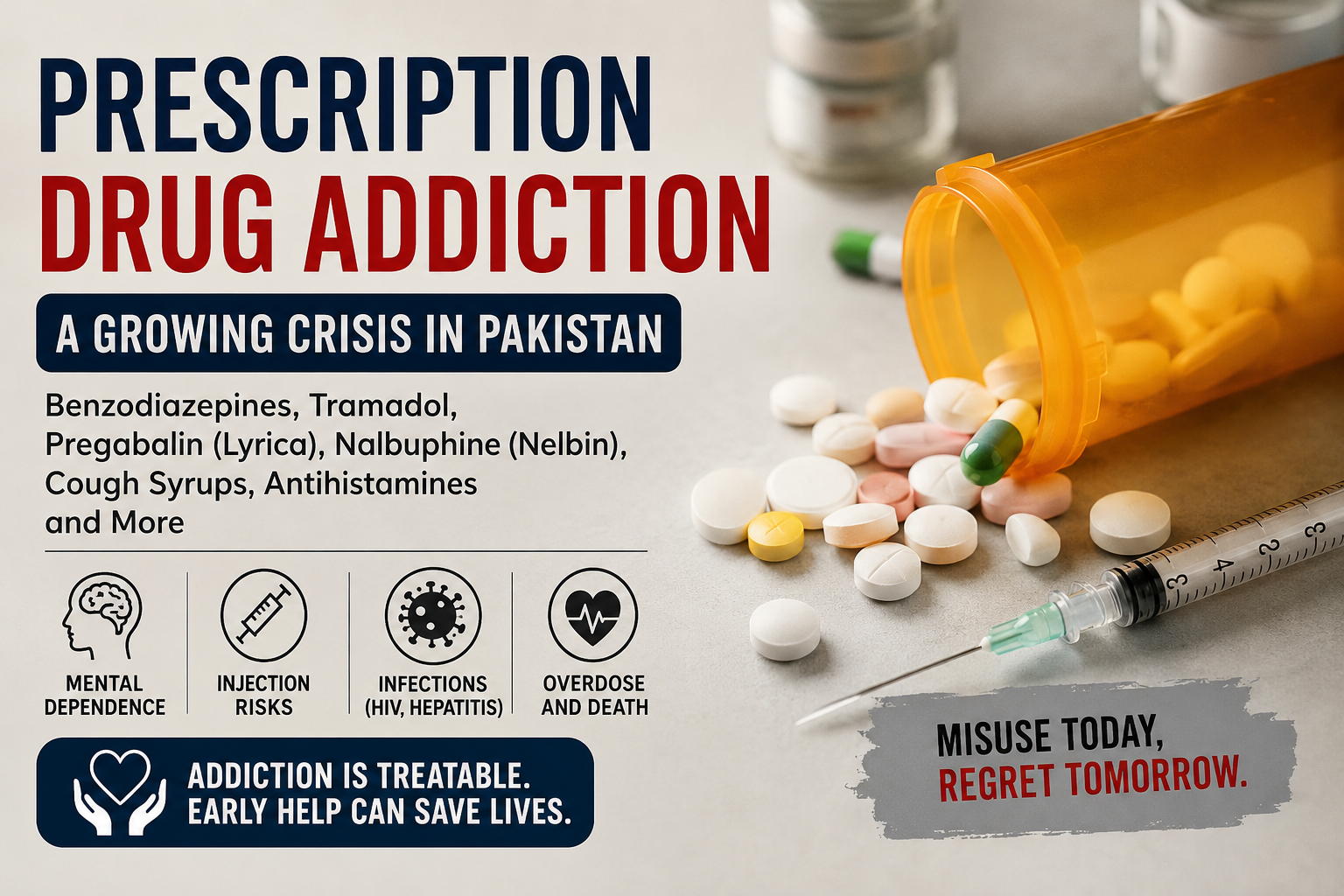
This article explains the growing problem of pharmaceutical drug abuse in Pakistan, why it is increasing, which medicines are commonly misused, the dangers of injecting medicines such as nalbuphine (Nelbin), available treatment options, and practical steps families can take to prevent addiction.
⸻
What Is Prescription Drug Addiction?
Prescription drug addiction occurs when a person continues using a medicine beyond its intended medical purpose despite physical, psychological, social, or occupational harm.
Unlike appropriate medical use under a doctor’s supervision, addiction is characterized by:
* Loss of control over medicine use * Increasing doses to achieve the same effect (tolerance) * Strong cravings * Withdrawal symptoms when the medicine is stopped * Continued use despite harmful consequences
Not everyone who takes these medicines becomes addicted. However, prolonged use, self-medication, high doses, or combining medicines with alcohol or other drugs significantly increases the risk.
⸻
Why Prescription Drug Abuse Is Increasing in Pakistan
Easy Availability
Many potentially addictive medicines remain available through pharmacies without adequate prescription verification. This accessibility allows repeated purchases from different medical stores and encourages self-medication.
Self-Medication Culture
Instead of consulting qualified healthcare professionals, many individuals rely on advice from friends, relatives, pharmacy workers, or previous prescriptions. Medicines intended for short-term treatment may continue for months or even years.
Untreated Mental Health Problems
Anxiety, depression, insomnia, trauma, and chronic stress frequently remain untreated due to stigma or lack of access to mental health care. Some people begin using sedatives or painkillers in an attempt to cope with emotional distress.
Chronic Pain and Physical Illness
Patients with persistent pain may gradually increase their medication doses without medical supervision, increasing the risk of dependence.
Misconceptions About Prescription Medicines
Many people believe:
* “It is a doctor’s medicine, so it cannot be addictive.” * “Sleeping pills are harmless.” * “Painkillers are safer than illegal drugs.” * “An injection works better than tablets.”
Unfortunately, these misconceptions often delay recognition of addiction until serious complications develop.
⸻
Medicines Commonly Misused in Pakistan
Benzodiazepines
Examples include alprazolam, clonazepam, diazepam, bromazepam, and lorazepam.
These medicines are commonly prescribed for anxiety, panic attacks, muscle spasms, and insomnia. While highly effective when used appropriately, prolonged or unsupervised use can lead to tolerance and dependence.
Individuals may initially experience relaxation and improved sleep, but over time they often require progressively higher doses. Long-term misuse can impair memory, concentration, reaction time, and judgment. Sudden discontinuation may trigger severe anxiety, tremors, seizures, or even life-threatening withdrawal.
⸻
Tramadol
Tramadol is an opioid pain medication widely prescribed for moderate to severe pain.
Because it can produce relaxation, mild euphoria, and increased energy in some individuals, it has become one of the most frequently misused prescription medicines in many countries.
Excessive use may result in dependence, seizures, serotonin syndrome, respiratory depression, overdose, and significant withdrawal symptoms when stopped abruptly.
⸻
Pregabalin (Lyrica)
Pregabalin is prescribed for nerve pain, epilepsy, and generalized anxiety disorder.
Although extremely useful in selected patients, misuse has increased considerably over recent years. High doses may produce sedation, dizziness, dissociation, or feelings of intoxication. Pregabalin is particularly dangerous when combined with opioids or benzodiazepines because the combination can significantly increase the risk of respiratory depression.
⸻
Nalbuphine (Nelbin)
Nalbuphine, commonly marketed as Nelbin in Pakistan, is an injectable opioid analgesic used for moderate to severe pain.
Unfortunately, it has become one of the most commonly misused injectable medicines in parts of Pakistan.
Some individuals begin using it after surgery or injury, while others are introduced to it by friends or drug-using peers. The rapid onset of effects following injection can reinforce repeated use, leading to tolerance and addiction within a relatively short period.
Repeated daily injections may eventually become necessary simply to avoid withdrawal symptoms rather than to achieve pleasure.
⸻
Cough Syrups
Codeine-containing and dextromethorphan-containing cough syrups are also commonly misused, particularly among adolescents and young adults.
Large doses may cause drowsiness, hallucinations, impaired judgment, and dependence.
⸻
Antihistamines
Medicines such as promethazine, diphenhydramine, and chlorpheniramine are intended to treat allergies or nausea.
When taken in excessive amounts or combined with opioids, they may enhance sedation and increase the risk of overdose. High doses can also produce confusion, hallucinations, delirium, and memory impairment.
⸻
Other Frequently Misused Medicines
Other pharmaceutical drugs increasingly reported in addiction treatment settings include:
* Gabapentin * Quetiapine * Trihexyphenidyl * Tapentadol * Carisoprodol
⸻
The Growing Problem of Injection Drug Abuse
Injecting medicines such as nalbuphine dramatically increases health risks.
Many people mistakenly believe that injections are stronger, faster, or more effective than tablets. Unfortunately, intravenous drug use exposes individuals to life-threatening complications that extend far beyond addiction itself.
Repeated injections damage veins, increase infection risk, and may introduce dangerous bacteria or viruses directly into the bloodstream.
⸻
Complications of Intravenous Nalbuphine and Other Injectable Drug Abuse
Injection drug use can cause:
* Collapsed veins * Chronic thrombophlebitis * Cellulitis * Skin abscesses * Septicemia (bloodstream infection) * Infective endocarditis (infection of the heart valves) * HIV infection through shared needles * Hepatitis B * Hepatitis C * Bone infections (osteomyelitis) * Pulmonary embolism * Limb ischemia and gangrene * Chronic kidney injury * Permanent disability * Fatal overdose
Many patients require prolonged hospitalization, intravenous antibiotics, surgical drainage of abscesses, or even heart valve replacement surgery because of infections acquired through unsafe injecting practices.
⸻
Mental Health and Prescription Drug Addiction
Prescription drug addiction rarely occurs in isolation.
Many patients also experience:
* Depression * Anxiety disorders * Panic disorder * Bipolar disorder * PTSD * Personality disorders * Chronic insomnia * Suicidal thoughts
When addiction and another psychiatric illness occur together, the condition is known as dual diagnosis. Treating only the addiction while ignoring the underlying mental illness often leads to relapse.
⸻
Warning Signs Families Should Recognize
Families should seek professional help if they notice:
* Frequent requests for early prescription refills * Visiting multiple doctors or pharmacies * Escalating doses without medical advice * Persistent drowsiness or confusion * Sudden mood changes * Financial problems * Social withdrawal * Needle marks * Recurrent skin infections * Missing work or studies * Secretive behaviour regarding medicines
Early intervention greatly improves recovery outcomes.
⸻
Treatment of Prescription Drug Addiction
Recovery begins with a comprehensive medical and psychiatric assessment.
Treatment should be individualized and may include:
* Medically supervised detoxification * Gradual tapering of benzodiazepines when appropriate * Management of withdrawal symptoms * Treatment of co-existing psychiatric disorders * Cognitive Behavioural Therapy (CBT) * Motivational Interviewing * Family therapy * Relapse prevention planning * Long-term follow-up and aftercare
Patients with severe dependence, repeated relapse, injection drug use, or unstable home environments often benefit from structured inpatient rehabilitation programs.
⸻
Prevention
Preventing prescription drug addiction requires collaboration between healthcare professionals, pharmacists, families, educators, and policymakers.
Important preventive measures include:
* Responsible prescribing practices * Stronger pharmacy regulation * Public education about medicine misuse * Secure storage of prescription medicines at home * Early treatment of mental health disorders * School and university awareness programs * Reducing stigma surrounding psychiatric care
⸻
Frequently Asked Questions
Can prescription medicines really cause addiction? Yes. Several medicines can lead to dependence when used for prolonged periods or without medical supervision.
Is Pregabalin addictive? It can be, particularly when taken in high doses or combined with other sedative drugs.
Can sleeping pills be stopped suddenly? No. Abrupt discontinuation of benzodiazepines may trigger severe withdrawal, including seizures. Medical supervision is essential.
Why do some people inject Nelbin? The rapid onset of effects may produce temporary relief or euphoria, but repeated injections significantly increase the risk of addiction, infection, and overdose.
Can prescription drug addiction be treated successfully? Yes. With timely assessment, evidence-based detoxification, psychotherapy, family support, and rehabilitation, many individuals achieve long-term recovery.
⸻
Conclusion
Prescription drug addiction is no longer a hidden issue—it is an emerging public health challenge in Pakistan. Medicines intended to relieve suffering can become harmful when misused, particularly in settings where regulation is weak and awareness is limited.
The encouraging news is that addiction is a treatable medical condition, not a moral failing. Early recognition, compassionate care, evidence-based treatment, and ongoing family support can help individuals regain their health, rebuild relationships, and return to productive lives.
If you or someone you know is struggling with dependence on prescription medicines, seeking help early can prevent irreversible complications and significantly improve the chances of lasting recovery.
⸻
About the Author
Dr. Muhammad Shoaib Zafar is a Consultant Psychiatrist, Addiction Specialist, Child & Adolescent Psychiatrist, and Psychotherapist based in Lahore, Pakistan. He has extensive experience in the assessment, medically supervised detoxification, inpatient rehabilitation, relapse prevention, and long-term management of substance use disorders, including prescription drug addiction, opioid dependence, benzodiazepine misuse, and dual diagnosis. His clinical work focuses on evidence-based, compassionate, and individualized treatment to help patients achieve sustainable recovery.
Related articles
Opioid Dependence Treatment in Lahore | OAMT & Buprenorphine at Mayo Hospital
Research and evidence