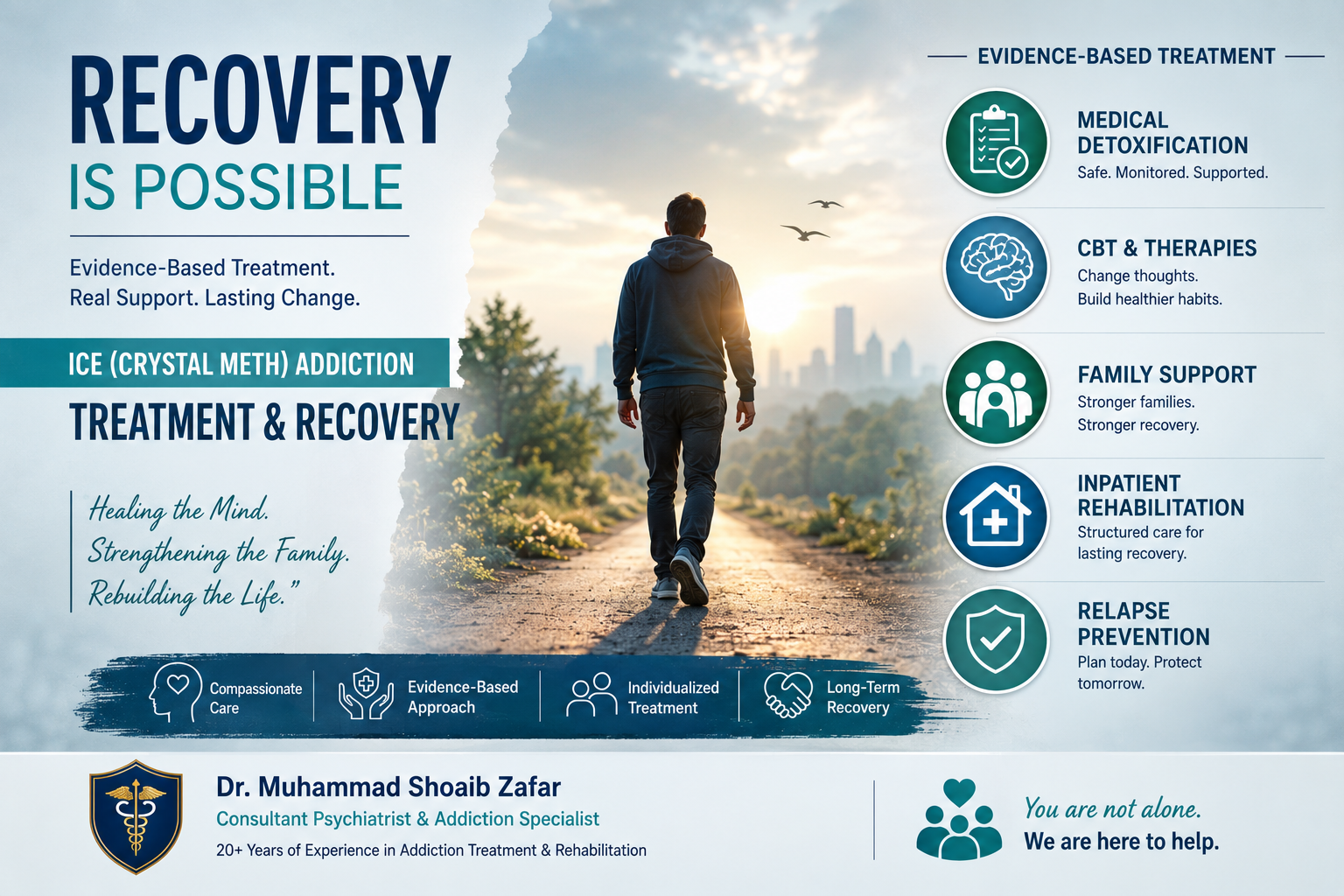
Ice (crystal methamphetamine) addiction is one of the most challenging substance use disorders because it profoundly affects the brain, emotions, behaviour, and physical health. Many individuals and families believe recovery is impossible after prolonged methamphetamine use. Fortunately, decades of scientific research and clinical experience demonstrate that recovery is achievable when treatment is comprehensive, evidence-based, and tailored to each person’s needs.
Successful treatment involves much more than simply stopping drug use. It focuses on healing the brain, improving mental health, rebuilding relationships, preventing relapse, and helping individuals return to productive, meaningful lives.
⸻
How Is Ice Addiction Diagnosed?
Psychiatrists and addiction specialists diagnose Methamphetamine Use Disorder using the Diagnostic and Statistical Manual of Mental Disorders, Fifth Edition, Text Revision (DSM-5-TR).
The diagnosis is based on a persistent pattern of methamphetamine use causing clinically significant impairment or distress. Common diagnostic features include:
* Using larger amounts than intended * Repeated unsuccessful attempts to stop * Spending excessive time obtaining or using the drug * Strong cravings * Failure to fulfil responsibilities at work, school, or home * Continuing use despite health or relationship problems * Giving up important activities * Using in dangerous situations * Developing tolerance * Experiencing withdrawal symptoms
Severity is classified as:
* Mild: 2–3 criteria * Moderate: 4–5 criteria * Severe: 6 or more criteria
This assessment guides the most appropriate treatment plan.
⸻
Who Is at Highest Risk?
Ice addiction can affect anyone, but some individuals are more vulnerable because of biological, psychological, and environmental factors.
Higher-risk groups include:
* People with a family history of addiction * Individuals with depression, anxiety, ADHD, bipolar disorder, or PTSD * Teenagers and young adults * People exposed to chronic stress or trauma * Those with easy access to drugs * Individuals whose friends or social circles use stimulants * Professionals working in demanding, high-pressure environments
Recognising these risk factors allows earlier intervention and prevention.
⸻
Special Considerations for Teenagers, Women, and Professionals
Teenagers
The adolescent brain is still developing, making young people particularly vulnerable to the harmful effects of methamphetamine.
Warning signs include:
* Declining academic performance * Behavioural changes * New peer groups * Irritability * Sleep disturbances * Risk-taking behaviour
Early assessment is essential because addiction during adolescence can interfere with brain development, education, and future opportunities.
⸻
Women
Women with methamphetamine addiction may experience:
* Faster progression to dependence * Higher rates of anxiety, depression, and trauma * Pregnancy-related complications * Greater stigma and delayed treatment * Parenting challenges
Trauma-informed and family-centred care often improves outcomes.
⸻
Professionals
Methamphetamine addiction also affects:
* Doctors * Lawyers * Engineers * Business executives * Students * Shift workers * Healthcare professionals
Many initially misuse stimulants believing they improve concentration or productivity. Over time, addiction reduces performance, impairs judgment, and increases the risk of burnout, medical complications, and relationship difficulties.
⸻
Medical Detoxification
Withdrawal from Ice is usually not medically life-threatening, but it can be emotionally overwhelming.
Common withdrawal symptoms include:
* Fatigue * Depression * Anxiety * Sleep disturbances * Increased appetite * Intense cravings * Poor concentration
A medically supervised detoxification programme provides:
* Comprehensive psychiatric assessment * Monitoring for depression or suicidal thoughts * Symptom management * Nutritional support * Sleep restoration * Safe transition into rehabilitation
Detoxification alone is not a cure. It is the first step in recovery.
⸻
Evidence-Based Psychological Therapies
Long-term recovery depends on addressing the thoughts, emotions, and behaviours that maintain addiction.
Cognitive Behavioural Therapy (CBT)
CBT is one of the most effective treatments for stimulant addiction.
It helps individuals:
* Identify triggers * Challenge unhelpful thinking patterns * Develop healthier coping strategies * Manage cravings * Improve emotional regulation * Prevent relapse
⸻
Contingency Management
Contingency Management uses positive reinforcement to encourage abstinence.
Patients receive meaningful rewards for:
* Attending treatment * Remaining drug-free * Achieving recovery goals
Research consistently shows this approach improves treatment engagement and abstinence rates in stimulant use disorders.
⸻
Family Therapy
Addiction affects the entire family.
Family therapy helps:
* Improve communication * Rebuild trust * Reduce conflict * Establish healthy boundaries * Educate relatives about addiction * Strengthen long-term recovery support
Supportive family involvement is associated with better treatment outcomes and reduced relapse.
⸻
Inpatient Rehabilitation
Residential rehabilitation provides a structured environment away from triggers and drug availability.
It is particularly recommended for individuals with:
* Severe dependence * Repeated relapses * Methamphetamine-induced psychosis * Multiple substance use disorders * Significant mental health conditions * Unsafe home environments
Comprehensive inpatient programmes typically include:
* 24-hour medical and nursing care * Psychiatric review * Individual psychotherapy * Group therapy * Family counselling * Relapse prevention training * Occupational and recreational activities * Discharge and aftercare planning
⸻
Relapse Prevention
Recovery does not end after detoxification or rehabilitation.
Successful relapse prevention includes:
* Identifying personal triggers * Avoiding high-risk situations * Building healthy daily routines * Maintaining regular sleep * Exercising regularly * Managing stress effectively * Continuing psychotherapy * Attending follow-up appointments * Strengthening family and social support
Relapse should be viewed as an opportunity to review and strengthen the treatment plan rather than as a personal failure.
⸻
Recovery Timeline
Recovery from Ice addiction occurs gradually.
First Week
* Withdrawal symptoms peak. * Sleep and appetite begin to improve.
First Month
* Cravings remain significant but become more manageable. * Mood gradually stabilises. * Structured therapy becomes increasingly important.
Three to Six Months
* Concentration, memory, and emotional regulation often improve. * Confidence in recovery grows. * Healthy routines become established.
Six to Twelve Months and Beyond
* Brain function continues to recover. * Relationships improve. * Risk of relapse decreases with ongoing support. * Many individuals return successfully to education, employment, and family life.
Recovery timelines vary depending on the duration of drug use, mental health conditions, physical health, and engagement with treatment.
⸻
What Is the Prognosis?
The outlook for methamphetamine addiction has improved significantly with modern, evidence-based treatment.
Better outcomes are associated with:
* Early diagnosis * Prompt treatment * Family involvement * Treatment of co-occurring mental health disorders * Participation in structured rehabilitation * Long-term follow-up and relapse prevention
Although recovery may involve setbacks, many individuals achieve sustained abstinence, improved mental health, restored relationships, and a productive quality of life.
⸻
Key Messages
* Ice addiction is a chronic but treatable medical condition. * Professional assessment is essential for accurate diagnosis and personalised treatment planning. * Detoxification should be followed by structured psychological rehabilitation. * CBT, Contingency Management, and Family Therapy are among the most effective evidence-based treatments. * Inpatient rehabilitation is often beneficial for severe or complex cases. * Recovery is a gradual process requiring commitment, family support, and ongoing care. * Early intervention offers the best chance of long-term recovery and prevents many life-threatening complications.
⸻
Conclusion
Ice (crystal methamphetamine) addiction can have devastating consequences for physical health, mental well-being, relationships, and society. However, it is important to remember that addiction is treatable and recovery is possible.
Modern addiction medicine combines psychiatric expertise, medical detoxification, psychological therapies, family involvement, and rehabilitation to help individuals regain control of their lives. Seeking help early not only reduces the risk of severe complications but also increases the likelihood of lasting recovery.
If you or someone you love is struggling with Ice addiction, don’t wait for the situation to worsen. Professional assessment, compassionate care, and evidence-based treatment can help individuals rebuild their health, restore relationships, and create a hopeful future.
⸻
Suggested Internal Links
* Ice (Crystal Meth) Addiction: Early Warning Signs, Brain Effects, and Why Early Treatment Saves Lives * Ice (Crystal Meth) Addiction: Medical Complications, Psychosis, Overdose & Emergency Warning Signs * Methamphetamine Withdrawal Symptoms * Methamphetamine-Induced Psychosis * Cocaine Addiction vs Ice Addiction * Addiction Rehabilitation in Lahore
Related articles
Opioid Dependence Treatment in Lahore | OAMT & Buprenorphine at Mayo Hospital
Research and evidence