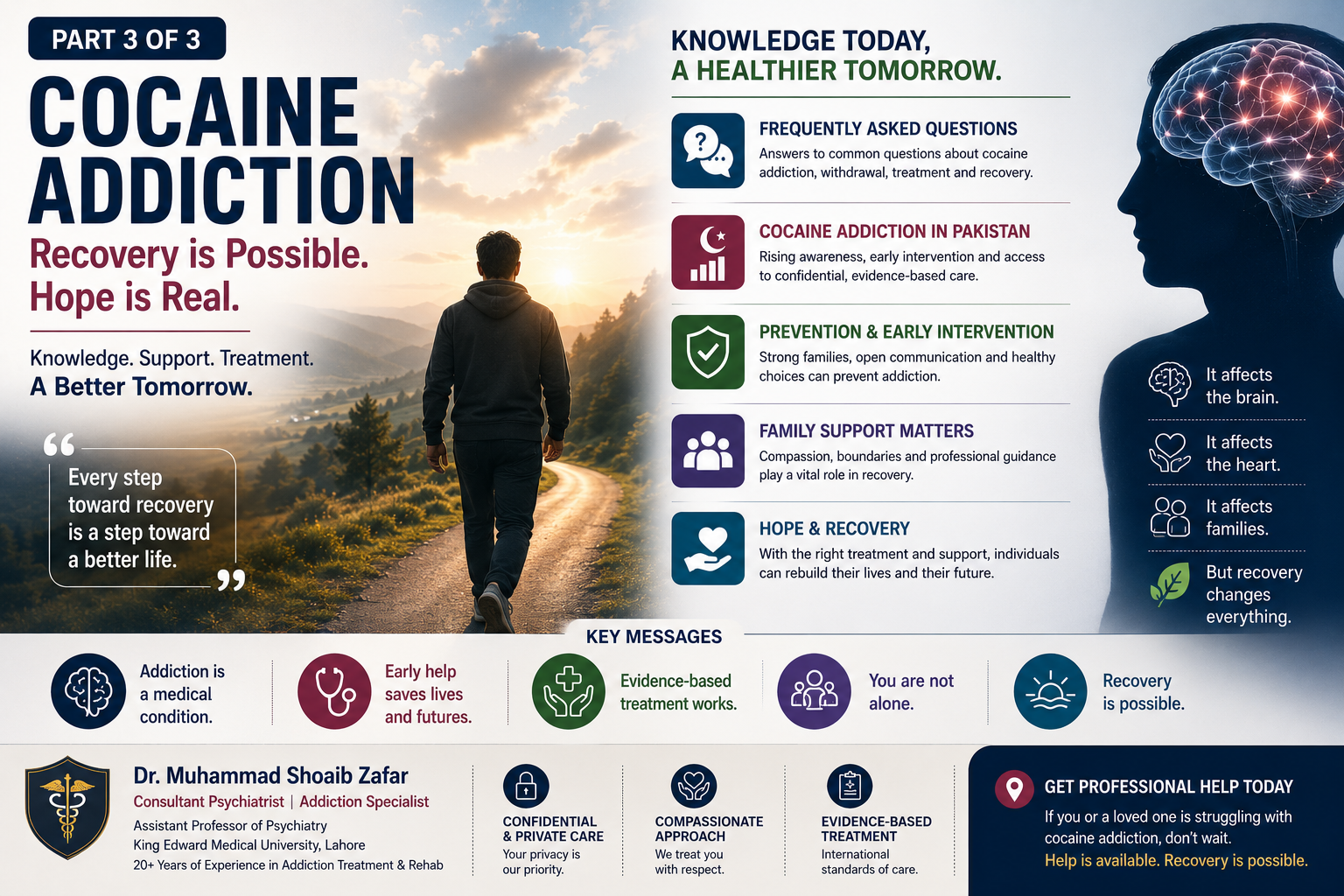
Part 3: Frequently Asked Questions, Recovery, Prevention, Pakistan Context, and Conclusion
Continue reading from Part 2B: Who Is at Risk, Long-Term Complications, Evidence-Based Treatment, and Family Support
By now, we have explored how cocaine addiction develops, the warning signs, medical emergencies, risk factors, and evidence-based treatment. This final section answers the questions patients and families ask most often, highlights the situation in Pakistan, and explains why early treatment offers the best chance of long-term recovery.
⸻
Frequently Asked Questions (FAQ)
Can someone become addicted after using cocaine only a few times?
Yes. While not everyone develops addiction immediately, cocaine has a high addictive potential because it produces rapid and intense dopamine release in the brain. Some individuals—particularly those with genetic vulnerability, mental health disorders, or repeated binge use—may develop cravings and loss of control after relatively limited exposure.
⸻
Can cocaine addiction be cured?
Cocaine addiction is considered a chronic but treatable medical condition.
Many people achieve long-term recovery with:
* Early diagnosis * Evidence-based psychological therapies * Family support * Healthy lifestyle changes * Relapse prevention programmes * Ongoing psychiatric follow-up
Recovery is not defined by perfection but by continuous progress toward a healthier life.
⸻
How long does cocaine withdrawal last?
Withdrawal varies between individuals.
Typical timelines include:
First 24–72 hours
* Fatigue * Depression * Irritability * Increased appetite * Intense cravings
First 1–2 weeks
* Sleep disturbances * Mood changes * Reduced motivation * Difficulty concentrating
Following weeks to months
* Gradual improvement in energy and mood * Occasional cravings triggered by stress or reminders of previous drug use
Professional treatment helps manage symptoms and lowers the risk of relapse.
⸻
Can cocaine permanently damage the brain?
Many cocaine-related brain changes improve with sustained abstinence and appropriate treatment. However, prolonged heavy use may lead to persistent problems with attention, memory, emotional regulation, and decision-making.
The earlier treatment begins, the better the opportunity for recovery.
⸻
Can cocaine addiction cause depression?
Yes.
Many individuals experience depression during cocaine withdrawal because repeated cocaine use disrupts the brain’s natural dopamine system.
Some people also have pre-existing depression that contributes to cocaine use.
Accurate psychiatric assessment is essential because both conditions should be treated together.
⸻
Can cocaine addiction cause psychosis?
Yes.
Heavy cocaine use can trigger:
* Hallucinations * Delusions * Severe paranoia * Aggressive behaviour * Confusion
Cocaine-induced psychosis is a psychiatric emergency requiring immediate professional assessment.
⸻
Can someone recover without rehabilitation?
Some individuals with mild cocaine use disorder may recover through structured outpatient treatment.
However, inpatient rehabilitation is often recommended for people who have:
* Severe dependence * Repeated relapses * Cocaine-induced psychosis * Multiple substance use disorders * Significant mental health conditions * Unsafe home environments
Treatment recommendations should always be individualised following a comprehensive assessment.
⸻
Cocaine Addiction in Pakistan
Reliable national data on cocaine use in Pakistan remain limited because stimulant use is often underreported and many individuals never seek treatment. However, addiction specialists have observed changing patterns over recent years.
Factors contributing to cocaine misuse include:
* Increasing availability in some urban areas * Social use at private gatherings and parties * Polysubstance use alongside alcohol or other stimulants * Curiosity among young adults * Workplace stress and performance pressures
Many people delay seeking help because of stigma, fear of legal consequences, or concerns about confidentiality. Unfortunately, delayed treatment increases the likelihood of serious medical, psychiatric, financial, and family complications.
Improving public awareness, reducing stigma, and expanding access to confidential, evidence-based treatment remain important priorities.
⸻
Why Early Treatment Matters
Families sometimes wait until addiction becomes “serious enough” before asking for help.
Unfortunately, addiction usually progresses if left untreated.
Early intervention can:
* Prevent overdose * Reduce the risk of heart attack and stroke * Lower the likelihood of psychosis * Improve treatment outcomes * Preserve employment * Protect family relationships * Reduce financial losses * Improve long-term quality of life
Seeking help early is a sign of strength—not weakness.
⸻
Preventing Cocaine Addiction
Although not every case can be prevented, several protective factors reduce risk.
These include:
* Open family communication * Early mental health assessment * Healthy stress management * Avoiding recreational drug use * Positive peer relationships * School- and community-based education * Prompt treatment for depression, anxiety, ADHD, or trauma * Encouraging healthy recreational activities
Prevention is particularly important during adolescence, when the brain is still developing.
⸻
Hope for Recovery
One of the most harmful myths surrounding cocaine addiction is that recovery is impossible.
Scientific evidence and clinical experience show otherwise.
Every year, thousands of individuals successfully rebuild their lives through:
* Medical treatment * Psychological therapy * Family involvement * Healthy routines * Continued follow-up * Strong recovery communities
Recovery is not simply about stopping cocaine. It is about restoring physical health, rebuilding relationships, improving emotional well-being, and creating a meaningful future.
Even after years of addiction, many people return to productive careers, repair family relationships, and regain a sense of purpose.
⸻
Key Messages
* Cocaine addiction is a medical condition, not a moral failure. * Early symptoms are often subtle and easily overlooked. * Addiction affects the brain, behaviour, emotions, and physical health. * Cocaine can lead to psychosis, heart attack, stroke, and overdose. * Early diagnosis significantly improves treatment outcomes. * Comprehensive care should address both addiction and any co-existing mental health conditions. * Family involvement plays a vital role in recovery. * Long-term recovery is possible with evidence-based treatment and ongoing support.
⸻
Conclusion
Cocaine addiction is a complex yet treatable disorder that affects individuals, families, and communities. It changes the brain in ways that make quitting difficult, but not impossible. Understanding the early warning signs, recognising medical emergencies, and seeking timely professional care can prevent devastating consequences.
Successful recovery requires more than detoxification alone. The strongest outcomes are achieved through comprehensive psychiatric assessment, evidence-based psychological therapies, treatment of co-occurring mental health conditions, family participation, relapse prevention planning, and long-term follow-up.
If you or someone you care about is struggling with cocaine addiction, remember that asking for help is the beginning of recovery. With appropriate medical care, compassionate support, and sustained commitment, people can overcome addiction and rebuild healthy, fulfilling lives.
⸻
About the Author
Dr. Muhammad Shoaib Zafar is a Consultant Psychiatrist, Addiction Specialist, Child & Adolescent Psychiatrist, and Assistant Professor of Psychiatry at King Edward Medical University, Lahore. He has extensive clinical experience in the assessment and treatment of substance use disorders, including cocaine addiction, dual diagnosis, medically supervised detoxification, inpatient rehabilitation, relapse prevention, and family-focused addiction care. His approach combines evidence-based psychiatry with compassionate, confidential, and personalised treatment to help individuals achieve long-term recovery.
⸻
Scientific References
This article is based on current evidence and internationally recognised clinical guidance, including:
* Diagnostic and Statistical Manual of Mental Disorders, Fifth Edition, Text Revision (DSM-5-TR), American Psychiatric Association. * National Institute on Drug Abuse (NIDA): Cocaine Research Reports and Clinical Resources. * World Health Organization (WHO): Guidelines on Substance Use Disorders. * United Nations Office on Drugs and Crime (UNODC): World Drug Report. * National Institute for Health and Care Excellence (NICE): Drug Misuse Management Guidelines. * American Society of Addiction Medicine (ASAM): Clinical Practice Guidelines. * Substance Abuse and Mental Health Services Administration (SAMHSA): Treatment Improvement Protocols.
Related articles
Opioid Dependence Treatment in Lahore | OAMT & Buprenorphine at Mayo Hospital
Research and evidence