Ice (Crystal Meth) Addiction: Medical Complications, Warning Signs, and When to Seek Emergency Help
Ice (crystal methamphetamine) is one of the most dangerous stimulant drugs because it affects nearly every organ in the body. Unlike many other substances, methamphetamine not only changes the brain’s reward system but also damages the heart, blood vessels, teeth, skin, immune system, and mental health. Without timely treatment, these complications can become permanent or even life-threatening.
Many people initially use Ice believing it will increase confidence, improve work performance, or help them stay awake. Unfortunately, repeated use rapidly changes brain chemistry, leading to dependence, severe cravings, emotional instability, and progressive physical deterioration.
Recognising these complications early allows patients and families to seek treatment before irreversible harm occurs.
⸻
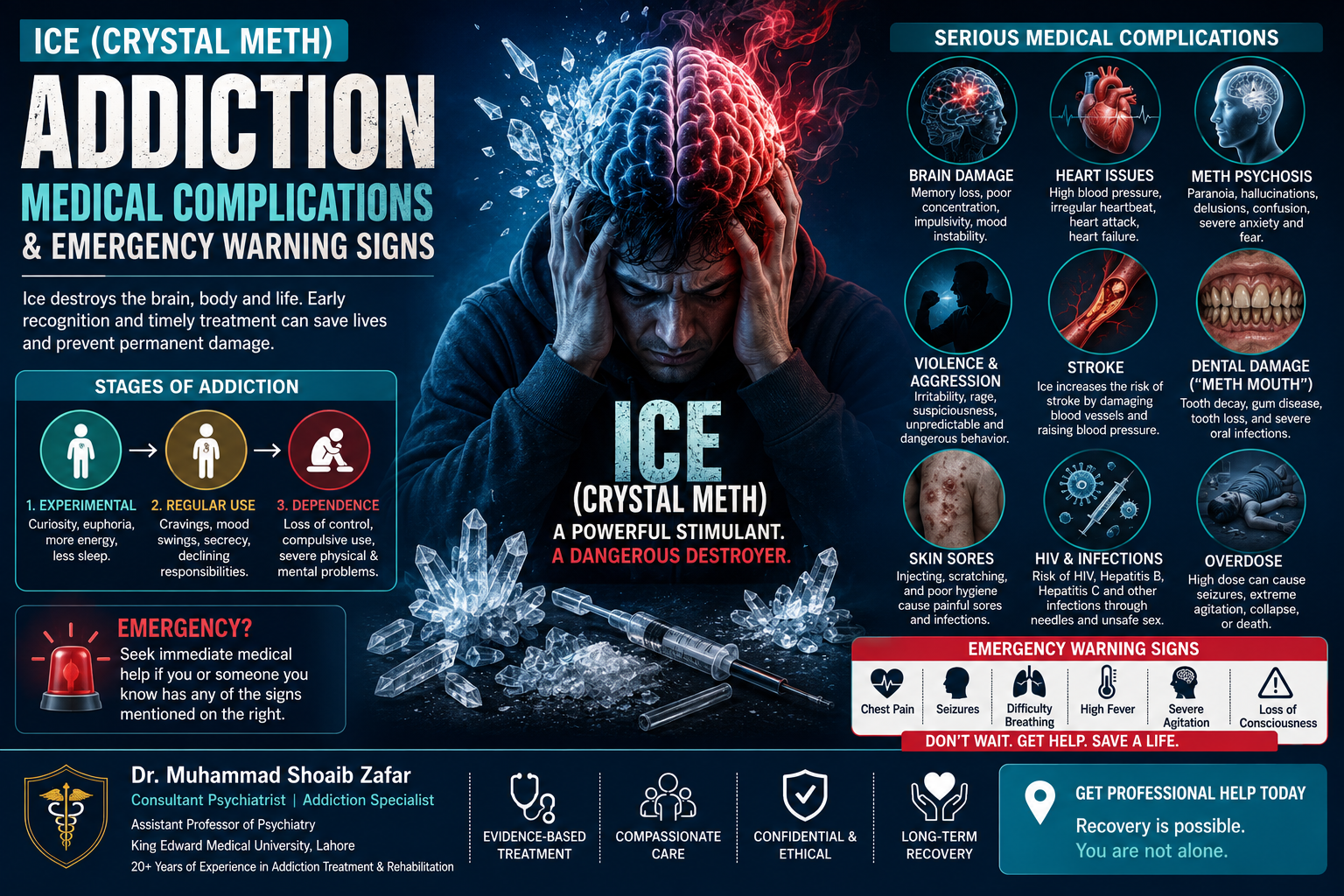
Stages of Ice Addiction
Although every individual’s journey is different, Ice addiction commonly progresses through three stages.
1. Experimental or Occasional Use
The person experiences:
* Intense energy * Euphoria * Increased confidence * Reduced appetite * Less need for sleep * Excessive talkativeness
Most individuals mistakenly believe they remain in complete control.
⸻
2. Regular Use
As tolerance develops, the person begins using Ice more frequently.
Warning signs include:
* Mood swings * Anxiety * Financial problems * Secretive behaviour * Declining work or academic performance * Strong cravings * Relationship conflicts
Ice gradually becomes central to everyday life.
⸻
3. Dependence
Eventually, addiction takes priority over work, education, family, and health.
Symptoms include:
* Loss of control * Compulsive drug-seeking * Severe cravings * Emotional instability * Social isolation * Continuing use despite serious consequences
At this stage, professional treatment is usually necessary.
⸻
Ice Intoxication (“The High”)
During intoxication, methamphetamine overstimulates the brain and nervous system.
Common symptoms include:
Physical
* Dilated pupils * Fast heartbeat * High blood pressure * Sweating * Increased body temperature * Tremors * Dry mouth
Behavioural
* Hyperactivity * Excessive confidence * Rapid speech * Restlessness * Impulsive decisions * Risk-taking behaviour
Psychological
* Euphoria * Heightened alertness * Anxiety * Suspiciousness * Irritability
As the dose increases, the risk of severe medical and psychiatric complications rises significantly.
⸻
Ice Withdrawal
Stopping Ice does not usually cause life-threatening withdrawal, but the psychological effects can be severe.
Common symptoms include:
* Extreme fatigue * Depression * Increased sleep * Increased appetite * Anxiety * Irritability * Poor concentration * Intense cravings
Without treatment, many individuals relapse during this phase. Medically supervised detoxification and structured psychological support improve safety and recovery outcomes.
⸻
Methamphetamine-Induced Psychosis
One of the most feared complications of Ice addiction is methamphetamine-induced psychosis.
People may experience:
* Severe paranoia * Hearing voices * Seeing things that are not present * Delusions * Confusion * Aggressive behaviour * Extreme fear
Some individuals develop formication, the sensation that insects are crawling under the skin, leading to repeated scratching and skin wounds.
Psychosis requires immediate psychiatric assessment and treatment.
⸻
Violence and Aggression
Ice can dramatically impair judgment and emotional regulation.
Some users become:
* Easily provoked * Verbally aggressive * Physically violent * Highly suspicious * Impulsive * Difficult to calm
Violence is more likely when methamphetamine use is combined with psychosis, sleep deprivation, or other substances such as alcohol.
Protecting the individual and those around them is the immediate priority.
⸻
Heart Complications
Methamphetamine places tremendous strain on the cardiovascular system.
Long-term use increases the risk of:
* High blood pressure * Irregular heartbeat * Heart attack * Heart failure * Cardiomyopathy (weakening of the heart muscle) * Sudden cardiac death
These complications can occur even in young adults with no previous history of heart disease.
⸻
Brain Damage
Repeated Ice use damages brain regions responsible for:
* Memory * Attention * Learning * Emotional regulation * Decision-making * Impulse control
Individuals may experience:
* Poor concentration * Forgetfulness * Emotional instability * Difficulty planning * Reduced motivation * Impaired judgment
Although many functions improve with prolonged abstinence, severe or prolonged use may leave lasting deficits.
⸻
Stroke
Methamphetamine significantly increases the risk of stroke by causing severe narrowing and spasm of blood vessels, elevated blood pressure, and abnormal heart rhythms.
Warning signs include:
* Sudden weakness * Difficulty speaking * Facial drooping * Severe headache * Vision changes * Loss of balance
A stroke is a medical emergency. Immediate hospital treatment can save brain function and reduce disability.
⸻
Meth Mouth (Severe Dental Damage)
One of the most recognisable complications of chronic methamphetamine use is “Meth Mouth.”
It results from:
* Severe dry mouth * Teeth grinding * Poor oral hygiene * High intake of sugary drinks * Reduced saliva production
Over time, users may develop:
* Tooth decay * Broken teeth * Gum disease * Tooth loss * Persistent bad breath
Early dental care should form part of comprehensive addiction treatment.
⸻
Skin Sores
Many users repeatedly scratch their skin because of hallucinations or the sensation that insects are crawling beneath it.
Combined with poor hygiene, this may lead to:
* Open wounds * Skin infections * Scarring * Abscesses
Medical treatment may be required to prevent more serious infections.
⸻
HIV and Other Infectious Diseases
Individuals who inject methamphetamine or engage in high-risk sexual behaviours are at increased risk of:
* HIV * Hepatitis B * Hepatitis C * Sexually transmitted infections * Skin and soft tissue infections
Preventive education, safer practices, and appropriate screening are important components of addiction care.
⸻
Methamphetamine Overdose
An overdose can occur unexpectedly, particularly with high doses, prolonged binges, or when methamphetamine is mixed with other drugs.
Warning signs include:
* Severe chest pain * Difficulty breathing * Very high fever * Seizures * Extreme agitation * Collapse * Confusion * Hallucinations * Irregular heartbeat * Loss of consciousness
An overdose is a medical emergency and requires immediate hospital care.
⸻
When Should You Seek Emergency Medical Care?
Call emergency medical services immediately if someone using Ice develops:
* Chest pain * Difficulty breathing * Stroke-like symptoms * Seizures * Loss of consciousness * Violent behaviour * Severe confusion * Hallucinations with risk of harm * High fever * Persistent irregular heartbeat
Do not wait for symptoms to improve on their own.
⸻
Can These Complications Improve?
The encouraging news is that many complications improve with sustained abstinence and comprehensive treatment.
Recovery often includes:
* Medical stabilisation * Psychiatric assessment * Medically supervised detoxification * Cognitive Behavioural Therapy (CBT) * Motivational Interviewing * Family therapy * Inpatient rehabilitation for severe cases * Relapse prevention * Long-term follow-up
Although some damage may persist after prolonged heavy use, early intervention significantly improves physical health, brain function, emotional stability, and quality of life.
⸻
Key Takeaway
Ice (crystal methamphetamine) addiction is far more than a drug habit—it is a serious medical condition that affects the brain, heart, blood vessels, teeth, skin, immune system, and mental health. Complications such as psychosis, stroke, heart attack, meth mouth, and overdose can occur even in young adults and may become life-threatening without prompt treatment.
Recognising the warning signs, understanding the risks, and seeking evidence-based professional care at the earliest opportunity offer the best chance of recovery. With comprehensive medical treatment, psychological therapies, family support, and long-term relapse prevention, individuals can overcome Ice addiction and rebuild healthy, productive lives.
Related articles
Opioid Dependence Treatment in Lahore | OAMT & Buprenorphine at Mayo Hospital
Research and evidence