Ice (Crystal Meth) Addiction: Early Warning Signs, Brain Effects, and Why Early Treatment Saves Lives
“Crystal methamphetamine—commonly known as Ice—is one of the most addictive and destructive stimulant drugs. Recognising the warning signs early can prevent severe physical, psychological, and social consequences.”
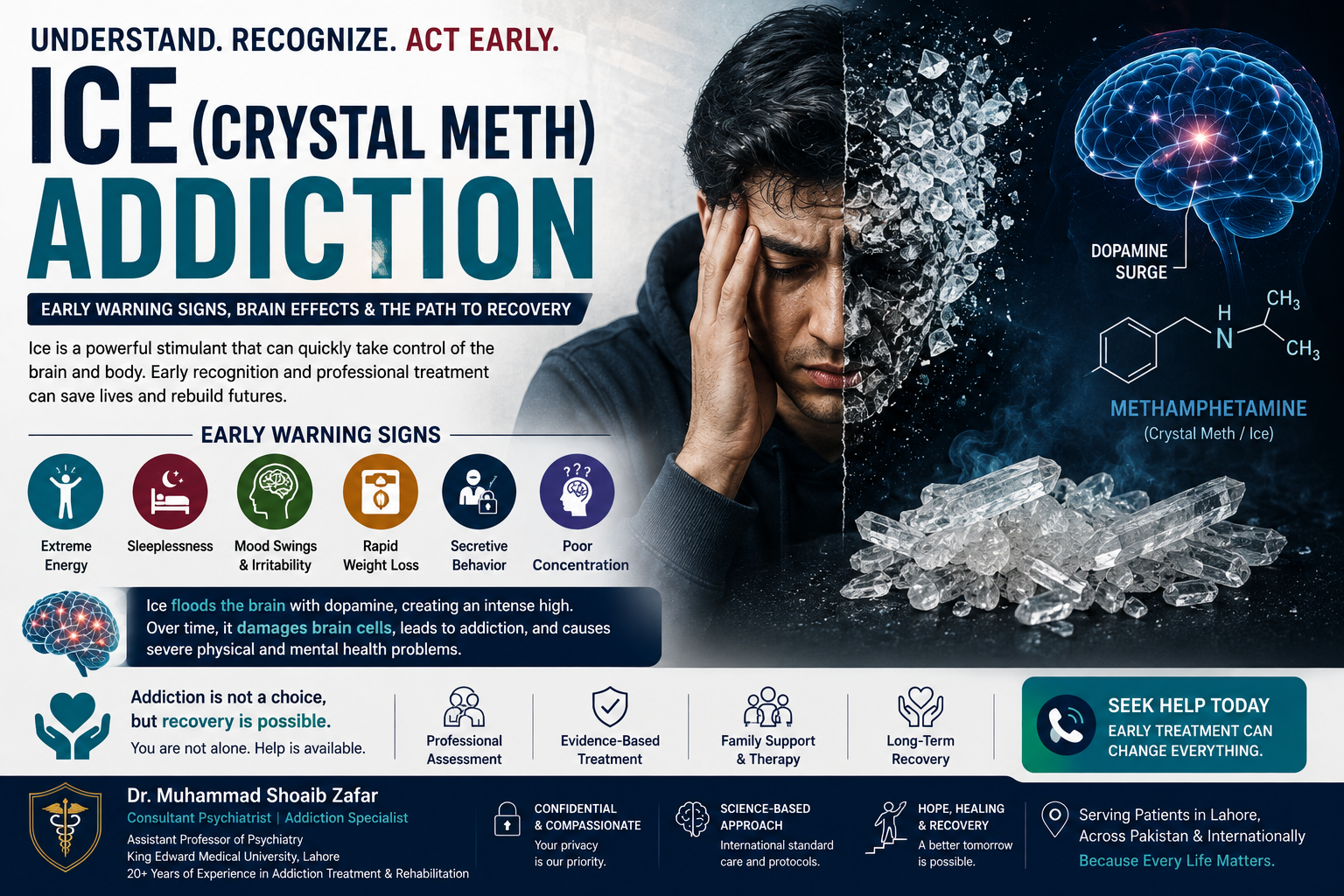
Over the past decade, Ice (crystal methamphetamine) has emerged as one of the fastest-growing illicit drugs in many countries, including Pakistan. Addiction specialists and mental health professionals are increasingly treating individuals whose lives have been profoundly affected by this highly potent stimulant. Although some people initially use Ice believing it will increase energy, confidence, productivity, or weight loss, repeated use can rapidly lead to addiction, severe psychiatric illness, violence, financial hardship, and devastating family consequences.
Unlike many other drugs, Ice produces long-lasting stimulation of the brain. The intense feeling of pleasure is followed by significant changes in brain chemistry, making it increasingly difficult to stop using without professional treatment.
The encouraging news is that recovery is possible. With early diagnosis, evidence-based treatment, family support, and comprehensive rehabilitation, many people successfully overcome Ice addiction and rebuild healthy, meaningful lives.
⸻
What Is Ice (Crystal Meth)?
Ice is the street name for crystal methamphetamine, a powerful synthetic stimulant that affects the central nervous system.
It usually appears as:
* Clear or bluish crystals * White crystalline fragments * Transparent “glass-like” pieces
Common street names include:
* Ice * Crystal * Crystal Meth * Meth * Glass * Tina * Shabu (in some regions)
Although the names differ, they all refer to forms of methamphetamine, one of the world’s most addictive stimulant drugs.
⸻
Ice, Crystal Meth, and Methamphetamine: Is There a Difference?
Many people believe these are different drugs.
In reality:
* Methamphetamine is the chemical substance. * Crystal Meth refers to its crystalline form. * Ice is the common street name used in many countries, including Pakistan.
All produce similar effects on the brain and carry a high risk of addiction.
⸻
Why Is Ice Becoming More Common in Pakistan?
Although comprehensive national statistics remain limited, addiction treatment centres and mental health services across Pakistan have reported increasing presentations related to methamphetamine use, particularly in urban areas.
Several factors may contribute to this trend:
* Increased trafficking across the region * Greater availability in some cities * Misconceptions that Ice improves work performance * Peer influence * Curiosity among adolescents and young adults * Social media misinformation * Stress, unemployment, and emotional difficulties
Because many users avoid seeking help due to stigma, the true number of affected individuals is likely higher than reported.
⸻
How Does Ice Affect the Brain?
To understand why Ice is so addictive, it is important to understand the brain’s reward system.
Under normal circumstances, the brain releases dopamine, a neurotransmitter that helps regulate:
* Pleasure * Motivation * Learning * Attention * Movement * Reward
After dopamine is released, it is normally recycled back into nerve cells.
Ice disrupts this process dramatically.
Instead of allowing dopamine to be recycled, methamphetamine causes a massive release of dopamine while also preventing its normal reuptake.
This results in dopamine levels that are far higher than those produced by natural rewards such as food, exercise, or social connection.
The brain responds by reducing its own dopamine production and becoming less sensitive to dopamine over time.
As a result, the person increasingly depends on Ice just to feel “normal.”
⸻
Why Is Ice More Addictive Than Cocaine?
Although both cocaine and methamphetamine are stimulants, Ice typically has a longer duration of action and produces more prolonged changes in brain chemistry.
Compared with cocaine, Ice:
* Produces longer-lasting stimulation * Causes larger dopamine release * Leads to stronger cravings * Increases the risk of psychosis * Causes greater neurotoxicity * Often results in more rapid deterioration of physical and mental health
These factors make Ice one of the most challenging substances to overcome without structured treatment.
⸻
Early Warning Signs of Ice Addiction
One of the most important reasons families delay seeking help is that the early symptoms are often mistaken for stress, personality changes, or overwork.
Recognising these warning signs early may prevent severe complications.
⸻
Physical Symptoms
Ice affects nearly every organ system.
Common physical signs include:
* Rapid weight loss * Loss of appetite * Dilated pupils * Excessive sweating * Tremors * Dry mouth * Persistent insomnia * Hyperactivity * Increased body temperature * Teeth grinding * Frequent skin scratching * Poor personal hygiene
As addiction progresses, physical health often deteriorates rapidly.
⸻
Behavioural Symptoms
Behavioural changes are often the first signs noticed by family members.
These include:
* Staying awake for several days * Sudden bursts of excessive energy * Talking unusually fast * Secretive behaviour * Frequent disappearances * Unexplained financial problems * Aggressive outbursts * Risk-taking behaviour * Neglecting responsibilities * Social withdrawal from family * Associating with new peer groups * Declining work or academic performance
These changes usually become more noticeable as drug use increases.
⸻
Psychological Symptoms
Ice has profound effects on emotional regulation and mental health.
Individuals may experience:
* Anxiety * Irritability * Restlessness * Mood swings * Depression * Panic attacks * Emotional numbness * Suspiciousness * Excessive confidence * Intense drug cravings
Many people continue using Ice in an attempt to avoid these unpleasant emotions, creating a cycle of dependence.
⸻
Cognitive Symptoms
Methamphetamine affects the brain regions responsible for thinking, memory, and decision-making.
Common cognitive symptoms include:
* Poor concentration * Forgetfulness * Difficulty planning * Impulsive decisions * Poor judgement * Reduced attention span * Slowed learning * Difficulty solving problems
These changes may interfere with employment, education, and relationships.
⸻
Impact on Families
Ice addiction rarely affects only one person.
Families often experience:
* Emotional distress * Fear and uncertainty * Financial strain * Relationship conflict * Loss of trust * Domestic violence * Social isolation * Caregiver burnout
Parents may notice dramatic personality changes in their children, while spouses often describe increasing secrecy, emotional distance, and unpredictable behaviour.
Family members sometimes blame themselves for addiction. In reality, addiction is a complex medical disorder influenced by biological, psychological, and environmental factors.
Supportive family involvement can play an important role in successful recovery.
⸻
When Should Families Seek Professional Help?
Professional assessment is recommended if a person shows several of the following:
* Rapid behavioural changes * Persistent insomnia * Extreme weight loss * Increasing aggression * Hallucinations or paranoia * Declining work or academic performance * Financial problems related to drug use * Repeated failed attempts to stop using * Neglect of personal responsibilities * Strong cravings or compulsive drug-seeking behaviour
Early intervention can prevent serious complications and improve the likelihood of sustained recovery.
⸻
Key Takeaway
Ice (crystal methamphetamine) addiction is a serious but treatable medical condition. It changes the brain’s reward system, affects judgment and emotional regulation, and can rapidly lead to severe physical and psychiatric complications. Recognising the early warning signs is the first step toward recovery.
If you notice significant behavioural, emotional, or physical changes in yourself or someone you care about, seeking an assessment from a qualified addiction specialist or psychiatrist as early as possible can make a substantial difference. Early treatment not only improves recovery outcomes but also helps protect relationships, careers, and long-term health.
⸻
Coming in Part 2
In the next part of this series, we will explore:
* Stages of Ice addiction * Ice intoxication versus withdrawal symptoms * Methamphetamine-induced psychosis * “Meth mouth” and skin sores * Heart attacks, stroke, and brain damage * Violence and aggressive behaviour * Overdose warning signs * When emergency medical care is needed * Long-term neurological and psychiatric complications
Related articles
Opioid Dependence Treatment in Lahore | OAMT & Buprenorphine at Mayo Hospital
Research and evidence