How Cocaine Changes the Brain: Long-Term Effects on Mental Health and Recovery
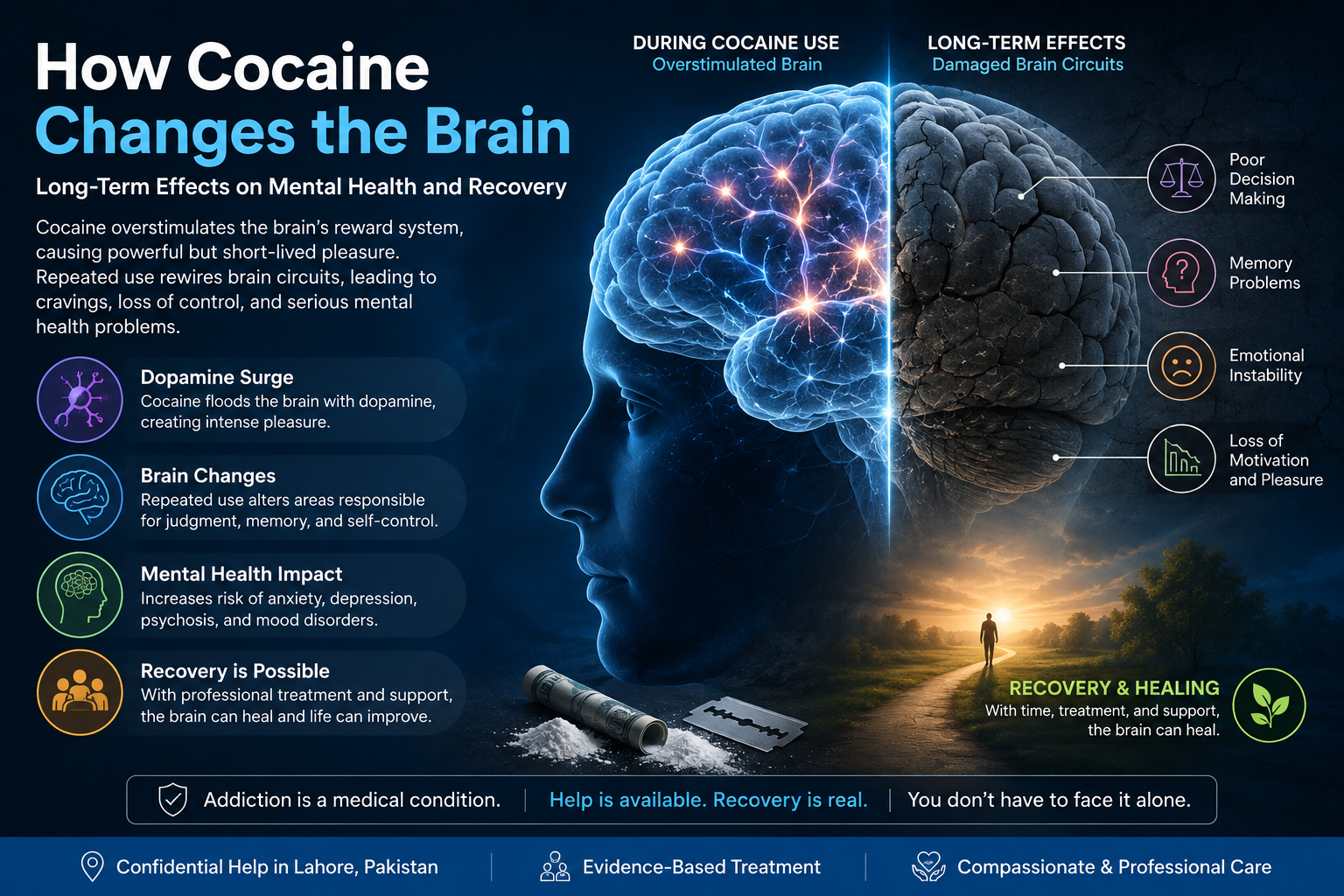
Cocaine addiction is far more than a habit or a lack of willpower. Modern neuroscience has shown that cocaine physically alters the structure and function of the brain, affecting decision-making, emotions, motivation, memory, and self-control. These biological changes explain why many people continue using cocaine despite severe consequences affecting their health, family, career, finances, and relationships.
While cocaine initially produces feelings of intense pleasure, confidence, energy, and alertness, repeated use gradually changes the brain’s reward pathways. Over time, users often discover that they need larger amounts of cocaine simply to feel “normal,” while everyday pleasures such as spending time with family, achieving personal goals, exercising, or enjoying hobbies become less satisfying.
The encouraging news is that the brain has remarkable healing potential. With timely medical treatment, structured rehabilitation, psychological therapies, and long-term recovery support, many of these brain changes can improve significantly.
This article explains the science behind cocaine addiction in simple language while highlighting why professional treatment offers the greatest chance of lasting recovery.
⸻
Understanding Cocaine
Cocaine is a powerful stimulant drug extracted from the leaves of the coca plant. It stimulates the central nervous system and produces rapid but short-lived effects.
Common street names include:
* Coke * Snow * Blow * Crack (smoked form) * White powder
Although many people view cocaine as a “party drug,” it is one of the most addictive substances worldwide. It affects nearly every organ system, but its most profound impact occurs within the brain.
⸻
The Brain’s Reward System
The human brain contains an intricate reward network designed to encourage healthy survival behaviors such as:
* Eating nutritious food * Building relationships * Learning new skills * Exercising * Achieving goals
Whenever these activities occur, brain cells release dopamine—a neurotransmitter associated with pleasure, motivation, learning, and reinforcement.
Normally, dopamine is released in carefully regulated amounts and then recycled back into nerve cells.
This balance keeps motivation healthy.
⸻
How Cocaine Disrupts Dopamine
Cocaine blocks dopamine transporters, preventing dopamine from being reabsorbed into nerve cells.
Instead, dopamine accumulates between neurons.
This produces:
* Extreme pleasure * Increased confidence * High energy * Reduced fatigue * Increased talkativeness * Elevated mood
Unfortunately, this dopamine surge is far greater than anything produced naturally.
The brain quickly adapts to these unnaturally high dopamine levels.
Over time, the brain reduces its own dopamine production and decreases the sensitivity of dopamine receptors.
This process is called neuroadaptation.
⸻
Why Cocaine Becomes Addictive
Initially, cocaine use may feel voluntary.
However, repeated exposure gradually changes the brain’s wiring.
Brain regions involved include:
1. Reward Circuit
The reward system begins associating cocaine with survival-level importance.
Cravings become increasingly powerful.
2. Prefrontal Cortex
This area controls:
* Judgment * Planning * Decision-making * Self-control * Impulse regulation
Repeated cocaine exposure weakens these functions.
People begin making decisions they would never normally make.
3. Amygdala
The amygdala processes stress and emotions.
After addiction develops, stress, anxiety, loneliness, anger, or sadness can rapidly trigger intense cravings.
4. Hippocampus
This memory center stores powerful memories linked to drug use.
Simply seeing familiar locations, friends, music, or environments associated with cocaine may trigger relapse months or even years later.
⸻
Long-Term Brain Changes
Chronic cocaine use affects several important brain functions.
Reduced Ability to Feel Pleasure
Many individuals experience:
* Emotional numbness * Lack of motivation * Loss of enjoyment * Difficulty experiencing happiness
This condition is sometimes called anhedonia.
Without treatment, many people mistakenly believe they need cocaine just to feel normal.
⸻
Poor Decision-Making
Damage to executive functioning may lead to:
* Risky driving * Financial losses * Unsafe sexual behaviour * Gambling * Violence * Job loss * Family conflict
⸻
Memory Problems
Long-term users commonly report:
* Forgetfulness * Difficulty concentrating * Reduced attention span * Poor learning ability
These problems often improve gradually during sustained recovery.
⸻
Increased Stress Sensitivity
Even small daily stresses may feel overwhelming.
This explains why relapse often occurs after arguments, work stress, financial difficulties, or relationship problems unless healthier coping strategies are learned.
⸻
Cocaine and Mental Health
Cocaine affects more than the reward system. It can contribute to or worsen several psychiatric disorders.
These include:
* Anxiety disorders * Panic attacks * Depression * Insomnia * Irritability * Aggression * Mood instability * Suicidal thoughts * Psychosis
Some people experience severe paranoia, believing others are watching or trying to harm them.
Others may hear voices or see things that are not present.
These symptoms require urgent psychiatric assessment.
⸻
Why Cravings Persist
Many patients ask:
“If I stop using cocaine, why do I still crave it?”
The answer lies in brain learning.
The brain remembers experiences associated with intense dopamine release.
Triggers may include:
* Certain friends * Money * Weekends * Music * Specific locations * Emotional distress
Professional relapse-prevention therapy helps weaken these learned associations over time.
⸻
Can the Brain Recover?
Yes.
Research demonstrates that many cocaine-induced brain changes improve after sustained abstinence.
Recovery depends on several factors:
* Duration of cocaine use * Quantity consumed * Frequency of use * Age * Physical health * Mental health conditions * Family support * Engagement in treatment
Most individuals notice improvements in sleep, concentration, emotional regulation, and motivation over weeks to months.
However, some cognitive functions may take considerably longer to recover.
⸻
Evidence-Based Treatment
Successful recovery usually combines several approaches.
Medical Assessment
Every patient should receive a comprehensive psychiatric and physical evaluation to identify:
* Severity of addiction * Mental health disorders * Physical complications * Risk of self-harm * Other substance use
⸻
Medically Supervised Detoxification
Although cocaine withdrawal is not usually life-threatening, many patients experience:
* Depression * Fatigue * Intense cravings * Sleep disturbances * Anxiety
Medical supervision improves safety and comfort during this phase.
⸻
Psychological Therapies
Evidence-based therapies include:
* Cognitive Behavioural Therapy (CBT) * Motivational Interviewing * Contingency Management * Relapse Prevention Therapy * Family Therapy * Group Therapy
These treatments help patients understand triggers, challenge unhealthy thinking patterns, and build practical coping skills.
⸻
Treatment of Co-Occurring Mental Health Conditions
Many individuals with cocaine addiction also experience depression, anxiety, ADHD, bipolar disorder, or trauma-related disorders.
Identifying and treating these conditions is essential for long-term recovery.
⸻
Inpatient Rehabilitation
Residential rehabilitation provides:
* A drug-free environment * Medical monitoring * Daily psychotherapy * Structured routines * Peer support * Family counselling * Relapse prevention planning
For individuals with severe cocaine dependence, repeated relapses, or significant psychiatric symptoms, inpatient care often offers the best opportunity for sustained recovery.
⸻
Lifestyle Changes That Support Brain Healing
Recovery extends beyond stopping cocaine use. Healthy daily habits can help restore brain function.
Important strategies include:
* Regular physical activity * Nutritious meals * Adequate sleep * Stress management * Mindfulness practices * Social support * Meaningful work or education * Avoiding high-risk environments * Continuing psychological therapy * Participating in aftercare programs
These lifestyle measures reinforce the brain’s natural ability to heal over time.
⸻
Myths About Cocaine and the Brain
Myth: Cocaine only affects willpower. Fact: Cocaine causes measurable changes in brain structure and function.
Myth: Recovery is impossible after years of cocaine use. Fact: Many people experience substantial recovery with comprehensive treatment and sustained abstinence.
Myth: Detox alone cures cocaine addiction. Fact: Detox is only the first step. Long-term recovery requires psychological treatment, relapse prevention, and ongoing support.
⸻
Frequently Asked Questions
Can cocaine permanently damage the brain?
Some changes may persist, particularly after prolonged heavy use, but many brain functions improve significantly with sustained recovery and evidence-based treatment.
Why do people relapse?
Relapse often results from a combination of persistent brain changes, environmental triggers, stress, untreated mental health conditions, and inadequate recovery support. It should be viewed as a signal to reassess and strengthen the treatment plan rather than as a personal failure.
How long does brain recovery take?
Recovery varies widely. Some improvements occur within weeks, while attention, memory, emotional regulation, and decision-making may continue to improve over many months or even years.
Is inpatient rehabilitation necessary?
Not everyone requires residential treatment. However, individuals with severe dependence, repeated relapses, cocaine-induced psychosis, significant depression, or limited social support often benefit from a structured inpatient rehabilitation program.
⸻
Conclusion
Cocaine addiction is a complex medical condition that changes the brain’s reward system, emotional regulation, memory, and decision-making. These changes explain why quitting can be so difficult without professional support. Fortunately, the brain is capable of remarkable recovery.
Early intervention, evidence-based psychological therapies, medical care, family involvement, and comprehensive rehabilitation can help individuals regain control of their lives and significantly reduce the risk of relapse. Recovery is not simply about stopping cocaine—it is about rebuilding brain health, restoring relationships, and creating a meaningful future.
⸻
About the Author
Dr. Muhammad Shoaib Zafar is a Consultant Psychiatrist, Addiction Specialist, Child & Adolescent Psychiatrist, and Assistant Professor of Psychiatry at King Edward Medical University, Lahore. He has extensive experience in the assessment and treatment of substance use disorders, including cocaine addiction, dual diagnosis, and medically supervised inpatient rehabilitation. His clinical work focuses on evidence-based, compassionate, and confidential care for individuals and families affected by addiction.
Related articles
Opioid Dependence Treatment in Lahore | OAMT & Buprenorphine at Mayo Hospital
Research and evidence