
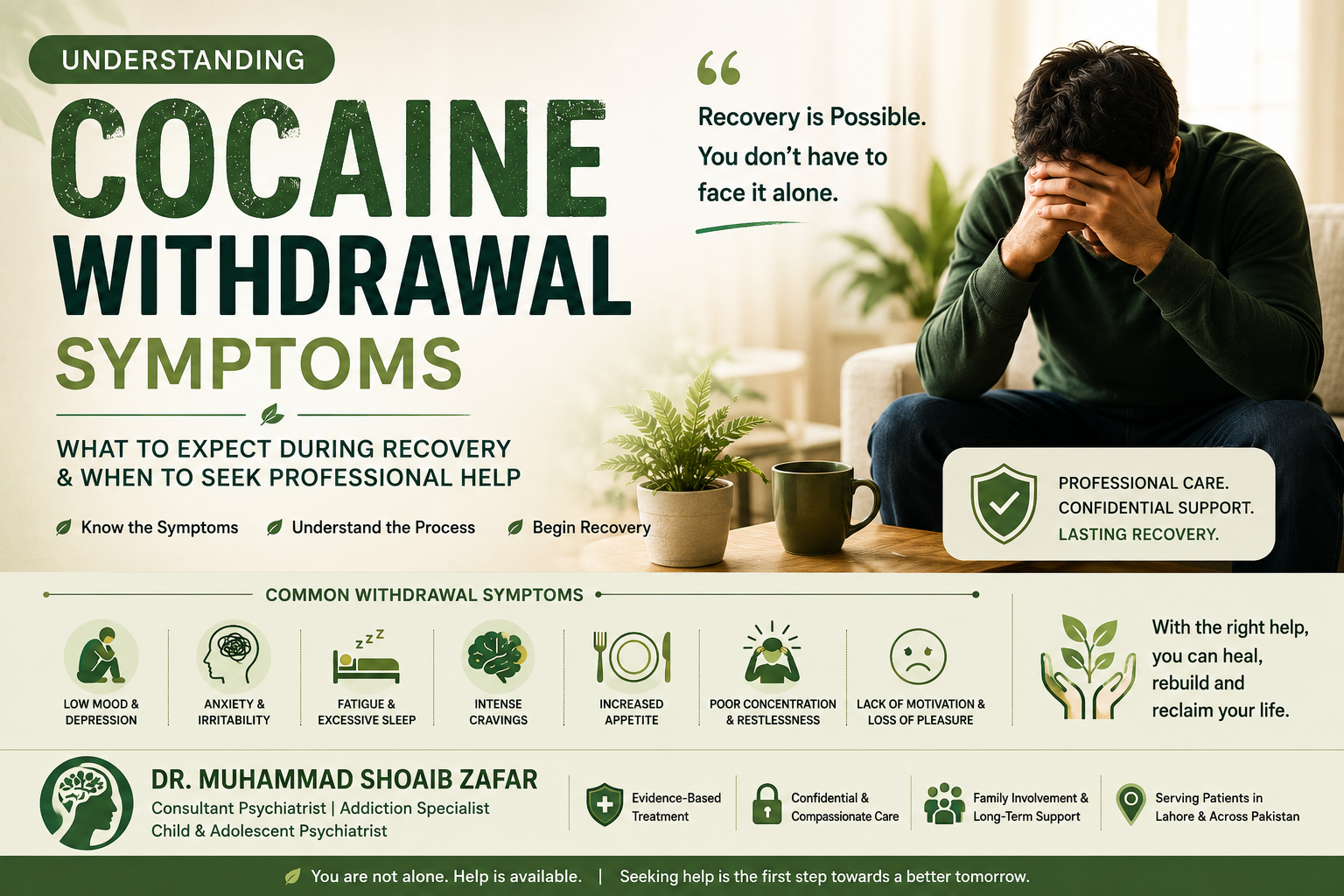
Cocaine Withdrawal Symptoms: What to Expect During Recovery and When to Seek Professional Help?
By Dr. Muhammad Shoaib Zafar Consultant Psychiatrist | Addiction Specialist | Child & Adolescent Psychiatrist Assistant Professor of Psychiatry, King Edward Medical University, Lahore
⸻
Cocaine Withdrawal Is Challenging—but Recovery Is Possible
One of the biggest reasons people continue using cocaine is not because they enjoy it, but because they fear the withdrawal symptoms that occur when they stop. Fatigue, depression, intense cravings, disturbed sleep, and anxiety can make quitting feel overwhelming.
The good news is that cocaine withdrawal is treatable, and with professional medical and psychological support, most individuals can safely begin recovery and regain control of their lives.
If you or a loved one is struggling with cocaine dependence, understanding the withdrawal process is the first step toward recovery.
⸻
What Is Cocaine Withdrawal?
Cocaine withdrawal refers to the physical, emotional, and psychological symptoms that develop after reducing or stopping cocaine use following repeated or heavy consumption.
Unlike alcohol or benzodiazepine withdrawal, cocaine withdrawal is usually not life-threatening, but it can cause severe psychological distress, particularly depression, suicidal thoughts, and intense cravings. These symptoms often increase the risk of relapse if left untreated.
Withdrawal occurs because cocaine artificially increases dopamine levels in the brain. Over time, the brain becomes less able to produce normal feelings of pleasure without the drug. When cocaine use suddenly stops, dopamine activity drops sharply, leading to withdrawal symptoms.
⸻
Common Cocaine Withdrawal Symptoms
Symptoms vary depending on the amount used, duration of addiction, co-existing mental illness, and use of other substances.
Emotional Symptoms
Many patients experience:
* Low mood or depression * Anxiety * Irritability * Emotional numbness * Loss of motivation * Difficulty experiencing pleasure (anhedonia) * Mood swings * Feelings of hopelessness
Depression during withdrawal can be severe and should never be ignored.
⸻
Psychological Symptoms
Common psychological symptoms include:
* Intense cocaine cravings * Poor concentration * Slowed thinking * Restlessness * Difficulty making decisions * Reduced self-confidence * Paranoia in some individuals * Suicidal thoughts in severe cases
Cravings are often strongest during the first few weeks but can return unexpectedly when triggered by stress, certain environments, or social situations.
⸻
Physical Symptoms
Patients commonly report:
* Extreme fatigue * Increased sleep * Vivid dreams * Disturbed sleep patterns * Increased appetite * Headaches * General body discomfort * Reduced energy * Slowed movements
Although these symptoms are uncomfortable, they generally improve over time with appropriate care.
⸻
Timeline of Cocaine Withdrawal
Every patient is different, but withdrawal typically follows three overlapping phases.
Phase 1: Crash (First 24–72 Hours)
Immediately after stopping cocaine, many people experience a “crash.”
Symptoms may include:
* Exhaustion * Excessive sleeping * Depression * Anxiety * Irritability * Strong cravings * Difficulty concentrating
This phase is often the most emotionally difficult.
⸻
Phase 2: Acute Withdrawal (1–3 Weeks)
During this period, patients may experience:
* Ongoing cravings * Mood fluctuations * Sleep disturbances * Increased appetite * Reduced motivation * Low energy * Anxiety
Many individuals mistakenly believe they have recovered during this stage and discontinue treatment, increasing their risk of relapse.
⸻
Phase 3: Protracted Withdrawal (Weeks to Months)
Some patients continue to experience:
* Intermittent cravings * Difficulty enjoying normal activities * Reduced motivation * Sleep disturbances * Stress sensitivity
Professional follow-up and relapse prevention strategies are particularly important during this phase.
⸻
Why Cocaine Withdrawal Feels So Difficult
Cocaine stimulates the brain’s reward system by increasing dopamine, a neurotransmitter involved in motivation and pleasure.
Repeated cocaine use changes these pathways, making everyday experiences feel less rewarding. When cocaine is stopped, the brain needs time to restore its natural balance. During this period, patients often feel emotionally flat, tired, and unable to experience pleasure.
These changes are temporary and usually improve with sustained abstinence and treatment.
⸻
Is Cocaine Withdrawal Dangerous?
Although cocaine withdrawal is generally less medically dangerous than withdrawal from alcohol or certain sedative medications, it can still be serious.
Professional assessment is recommended if the individual experiences:
* Severe depression * Suicidal thoughts * Psychotic symptoms * Aggressive behaviour * Multiple substance use * Significant medical illness * Repeated relapse despite previous treatment
These situations often require close psychiatric supervision.
⸻
Who Needs Inpatient Withdrawal Treatment?
Many individuals can be treated as outpatients, but inpatient rehabilitation may be the safest option when there is:
* Heavy or prolonged cocaine use * Repeated failed attempts to quit * Co-occurring heroin, crystal meth, alcohol, or benzodiazepine use * Severe psychiatric illness * Cocaine-induced psychosis * Suicidal thoughts * Poor family supervision * High relapse risk * Unstable home environment
An inpatient programme provides 24-hour support, structured therapy, medication management when indicated, and protection from immediate access to drugs.
⸻
How Cocaine Withdrawal Is Treated
Treatment begins with a comprehensive psychiatric assessment to identify:
* Severity of addiction * Mental health conditions * Physical health concerns * Family support * Previous treatment history * Relapse risk
A personalized treatment plan is then developed.
⸻
Medical Care
Although no medication specifically eliminates cocaine withdrawal, psychiatrists may prescribe medications to manage:
* Depression * Anxiety * Sleep disturbance * Irritability * Other co-existing psychiatric disorders
Medical monitoring also helps identify complications that may require additional treatment.
⸻
Psychological Therapy
Evidence-based therapies include:
* Cognitive Behaviour Therapy (CBT) * Motivational Enhancement Therapy * Relapse Prevention Therapy * Family Therapy * Psychoeducation * Contingency Management where appropriate
These interventions help patients understand triggers, manage cravings, and build healthier coping strategies.
⸻
Family Support
Recovery is more successful when families are actively involved.
Family counselling can help loved ones:
* Understand addiction as a medical condition * Improve communication * Avoid enabling behaviours * Support long-term recovery * Recognize early warning signs of relapse
⸻
Preventing Relapse After Withdrawal
Withdrawal is only the beginning of recovery.
Long-term success depends on:
* Regular psychiatric follow-up * Continuing psychological therapy * Stress management * Healthy sleep routines * Physical activity * Avoiding drug-related environments * Building supportive relationships * Addressing co-occurring mental health conditions
Patients who remain engaged in treatment generally achieve better long-term outcomes.
⸻
When Should You Seek Professional Help?
Professional assessment is recommended if you or a loved one:
* Cannot stop using cocaine despite wanting to quit * Experiences severe withdrawal symptoms * Has repeated relapses * Develops depression or suicidal thoughts * Uses cocaine with other substances * Experiences paranoia or hallucinations
Early intervention reduces the risk of serious complications and improves the likelihood of sustained recovery.
⸻
Cocaine Withdrawal Treatment in Lahore
Effective cocaine withdrawal management requires more than simply stopping the drug. A comprehensive treatment programme should address the physical, psychological, and social aspects of addiction.
Evidence-based inpatient and outpatient services may include:
* Confidential psychiatric assessment * Medically supervised withdrawal management * Individual psychotherapy * Family counselling * Relapse prevention planning * Long-term follow-up
Treatment should always be tailored to the individual’s needs and delivered by qualified mental health professionals.
⸻
Frequently Asked Questions
How long does cocaine withdrawal last?
The most intense symptoms usually occur during the first few days. Many patients improve significantly within two to three weeks, although cravings and mood changes may continue for several months.
Can cocaine withdrawal cause depression?
Yes. Depression is one of the most common symptoms and may become severe in some individuals. Professional assessment is recommended if symptoms are intense or persistent.
Can I detox from cocaine at home?
Some individuals may recover safely with outpatient support, but those with severe addiction, mental illness, suicidal thoughts, or multiple substance use should be assessed by an addiction specialist to determine whether inpatient care is appropriate.
Does withdrawal mean I am cured?
No. Withdrawal is only the first stage of recovery. Ongoing therapy, relapse prevention, and regular follow-up are essential for maintaining long-term abstinence.
⸻
Final Thoughts
Cocaine withdrawal can be physically exhausting and emotionally overwhelming, but it is a temporary phase of recovery—not the end of the journey. With evidence-based psychiatric care, psychological therapy, family support, and structured rehabilitation, individuals can overcome withdrawal, reduce the risk of relapse, and rebuild healthy, meaningful lives.
If you or someone you care about is struggling with cocaine use, seeking professional help early can make a significant difference in achieving lasting recovery.
Related articles
Opioid Dependence Treatment in Lahore | OAMT & Buprenorphine at Mayo Hospital
Research and evidence